



Detroit's M-1 taps Czech supplier for streetcars
The value of the contract with the Inekon Group is expected to be approximately $30 million for six separate custom coaches that will feature both regulatory compliance and customer comfort.

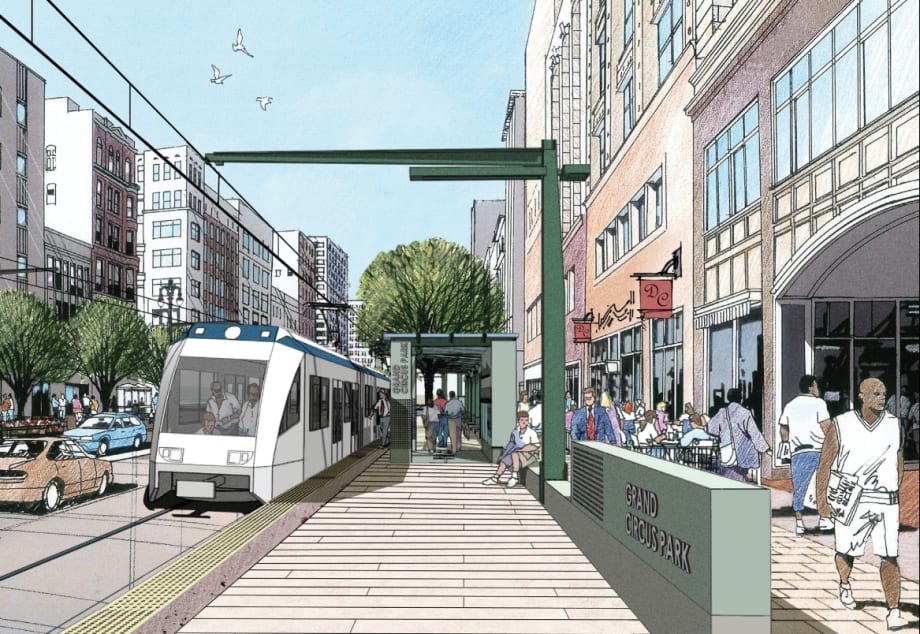
The value of the contract is expected to be approximately $30 million for six separate custom coaches that will feature both regulatory compliance and customer comfort.
“M-1 RAIL will negotiate the final terms and conditions with Inekon Group to build our streetcars,” said Paul Childs, COO of M-1 RAIL. “Inekon has a strong track record with other streetcar projects in Portland, Seattle, and Washington, D.C., and owns a 40% share of U.S.-installed projects. While Inekon is headquartered in the Czech Republic, our requirements specify that it will be compliant with the U.S. Government’s “Buy America” initiative.”
Childs added the M-1 team will announce a final assembly location in the future, but added that several locations in Southeast Michigan are under consideration.
M-1 RAIL’s streetcars also will be compliant with the Americans with Disabilities Act, allowing for station-level access for pedestrians, and persons who use mobility assist devices such as wheelchairs.
Vertical bicycle racks will be included in the design to accommodate Detroit’s burgeoning bicycle community, as well as wireless access for busy passengers and HVAC systems to facilitate the swings in Michigan’s weather.
Each streetcar will be 73 feet long, 8.5 feet wide and 13 feet high, with a vehicle weight of approximately 76,000 pounds. The cars will be operator-driven, with a double-ended, double-sided configuration.
Childs said the final design of the streetcars, as well as future contracts with U.S.-based or Michigan suppliers will be announced later as the project proceeds. M-1 RAIL expects to be operational in 2016.
More Rail

New York MTA Advances Final Contract for Second Avenue Subway Expansion
Contract Four is the largest in the Second Avenue Subway Phase 2 project and includes construction of station infrastructure, tracks, and signals for the subway expansion, MTA officials said. Work on Contract Four will begin in 2027.
Read More →
San Diego MTS Breaks Monthly Trolley Ridership Record
Agency officials said July’s ridership indicates MTS’s continued recovery from the pandemic.
Read More →
Report Examines NJ TRANSIT Reliability, Funding Challenges
The Garden State Initiative analysis examines the roles of Amtrak infrastructure, fleet management, and agency operations while recommending a more performance-based approach to improving reliability.
Read More →
Stadler, CapMetro Sign Long-Term Rail Fleet Support Agreement
Beginning in 2027, Stadler will provide on-site technical expertise, spare parts support, training, and obsolescence management to help extend the reliability and longevity of CapMetro’s GTW fleet.
Read More →
Biz Briefs: Alstom Lands Canadian Contract, LYT to Supply California TSP, and More
In METRO's latest installment, we take a look at recent news from Complete Coach Works, Beep, FlixBus, and more partnerships making headlines across the transportation sector.
Read More →
CATS Gold Line Marks 5 Years of Service, 2.8M Passenger Trips
With a six-mile expansion planned, the Charlotte streetcar is positioned to connect more neighborhoods and major transit hubs across the region.
Read More →
Why Simulating Pedestrian Movement Has Become Essential for Modern Rail Stations
Pedestrian microsimulation is helping rail planners identify bottlenecks, test station designs, and prepare complex transit hubs for growing passenger volumes.
Read More →
Amtrak Begins Major Construction at New York’s Sunnyside Yard
The new maintenance facility will support Amtrak’s Airo trainsets while improving maintenance efficiency and turnaround times in New York.
Read More →
Chicago Leaders Unveil Plans for O’Hare Airport Express Train
The privately developed project would offer a 15-minute trip between downtown and O’Hare’s Terminal 2, with trains operating every 15 minutes on a dedicated track. The service would use battery-electric trains and three existing freight rail rights-of-way.
Read More →
OCTA Maps Out 30-Year Strategy to Protect Coastal Rail Corridor
The draft feasibility report identifies strategies to protect the coastal rail line for decades as the agency continues near-term stabilization and sand placement efforts.
Read More →