



NYCT's New 'Millennium' Cars Enter Service
New trainsets are part of the city’s huge rehab and revitalization of the subway. Design features are likely to be used on future metro car orders elsewhere.
MTA New York City Transit (NYCT) is in the process of accepting delivery of a fleet of more than 1,000 new subway cars. Designated R142 and 142A, the New Millennium trains were sourced from Bombardier and Kawasaki and represent a quantum leap in passenger railcar design and development, depending heavily on computer power for diagnostics and operation. The new state-of-the-art cars are the product of a 10-year research and development process that included input from customers and employees.
As a result, the new cars boast wider doors, brighter interiors, quieter, smoother operation and crystal-clear audio and visual communications. NYCT ordered 1,080 stainless-steel subway cars for service on the Nos. 2, 4, 5 and 6 lines.
They will replace the aging “redbirds,” cars that have seen nearly 40 years of service and are now beginning to suffer from corrosion and increased maintenance costs. All cars in the order are scheduled to be delivered by the end of 2001. NYCT has an option to purchase 320 more and, if the option is exercised, it would effectively relegate the last of the redbirds to a spot in the New York Transit Museum.
More Than 1,000 Cars to Come
The contract to purchase the cars was split into two awards; Bombardier’s Plattsburg, N.Y., plant will supply 680 cars at a cost of $906.8 million and Kawasaki will build 400 cars at its facility in Yonkers, N.Y., for $538.9 million. The funding is sourced from the MTA’s 1995-1999 Capital Plan.
The program is investing more than $12 billion into the region’s rail and bus system. MTA Chairman E. Virgil Conway, NYCT President Lawrence G. Reuter and Joseph E. Hofmann, senior vice president, Department of Subways, took the first ride on the new cars last July and all had positive impressions.
“The subway cars that we ride for the first time today represent the single largest investment in rolling stock in the history of mass transit,” said Conway during the inaugural run on the first set of new cars. “This historic purchase signals Governor George E. Pataki’s commitment to maintaining high-quality mass transportation for the City of New York.”
Reuter pointed out many of the cars’ features, noting the advances made over older models.
“These new cars are designed to be the most comfortable, efficient, dependable and safest subway cars ever built,” he explained. “New Yorkers and visitors to our home town will enjoy these new trains for many decades to come.”
Customers Notice New Trains
Customers boarding the new trains during their test runs went into sensory overload. After taking a few steps inside of a new car, they looked around and noticed the differences. Bright interiors, combined with digital information boards and electronic strip maps, give the new cars an ambiance entirely different from the cars in the current fleet. The seats are more comfortable than the scooped versions found on the R62/62A models and there is a ceiling-mounted handhold running down the center of the car.
The digitized voice announcements, provided by Bloomberg News Radio, are clear and audible and even self adjust their volume to compensate for background noise. Retired NYCT subway conductor Harry Nugent became a minor New York City celebrity in the 1980s by throwing in some additional neighborhood information as he made his station-stop announcements. The New Millennium cars probably would have taken much of the fun out of his job as all announcements, even transfer information, are made electronically.
Also, the electronic message boards situated at each end of the cars’ interiors give current station stop and next stop information along with the time of day.
No. 6 Line Conductor Daryl Gidron appreciates the train’s new electronic features.
“With the new system I don’t have to make announcements and this gives me more time to concentrate on observing the platform,” he says.
The airbag suspension system combined with another first; alternate current (AC) motors incorporating slip/slide operation contribute to a smooth ride with none of the lurches provided by older trains when accelerating and braking. Top speed, as it is on all of NYCT’s cars, is governed to 50 mph. A high-speed run along the elevated structure in the Bronx revealed a stable, smooth ride quiet enough for normal conversation.
Car interiors are heated and cooled using a newly designed heating-ventilation-air conditioning system (HVAC). Extremely effective on a recent 80-plus degree-day, the system even drew complaints from a few riders, who thought the car was too cold. The HVAC system, like the car itself, is designed for optimum efficiency. In fact, aside from having fewer parts to maintain, the new AC electrical propulsion system allows the employment of regenerative braking, which actually pumps power back into the third rail. As designed, it is expected that the new cars will consume up to 25% less energy than current NYCT cars.
“These cars were designed from the rails up with energy savings in mind,” says NYCT’s Hofmann. “Lighter weight, more efficient propulsion and auxiliary systems all contribute to energy and cost savings. The way the bodies are designed also contribute to improved crashworthiness and, because they are stainless-steel construction, we expect these cars to remain in service at least 40 to 45 years.” In keeping with NYCT’s commitment to customer and employee safety, the R142/142A cars were designed with safety as a prime consideration. In order to help prevent customer draggings, doors re-open automatically if they sense an obstruction. The new cars also have event recorders, in compliance with established Institute of Electrical and Electronics Engineers standards.
Goal is Improved Reliability
The process of maintaining the new cars is designed to be more efficient than older models. As an example, air-conditioning units are situated in the roof of the car, facilitating quick and relatively easy removal by overhead crane. Reflecting NYCT’s demands for high reliability, the new cars are designed to travel at least 100,000 miles between service interruptions due to equipment failure—an increase of 50% over the car fleet’s average when the project first began.
The new cars, which are permanently linked in five-car units in an A-B-B-B-A configuration, allow for a reduction in the number of components and systems. Unlike older car classes currently serving NYCT, the R142 and R142A cars will not have the same number of motors in all cars. Seventy percent of the cars will be powered by 150 hp motors.
The operating cab cars, designated as “A” cars, have four motors and the second, third and fourth cars in the five-car set, designated as “B” cars, are powered by two motors. The arrangement was also used in Stockholm’s new metro cars. Both cities shared ideas during their respective development programs, says Hofmann. Those improvements also allow NYCT to project major reductions in operating and maintenance costs for the new cars.
“These cars were designed for high reliability,” says Gene Sansone, assistant chief mechanical officer. “Components were also designed for easy service and the cars include self-diagnostic computer systems for ease of maintenance. For example, the HVAC system is completely roof mounted and can be entirely removed for servicing.”
Aside from the durability of the car bodies and improved serviceability of components, NYCT also added an element that should help to protect the windows from scratchitti vandalism.
Tough Mylar sheets were placed over the glass to protect the windows from scratching. Instead of having to replace the window, the damaged Mylar sheet can be removed and replaced with a new one. While nothing is vandal-proof, NYCT worked hard to make the new cars as vandal-resistant as possible and a goal was set to not allow the new cars to begin a run with scratched windows.
More Rail
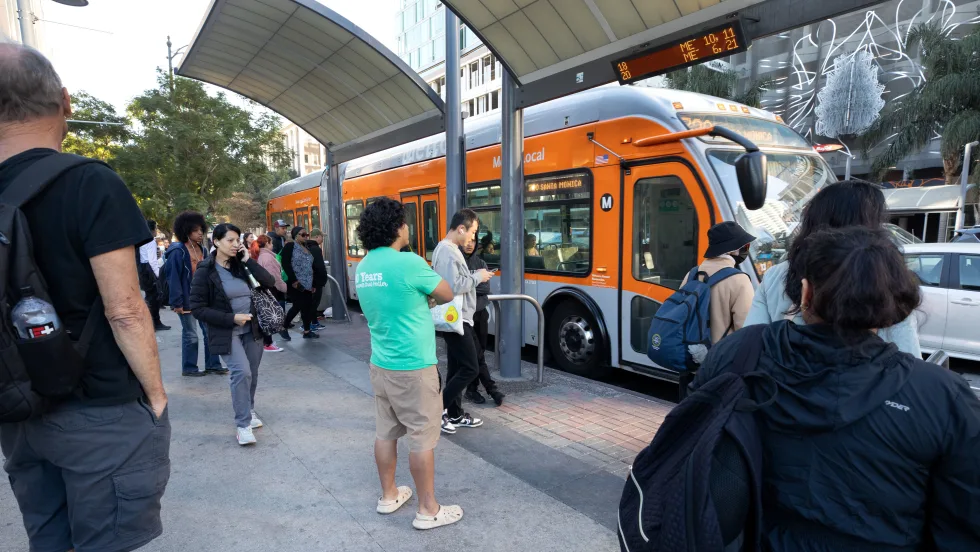
LA Metro September Ridership Climbs 3.9%, Led by Rail Growth
The agency recorded more than 27.2 million boardings, with rail ridership increasing 12.4% year over year and the D Line posting the largest gains.
Read More →
First Full MetroLink Rail Expansion Completed in 20 Years with $192M Airport Project
The project links two St. Louis-area airports by light rail while adding roadway and bike trail connections to improve regional access and mobility.
Read More →
Utilimarc Launches SmartReplace to Optimize Fleet Replacement Decisions
AI-powered SmartReplace helps fleets prioritize vehicle replacements, model budget scenarios, and build more defensible long-term strategies.
Read More →
Scenes from APTA TRANSform & EXPO 2026
Transit leaders, manufacturers, and industry professionals gathered in Chicago to explore new technologies, share ideas, and discuss the future of public transportation.
Read More →
USDOT Awards $416 Million for Florida Rail Crossing Safety Upgrades, New Brightline Station
The projects aim to reduce risks for motorists and pedestrians at rail crossings while expanding passenger rail access along Florida’s Space Coast.
Read More →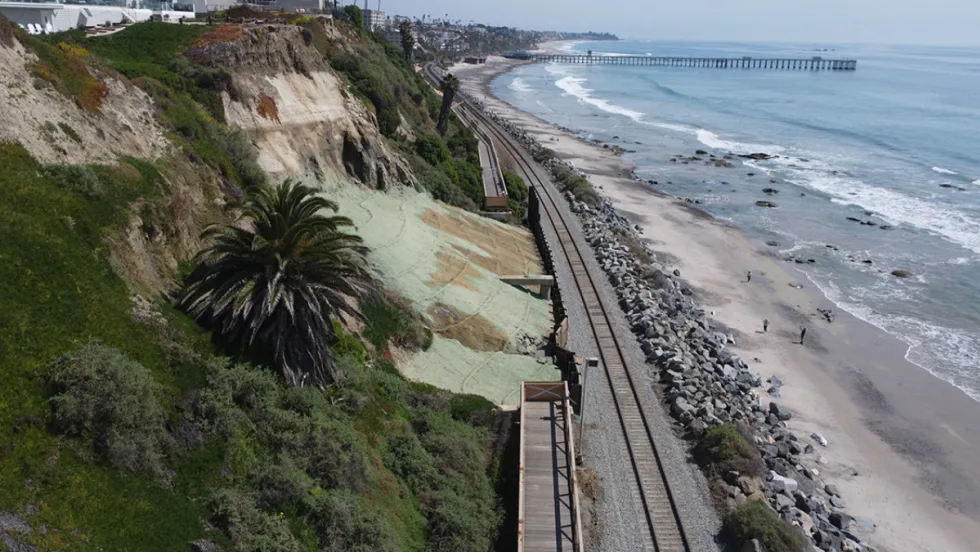
OCTA Declares Emergency to Protect Rail Corridor From Coastal Erosion
The California agency is accelerating shoreline protection and plans to place approximately 690,000 cubic yards of sand along the San Clemente coast to protect a key passenger and freight rail link.
Read More →
More Than a Summer Job: Building the Next Generation of Transit Talent
The Delaware River Port Authority and PATCO have transformed their internship program into a hands-on professional development experience that introduces students to the breadth of transportation careers — and creates a pipeline for future employees.
Read More →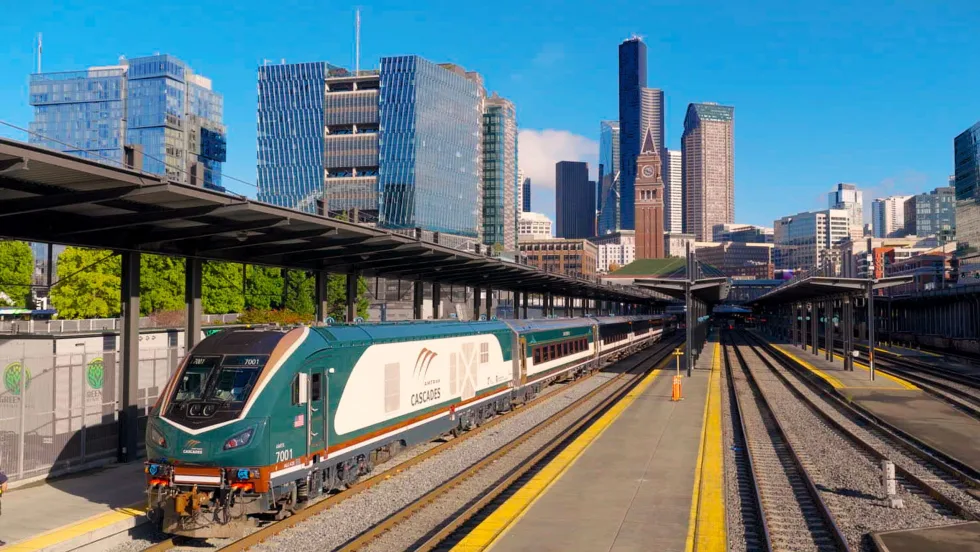
Airo Trains Make Their Amtrak Cascades Debut in the Pacific Northwest
Effective immediately, two cutting-edge Airo trainsets will join the Amtrak Cascades route, operating four daily trips between Vancouver, B.C., Seattle, Portland, and Eugene, Oregon, marking the first introduction of Airo trains into passenger service anywhere in the country.
Read More →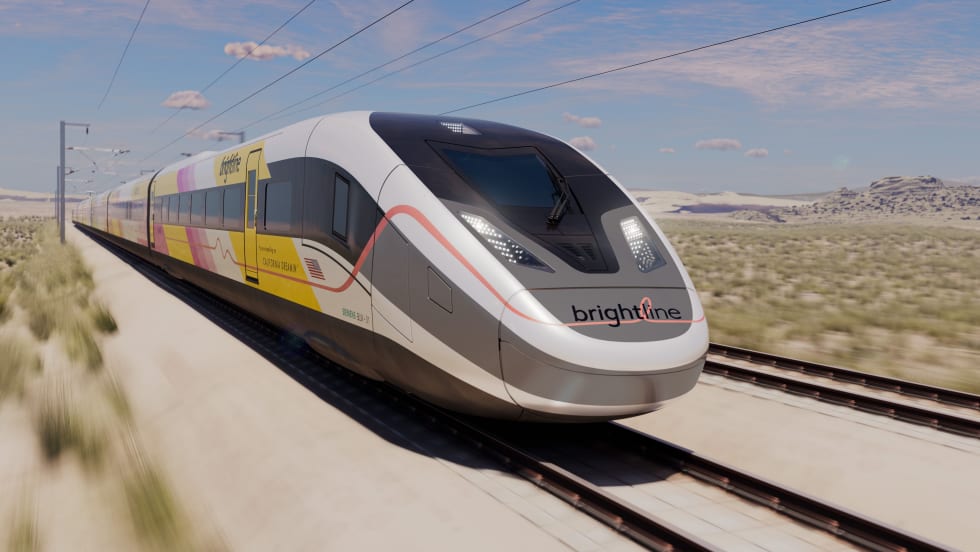
Florida's Brightline Announces Financial Restructuring
Brightline Florida says train operations will continue as normal as certain parent entities enter Chapter 11 and financial stakeholders provide $490 million in new long-term capital.
Read More →
ENC Lands MATA Contract and More in Biz Briefs
In this edition of Biz Briefs, we spotlight the latest developments shaping the future of mobility.
Read More →