



Transit agencies heighten security in wake of bin Laden killing
The New Jersey Transit Police Department maintained close communication with the New Jersey Office of Homeland Security and Preparedness; the FBI; and agencies at the municipal, county, state and federal levels.
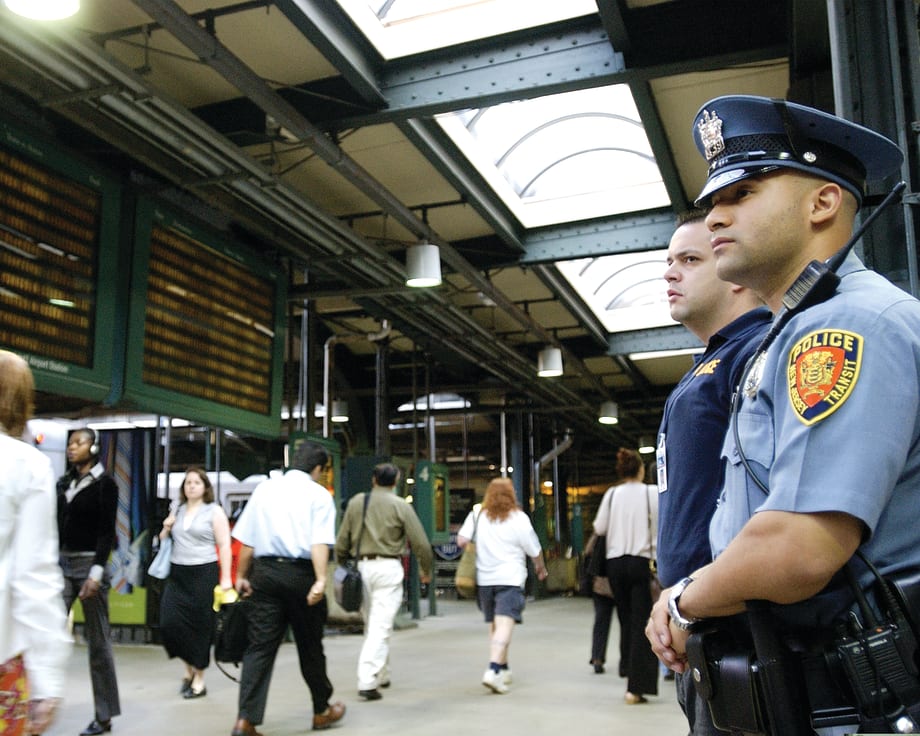
New Jersey Transit (NJ Transit) and the agency's law enforcement partners, including the New Jersey State Police and local law enforcement agencies, increased transit police presence in and around key locations.
New Jersey Transit (NJ Transit) and the agency's law enforcement partners, including the New Jersey State Police and local law enforcement agencies, increased transit police presence in and around key locations.
After the announcement on May 1 that a U.S. strike team had killed Osama bin Laden, transit agencies nationwide increased their levels of security to prepare for any possible retaliatory attacks and asked the public to look for and report any suspicious activity.
While no transit systems reported receiving any threats, U.S. transit agencies kept up continued vigilance following the news.
New Jersey Transit (NJ Transit) and the agency's law enforcement partners, including the New Jersey State Police and local law enforcement agencies, increased transit police presence in and around key locations. The NJ Transit Police Department maintained close communication with the New Jersey Office of Homeland Security and Preparedness; the FBI; and agencies at the municipal, county, state and federal levels.
"Many of our customers are seeing a significantly stepped up security presence," Dan Stessel, spokesman, NJ Transit, said.
Additionally, the agency urged customers who believed they saw suspicious activity or unattended packages at stations, aboard trains or buses, or near transit facilities to call the NJ Transit security hotline or notify a NJ Transit police officer.
Police monitoring of the system included random baggage screening, K-9 deployment, plainclothes and uniformed patrols, and community outreach.
The agency was uncertain of the cost impact at press time, or how long it would maintain the increased level of vigilance.
"During the last 36 hours or so, we've been able to staff up using existing resources and reassigning officers," Stessel said. "The heightened visibility on our system is not adding a significant budget impact yet."
The New Jersey police force consists of about 250 officers, according to Stessel. In addition, depending on the station, there are overlapping jurisdictions; Amtrak has a police force, as well as the Port Authority of New York & New Jersey, and the New York Metropolitan Transportation Authority (MTA). Security forces overlap primarily in the busier terminals, for example, Penn Station.
N.Y. MTA also coordinated with local, state and federal law enforcement partners to increase security at key locations across its transportation system and was "on high alert," according to a statement released soon after the announcement of bin Laden's death.
The agency also recently re-launched its security awareness campaign, "If You See Something, Say Something."
The re-launch came with a new round of television, print and poster advertisements intended to remind customers to remain alert while using MTA services.
On the west coast, Bay Area Rapid Transit District (BART) riders also saw law enforcement officers from other agencies patrolling parking lots and stations. Some local law enforcement agencies volunteered officers for patrols at no cost to BART, Jim Allison, deputy chief communications officer, said.
BART Police Chief Kenton W. Rainey, at the request of the Transit Security Administration, asked law enforcement agencies surrounding BART property to join BART Police in "Operation RAILSAFE." Types of assistance included extra vehicle patrols through bus zones and parking structures and uniformed officers from other agencies patrolling stations and platforms.
BART also had a Critical Asset Patrol team performing counter terrorism activities as part of an initiative launched in January. "We canceled scheduled training and deployed them on trains and stations," Allison explained.
More Rail

New York MTA Advances Final Contract for Second Avenue Subway Expansion
Contract Four is the largest in the Second Avenue Subway Phase 2 project and includes construction of station infrastructure, tracks, and signals for the subway expansion, MTA officials said. Work on Contract Four will begin in 2027.
Read More →
San Diego MTS Breaks Monthly Trolley Ridership Record
Agency officials said July’s ridership indicates MTS’s continued recovery from the pandemic.
Read More →
Report Examines NJ TRANSIT Reliability, Funding Challenges
The Garden State Initiative analysis examines the roles of Amtrak infrastructure, fleet management, and agency operations while recommending a more performance-based approach to improving reliability.
Read More →
Stadler, CapMetro Sign Long-Term Rail Fleet Support Agreement
Beginning in 2027, Stadler will provide on-site technical expertise, spare parts support, training, and obsolescence management to help extend the reliability and longevity of CapMetro’s GTW fleet.
Read More →
Biz Briefs: Alstom Lands Canadian Contract, LYT to Supply California TSP, and More
In METRO's latest installment, we take a look at recent news from Complete Coach Works, Beep, FlixBus, and more partnerships making headlines across the transportation sector.
Read More →
CATS Gold Line Marks 5 Years of Service, 2.8M Passenger Trips
With a six-mile expansion planned, the Charlotte streetcar is positioned to connect more neighborhoods and major transit hubs across the region.
Read More →
Why Simulating Pedestrian Movement Has Become Essential for Modern Rail Stations
Pedestrian microsimulation is helping rail planners identify bottlenecks, test station designs, and prepare complex transit hubs for growing passenger volumes.
Read More →
Amtrak Begins Major Construction at New York’s Sunnyside Yard
The new maintenance facility will support Amtrak’s Airo trainsets while improving maintenance efficiency and turnaround times in New York.
Read More →
Chicago Leaders Unveil Plans for O’Hare Airport Express Train
The privately developed project would offer a 15-minute trip between downtown and O’Hare’s Terminal 2, with trains operating every 15 minutes on a dedicated track. The service would use battery-electric trains and three existing freight rail rights-of-way.
Read More →
OCTA Maps Out 30-Year Strategy to Protect Coastal Rail Corridor
The draft feasibility report identifies strategies to protect the coastal rail line for decades as the agency continues near-term stabilization and sand placement efforts.
Read More →