



Artificial Intelligence Targets Bad Behavior
San Francisco’s Muni is one of several transit operations using DHS grant monies to bolster its program with the use of video surveillance technology software that analyzes abnormal behavior, and thereby alerting systems to potential security and safety issues.
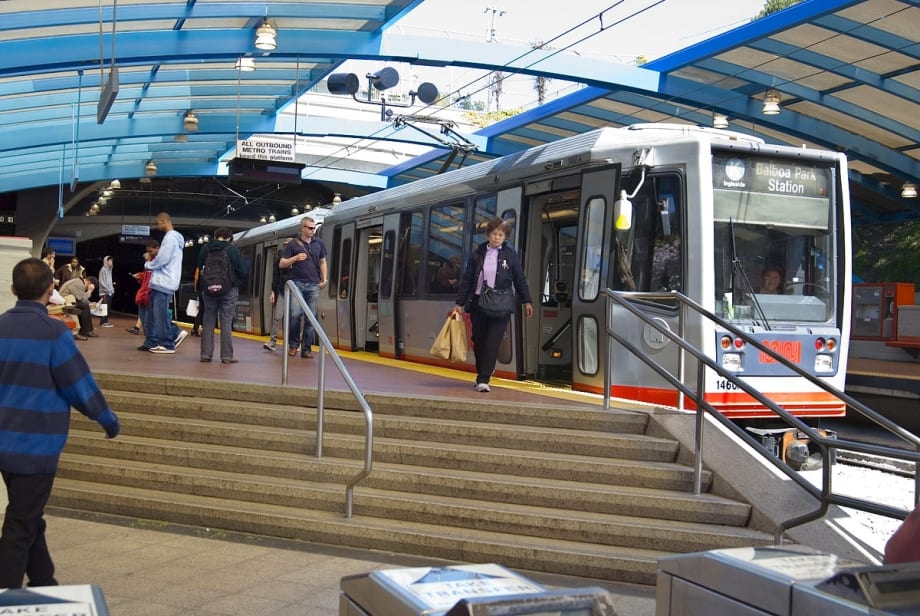
Since 9/11, securing transit in-frastructure has been uppermost in the transit industry’s collective mind. Deploying video surveillance systems or upgrading those already in place have become key elements of transit security and safety programs being deployed, which transit systems have been able to do with the help of U.S. Department of Homeland Security (DHS) grants. While building on video surveillance programs by adding additional cameras will help bolster these programs, figuring out how to manage the data from the cameras is another story.
The San Francisco Municipal Transportation Agency (Muni) is one of several transit operations using DHS grant monies to upgrade its program. The agency recently signed a $2 million, five-year contract with Behavioral Recognition Systems Inc. (BRS Labs), developer of video behavioral recognition software, with U.S. offices in Houston and Washington, D.C. The company has developed advanced, intelligent software that uses behavioral recognition technology to learn — on its own — about the environment and objects it observes in each camera’s field of view.
Per the Muni contract, BRS Labs will install the software, called AIsight, in 12 stations, with 22 surveillance cameras in each location, according to Muni spokesperson Paul Rose. Installation of the video surveillance cameras is expected to be completed by the end of 2013.
“This technology gives us another tool to identify abnormal behavior within our system to ensure our employees and passengers are as safe as possible,” he says.
Smart technology
“Since 9/11 really, there’s been an explosion in the utilization and planning to expand video surveillance technology,” says BRS Labs’ CEO John Frazzini, adding that not only is this technology growth being felt in the U.S., but globally as well. “You look at the 2004 Madrid train bombings, you look at what happened in London, and so points of compromise in Europe have been in transit systems.”
These events have led the U.S. to require more hardening, or more sophisticated security applications for transit, which includes the use of video surveillance technology. But, equipping rail stations and other key transit infrastructure areas with video surveillance cameras leads to the question of what to do with the information collected by these camera systems.
“If you look at it from a common sense perspective, if you’re deploying hundreds of thousands of video surveillance cameras, currently there’s no mechanism for humans to monitor those cameras 24 hours a day, seven days a week,” Frazzini says. “If you put up a camera system of 5,000 cameras, what proactive value are you going to get by hiring several security guards, for example, to monitor those?”
This leads to a lot of head scratching by organizations, according to Frazzini, wondering how they are going to deal with all of the data.
“We solve that problem,” he says. “We set forth the technology that analyzes, through a very artificial intelligence framework, the video surveillance data collected by these camera systems being deployed around the world.”
The software processes the information being collected by those cameras, which Frazzini likens to being the “eyeballs of the video surveillance system,” and the company provides the brain.
System alert
The way the system works is, once the system is installed in the video camera, it takes a few weeks to form its initial understanding of each camera’s field of view so it can observe things over the course of time.
“If you were to take a look at a video surveillance camera in the first 15 minutes, you would have to use your gut to determine whether what you are looking at is normal or not, because you don’t know,” he says. “What happens on a Friday at 3:00 p.m. is different than what happens on a Sunday at 9:00 a.m.”
The system needs a few weeks for it to gain awareness and an understanding of the field of view.
After the system has formed the initial understanding, it creates a memory set, which is basically the system’s memory. Once the baseline understanding is formed, if the system observes behavioral activity that deviates from that established pattern, it issues an alert in the form of a five- to ten-second alert clip. This is a video clip that is then presented through a command and control system to the customer for further review.
“Our system produces the video surveillance intelligence that operators now look at to determine whether a response is required,” Frazzini says.
While the science behind the software is very complex, he adds, the utilization is very straightforward, as transit systems need only plug it into the existing camera environment and the system starts analyzing the data and learning from it immediately.
After a few weeks, the alerts are presented in a format similar to a YouTube environment, where an operator just has to click on a video clip and make a determination as to what the response is. Video clips can be sent to smart phones and disseminated through email like any other video clip.
This software also reduces the need for camera maintenance. If, for example, a camera turns off, breaks, or is moved, the system will alert the operators, notifying them of a substantial field of view change for each camera.
“We’ve automated the maintenance process in these large, broad video surveillance networks where you don’t have to do system health checks,” Frazzini says. “It’s one of the associated benefits of using our sophisticated software. This associated benefit of the technology saves a substantial amount of time, energy and resources in just using the camera infrastructure by using the software’s ability to identify when something just isn’t right.”[PAGEBREAK]
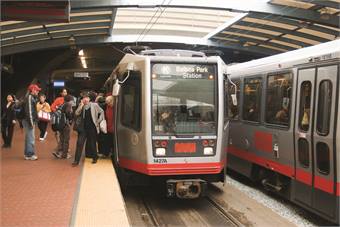
Photos Courtesy Muni
Additional benefits
While the funding driver behind the DHS providing grant dollars to these organizations is certainly consistent with the terrorism threat, Frazzini says, the technology provides other value as well. “What we’re seeing beyond the terrorism threat is we’re providing the substantial ability to increase security from a criminal perspective,” he explains.
The software system can act as a pre-crime detector to identify or intercept potential criminal activity that may not give way to potential terrorist activity, Frazzini says.
An additional benefit that is being seen in the installation of this system is the safety aspect. “Our system has proven to identify areas where various safety violations are presented to our customers. That includes behavior of employees that may be dangerous, for example, by putting themselves at risk, or putting the transit environment at risk,” Frazzini says. “That’s immensely valuable to them.”
Although it may not relate to a potential terrorist attack, these incidences help expose the vulnerabilities within their networks from a safety perspective, he says.
Frazzini does point out that the system does not read the minds of the people that the system is observing.
“It doesn’t collect any personally identifiable information; we just see the behavioral activity. It could be a car, animals, or environmental activity, whether it’s trees. It could be humans, which we would identify as humans, but our system doesn’t collect your info, like facial information.”
Emerging trend
San Francisco is not alone in its progressive plans for its video surveillance operations.
“There is a tectonic shift within the industry where I can point to a dozen U.S. cities where our system is either in the planning stages, or in various forms of implementation,” Frazzini says.
Beyond transit systems, the BRS Labs software system has been deployed in other areas such as intelligence agencies, U.S. defense applications, what are considered to be critical infrastructure environments — geographical locations, or venues, where there’s a heightened focus on security.
In the not too distant future, it will be unheard of to deploy video surveillance systems that don’t have sophisticated artificial intelligence connected to them, Frazzini says.
“Today, it’s an emerging trend, but the train’s leaving the station,” he says. “Sophisticated operators of video surveillance systems are recognizing that now the technology exists, it’s going to be applied broadly.”
Frazzini also sees the software system being used beyond just an early warning system for unusual behavioral activity. Because of end-user requests, BRS Labs is developing the ability to interrogate, or review, all collected intelligence over the course of time enabling users to conduct comprehensive video surveillance analysis.
More Rail
LA Metro Breaks Ground on East San Fernando Valley Light Rail Project
The 6.7-mile line will add 11 stations along Van Nuys Boulevard, expand access to jobs and regional transit connections, and support Metro’s broader efforts to improve mobility as rail ridership grows.
Read More →
CSA Group Releases Climate Resilience Standard for Transit, Passenger Rail
Developed with support from the Standards Council of Canada, CSA D700 guides assessing climate-related risks and planning adaptation measures for transit and passenger rail systems.
Read More →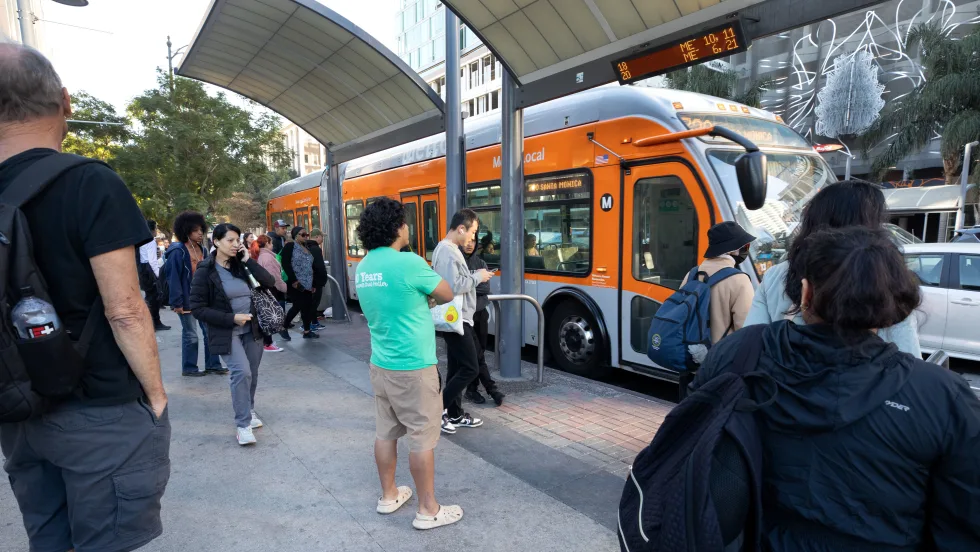
LA Metro September Ridership Climbs 3.9%, Led by Rail Growth
The agency recorded more than 27.2 million boardings, with rail ridership increasing 12.4% year over year and the D Line posting the largest gains.
Read More →
First Full MetroLink Rail Expansion Completed in 20 Years with $192M Airport Project
The project links two St. Louis-area airports by light rail while adding roadway and bike trail connections to improve regional access and mobility.
Read More →
Utilimarc Launches SmartReplace to Optimize Fleet Replacement Decisions
AI-powered SmartReplace helps fleets prioritize vehicle replacements, model budget scenarios, and build more defensible long-term strategies.
Read More →
Scenes from APTA TRANSform & EXPO 2026
Transit leaders, manufacturers, and industry professionals gathered in Chicago to explore new technologies, share ideas, and discuss the future of public transportation.
Read More →
USDOT Awards $416 Million for Florida Rail Crossing Safety Upgrades, New Brightline Station
The projects aim to reduce risks for motorists and pedestrians at rail crossings while expanding passenger rail access along Florida’s Space Coast.
Read More →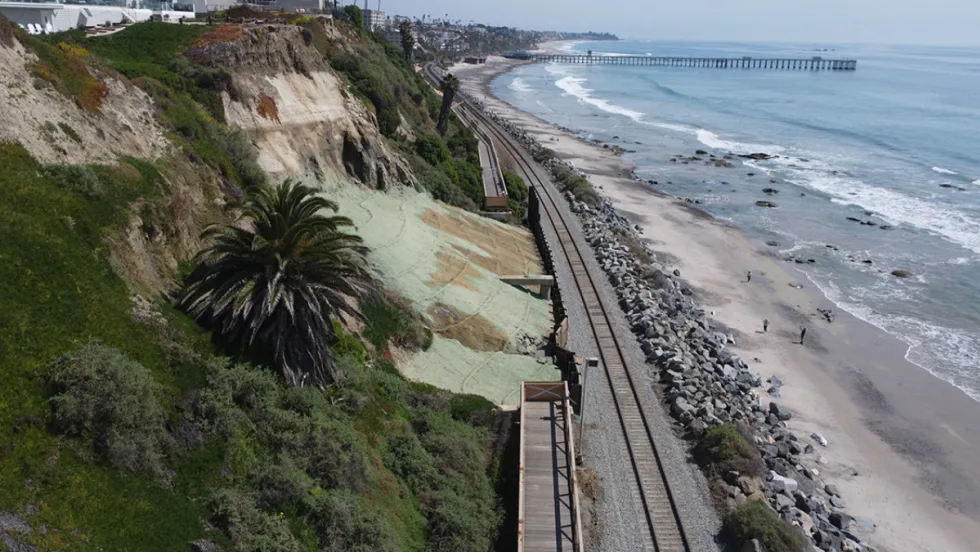
OCTA Declares Emergency to Protect Rail Corridor From Coastal Erosion
The California agency is accelerating shoreline protection and plans to place approximately 690,000 cubic yards of sand along the San Clemente coast to protect a key passenger and freight rail link.
Read More →
More Than a Summer Job: Building the Next Generation of Transit Talent
The Delaware River Port Authority and PATCO have transformed their internship program into a hands-on professional development experience that introduces students to the breadth of transportation careers — and creates a pipeline for future employees.
Read More →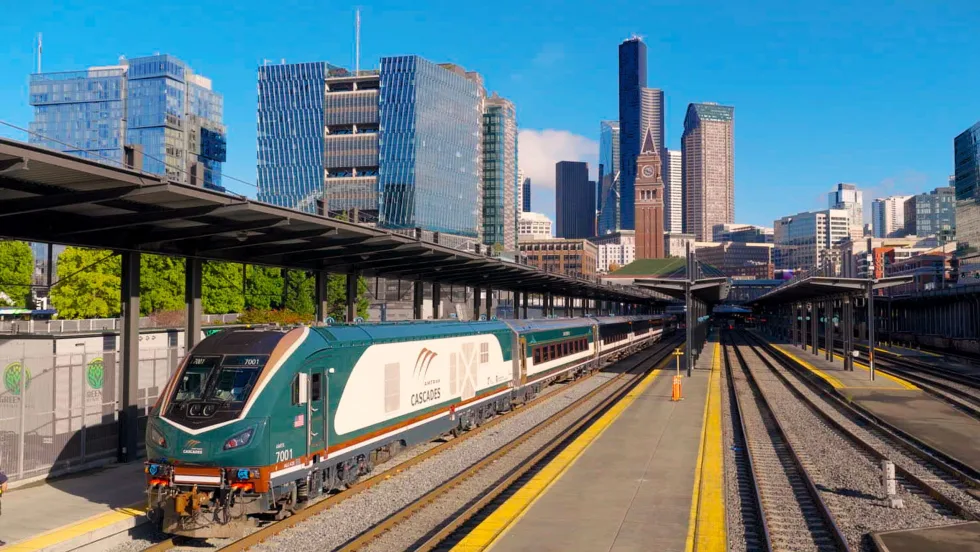
Airo Trains Make Their Amtrak Cascades Debut in the Pacific Northwest
Effective immediately, two cutting-edge Airo trainsets will join the Amtrak Cascades route, operating four daily trips between Vancouver, B.C., Seattle, Portland, and Eugene, Oregon, marking the first introduction of Airo trains into passenger service anywhere in the country.
Read More →