



Calif. high-speed rail project breaks ground
Marking significant progress toward modernizing California’s transportation infrastructure, the California High-Speed Rail Authority joined hundreds of supporters and government, student, community, transportation, business and labor leaders on Tuesday to break ground on the nation’s first high-speed rail system.

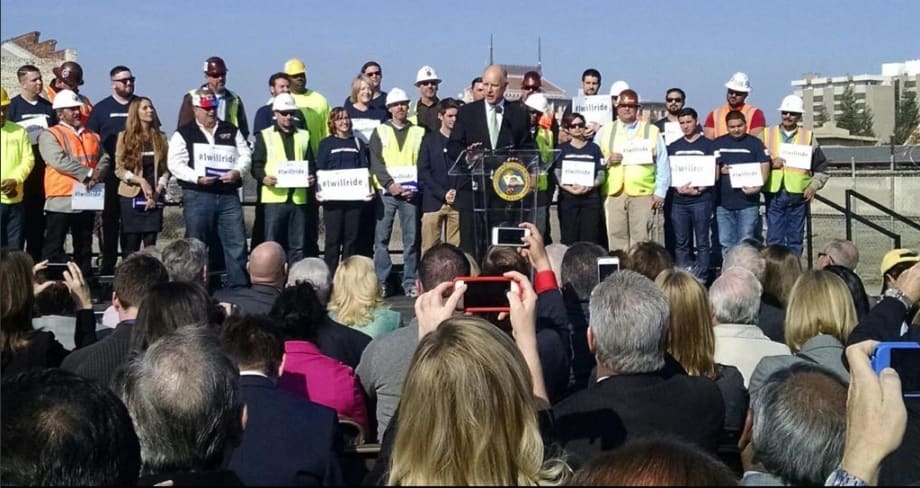
California Governor Edmund G. Brown Jr. at a ceremony held at the site of the future high-speed rail station in downtown Fresno.
California Governor Edmund G. Brown Jr. at a ceremony held at the site of the future high-speed rail station in downtown Fresno.
Marking significant progress toward modernizing California’s transportation infrastructure, the California High-Speed Rail Authority joined hundreds of supporters and government, student, community, transportation, business and labor leaders on Tuesday to break ground on the nation’s first high-speed rail system.
RELATED:Calif. high-speed rail set to start construction
“What is important is the connection that we are rooted in our forebears and we are committed and linked to our descendants,” said Governor Edmund G. Brown Jr. at a ceremony held at the site of the future high-speed rail station in downtown Fresno. “And the high-speed rail links us from the past to the future, from the south to Fresno and north; this is truly a California project bringing us together today.”
In addition to the support of federal, state and local dignitaries, there was strong backing from Central Valley and California-based construction crews, small businesses, and local students who were eager to highlight how high-speed rail is positively affecting California today and will continue to into the future.
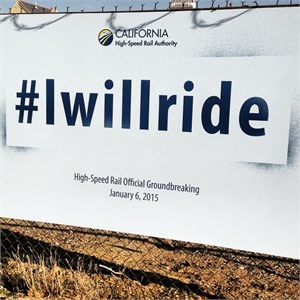
“We now enter a period of sustained construction on the nation’s first high-speed rail system—for the next five years in the Central Valley and for a decade after that across California,” said High-Speed Rail Authority Board of Directors Chairman Dan Richard. “This is an investment that will forever improve the way Californians commute, travel, and live. And today is also a celebration of the renewed spirit that built California.”
The ceremony included remarks from owners of a family-owned steel manufacturer already benefitting from high-speed rail construction. Student leaders from Fresno State and University of California, Merced also explained how high-speed rail is creating new local opportunities.
Although today represented the official groundbreaking ceremony, the event also showcased ground that has already been broken in the Central Valley. The Authority provided tours of nearby construction activity, including various demolition sites. Other achievements to date include finalization of project designs, ongoing right-of-way purchases, and workforce training and mobilization.
Local and statewide small businesses are completing a majority of this work. As of September 2014, 40 small businesses have active contracts valued at $296 million on Construction Package 1, a 29-mile stretch from Avenue 17 in Madera County to East American Avenue in Fresno County. This phase of construction includes 12 grade separations, two viaducts, a tunnel, and a bridge over the San Joaquin River. California-based Tutor Perini Zachry/Parsons (TPZP), A Joint Venture, is designing and building this first phase of the project.
More Rail
Amtrak, CN Reach Agreements to Strengthen Passenger Rail Service, Safety
The agreement resolves a more than decade-long proceeding before the Surface Transportation Board concerning the terms and conditions for Amtrak services, such as the City of New Orleans, Illini/Saluki, and Wolverine.
Read More →
New York MTA Advances Final Contract for Second Avenue Subway Expansion
Contract Four is the largest in the Second Avenue Subway Phase 2 project and includes construction of station infrastructure, tracks, and signals for the subway expansion, MTA officials said. Work on Contract Four will begin in 2027.
Read More →
San Diego MTS Breaks Monthly Trolley Ridership Record
Agency officials said July’s ridership indicates MTS’s continued recovery from the pandemic.
Read More →
Report Examines NJ TRANSIT Reliability, Funding Challenges
The Garden State Initiative analysis examines the roles of Amtrak infrastructure, fleet management, and agency operations while recommending a more performance-based approach to improving reliability.
Read More →
Stadler, CapMetro Sign Long-Term Rail Fleet Support Agreement
Beginning in 2027, Stadler will provide on-site technical expertise, spare parts support, training, and obsolescence management to help extend the reliability and longevity of CapMetro’s GTW fleet.
Read More →
Biz Briefs: Alstom Lands Canadian Contract, LYT to Supply California TSP, and More
In METRO's latest installment, we take a look at recent news from Complete Coach Works, Beep, FlixBus, and more partnerships making headlines across the transportation sector.
Read More →
CATS Gold Line Marks 5 Years of Service, 2.8M Passenger Trips
With a six-mile expansion planned, the Charlotte streetcar is positioned to connect more neighborhoods and major transit hubs across the region.
Read More →
Why Simulating Pedestrian Movement Has Become Essential for Modern Rail Stations
Pedestrian microsimulation is helping rail planners identify bottlenecks, test station designs, and prepare complex transit hubs for growing passenger volumes.
Read More →
Amtrak Begins Major Construction at New York’s Sunnyside Yard
The new maintenance facility will support Amtrak’s Airo trainsets while improving maintenance efficiency and turnaround times in New York.
Read More →
Chicago Leaders Unveil Plans for O’Hare Airport Express Train
The privately developed project would offer a 15-minute trip between downtown and O’Hare’s Terminal 2, with trains operating every 15 minutes on a dedicated track. The service would use battery-electric trains and three existing freight rail rights-of-way.
Read More →