



D.C. Metro to introduce new 7000-Series railcars in April
The introduction of the first new train will be the most significant milestone to date for a project that has spanned nearly five years from approval and funding, through design and engineering, to testing and certification.

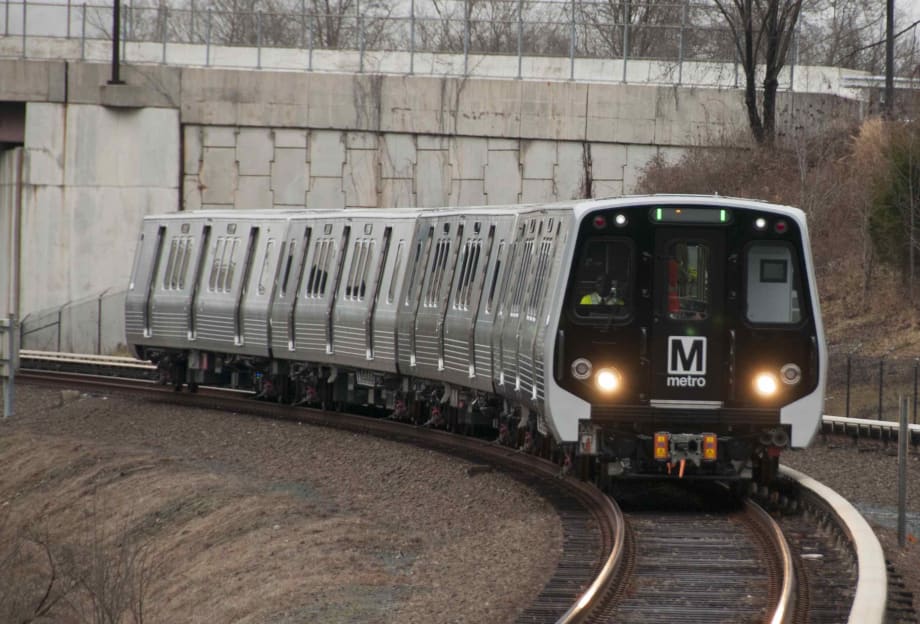
The Washington Metropolitan Area Transit Authority (Metro) announced its first 7000-series train will enter passenger service Tuesday, April 14, on the Blue Line.
The introduction of the first new train will be the most significant milestone to date for a project that has spanned nearly five years from approval and funding, through design and engineering, to testing and certification.
The first train in regular passenger service with eight 7000-series cars will depart from Franconia-Springfield shortly after 7 a.m. on April 14. The Blue Line serves five of Metro’s six jurisdictions: Fairfax County, the City of Alexandria, Arlington County, the District of Columbia and Prince George’s County.
The 7000-series cars feature new technologies that are generations ahead of Metro’s current railcars, all of which were designed to be “backward compatible” with Metro’s oldest cars, the 1000-series. For example, Metro’s current railcars use analog technology for onboard public address announcements, whereas the P.A. systems on 7000-series cars will be entirely digital and feature clear, automated announcements.
“The 7000-series is an entirely new generation of railcars at Metro — a fleet that is, by design, revolutionary as opposed to evolutionary,” said Metro Interim GM/CEO Jack Requa. “The cars were built to maximize safety while providing enhanced rider comfort and reliability. We are excited to welcome riders aboard their new trains.”
Requa noted that the second 7000-series train is already undergoing testing and is expected to quickly follow the first train into passenger service.
Metro has ordered 528 of the new railcars, enough to replace all 1000- and 4000-series cars and expand the size of the Metro fleet by 128 cars. Options to purchase an additional 220 cars at favorable pricing can be exercised if funding is committed by midyear. Metro’s funding jurisdictions have all indicated that they are inclined to support purchasing the additional 220 cars.
Unlike earlier railcar series that can be “mixed and matched” within a single train, the 7000-series cars will operate only with other 7000-series cars, and all of the new trains will all be eight-cars in length. The cars will also be in a “quad-unit configuration,” meaning that the cars will operate in four-car sets, allowing the accommodation of 40 more passengers per eight-car train than in older models because of fewer operator compartments.
The modern rail cars are equipped with state-of-the-art safety technology and features designed with extensive customer input. Through the project’s Customer Design Team, actual Metro riders participated in the design of the new railcars at every phase of the process. In addition, seat design options were tested with Metrorail riders in several stations, and Metro’s Accessibility Advisory Committee and Riders’ Advisory Council provided input.
More Rail
The Business Voice Behind Public Transportation
As chair of APTA’s Business Members Board of Governors, Ray Melleady explains how more than 850 business members are partnering with transit agencies to advance funding, innovation, and industry-wide collaboration.
Read More →
FRA Announces $5.3B in Rail Investments, Including $2B for Amtrak
Funding will support grade-crossing improvements, infrastructure upgrades, and new Amtrak equipment in 23 states.
Read More →
Finding the ‘Happy Medium’: Optimizing Maintenance Without Sacrificing Reliability
The key to maintenance optimization isn’t doing less work—it’s doing the right work at the right time on the right assets.
Read More →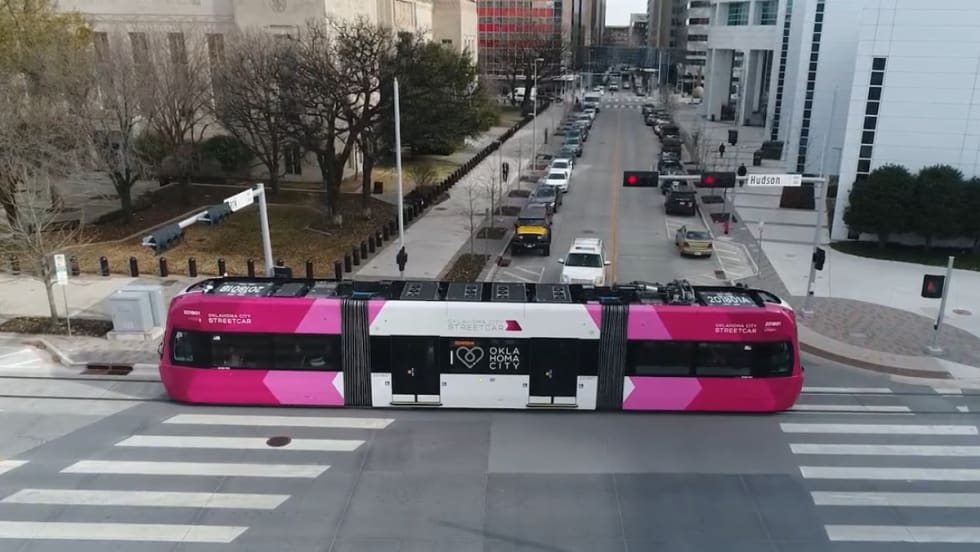
OKC Streetcar Makes Zero-Fare Service Permanent
Ridership increased an average of 71% compared with the same period a year earlier during the fare-free pilot.
Read More →
DART Customer Satisfaction Reaches Six-Year High
Overall satisfaction rose to 74.9%, while the agency’s Net Promoter Score reached a record 33.7.
Read More →
How DART's GoPass Is Redefining Regional Mobility
Serving 14 transit agencies, GoPass simplifies multimodal travel by allowing riders to plan, pay for, and manage an entire trip through one app.
Read More →
Amtrak Board Advances Plan to Restructure Organization, Seeks Public Input
The proposal, developed by Amtrak management and approved by the board for further consideration, is intended to modernize the organization's structure while improving accountability, operational efficiency, and customer service.
Read More →
Biz Briefs: STV teams with Amtrak, Motorcoach Operators Boost Fleet and Land Contracts, and More
From manufacturers and suppliers to transit agencies and motorcoach operators, these updates offer a snapshot of the projects, partnerships and business moves driving the industry forward.
Read More →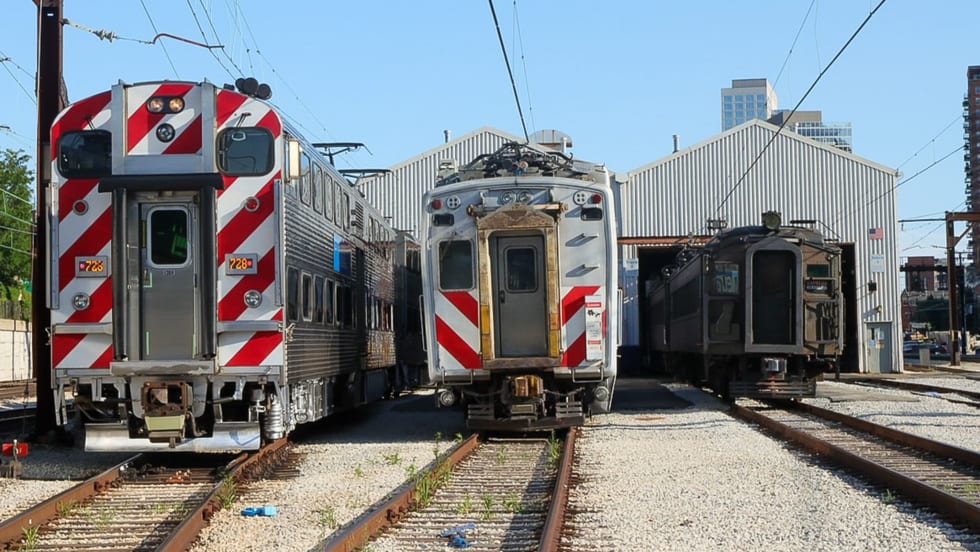
Metra Celebrates 100 Years of Electric Rail, Looks to the Future
The event was also a celebration of recent reforms to public transportation in the Chicago area, changes that could be as transformative in the future as the major civic achievement a century ago, said officials.
Read More →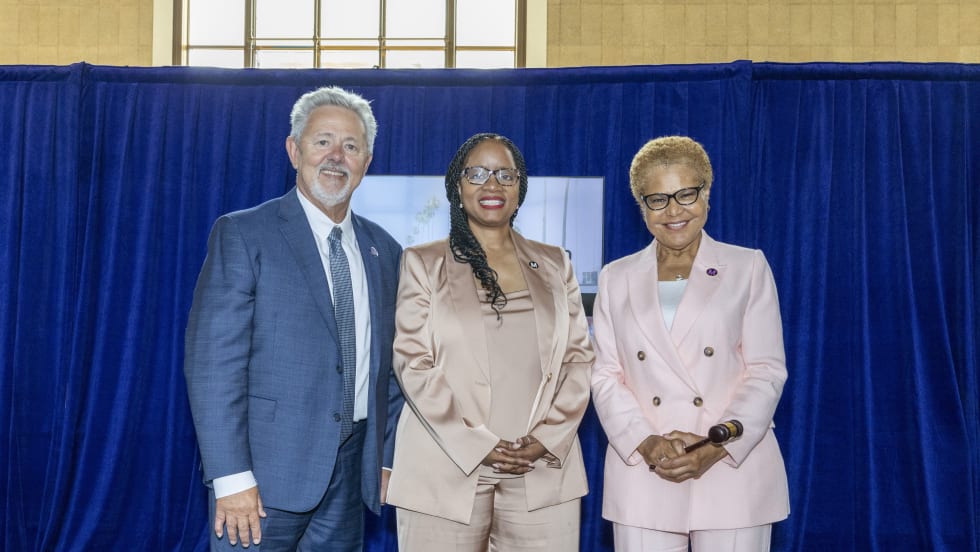
LA Metro Marks Banner Year, Sets Ambitious Goals for New Fiscal Year
Incoming LA Metro Board Chair and Los Angeles Mayor Karen Bass joined outgoing Board Chair Fernando Dutra and LA Metro CEO Stephanie Wiggins to review accomplishments from fiscal year 2026, which included the opening of new rail extensions, advancement of major transit projects, expanded safety programs, and new rider amenities.
Read More →