



Report: U.S. high-speed rail can learn from Japan's early-warning earthquake system
JR East, a Japanese rail company, has developed systems to mitigate the damage to its facilities and personnel, including an early earthquake detection system, retrofitting existing facilities for seismic safety, developing more seismically resistant designs for new facilities, and holding earthquake response training and exercises for company staff.

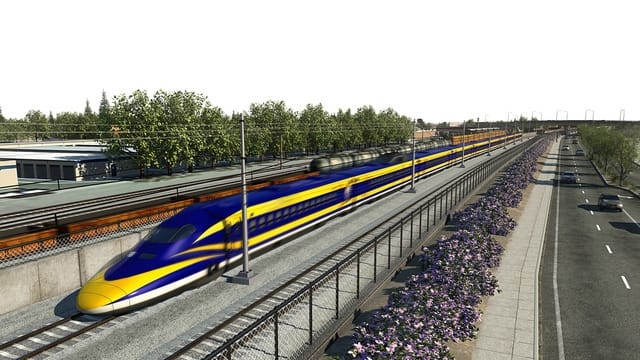
A rendering of the California High-Speed Rail sytem
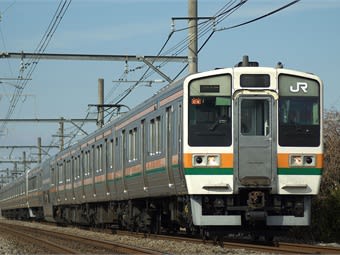
Sui-Sez
As California and other states move forward with high-speed rail plans, some have questioned the system's ability to withstand earthquakes. This is especially critical in California, an active quake zone. A new peer-reviewed research report from the Mineta Transportation Institute says that valuable lessons are easily adapted from Japan's successes with its early earthquake warning (EEW) systems.
The report, “Great East Japan Earthquake, JR East Mitigation Successes and Lessons for California High-Speed Rail,” is available for free download.
The principal investigators were Frances Edwards, PhD, and Daniel C. Goodrich, MPA, working with an academic and professional research team.
JR East, a Japanese rail company, has developed systems to mitigate the damage to its facilities and personnel, including an early earthquake detection system, retrofitting existing facilities for seismic safety, developing more seismically resistant designs for new facilities, and holding earthquake response training and exercises for company staff.
"These systems demonstrated their value in the Great East Japan Earthquake of 2011 and have been further developed based on that experience," said Dr. Frances Edwards, one of the report’s principal investigators. "Researchers in California are developing an EEW system for the state, and the private sector has seismic sensors in place. These technologies could contribute to the safety of the California High-Speed Rail Authority's developing system, which could emulate Japan's best practices."
A rendering of the California High-Speed Rail sytem
The JR East EEW system stops the train, prompting a response from passengers and staff. Detailed staff training in Japan was largely responsible for the subsequent lifesaving activities that moved passengers and staff out of harm's way. There were no passenger or crew deaths on any JR East trains, including the bullet trains. For this report, the types of training and exercise activities used in Japan are evaluated for applicability to California rail systems.
That disaster's impact and its three-fold aspects (earthquake, tsunami and nuclear event) also provided valuable information for the California High-Speed Rail Authority's (CHSRA) system. The insights will be leveraged and adapted to build greater safety for passengers and crew.
The report explains the physics of seismic events before delving into the evolution of warning systems. It also describes the extensive training that JR East provides for its employees so they can assist during a disaster.
JR East provided reports rarely available to Western researchers on EEW system performance; seismic resistance and resilience research related to columns, piers and bridges; and staff training. The authors conducted extensive EEW research through the Berkeley Seismic Laboratory, at the sites of existing installed EEW systems, and structural engineering research on seismic resistance through private engineering activities.
More Rail
Amtrak, CN Reach Agreements to Strengthen Passenger Rail Service, Safety
The agreement resolves a more than decade-long proceeding before the Surface Transportation Board concerning the terms and conditions for Amtrak services, such as the City of New Orleans, Illini/Saluki, and Wolverine.
Read More →
New York MTA Advances Final Contract for Second Avenue Subway Expansion
Contract Four is the largest in the Second Avenue Subway Phase 2 project and includes construction of station infrastructure, tracks, and signals for the subway expansion, MTA officials said. Work on Contract Four will begin in 2027.
Read More →
San Diego MTS Breaks Monthly Trolley Ridership Record
Agency officials said July’s ridership indicates MTS’s continued recovery from the pandemic.
Read More →
Report Examines NJ TRANSIT Reliability, Funding Challenges
The Garden State Initiative analysis examines the roles of Amtrak infrastructure, fleet management, and agency operations while recommending a more performance-based approach to improving reliability.
Read More →
Stadler, CapMetro Sign Long-Term Rail Fleet Support Agreement
Beginning in 2027, Stadler will provide on-site technical expertise, spare parts support, training, and obsolescence management to help extend the reliability and longevity of CapMetro’s GTW fleet.
Read More →
Biz Briefs: Alstom Lands Canadian Contract, LYT to Supply California TSP, and More
In METRO's latest installment, we take a look at recent news from Complete Coach Works, Beep, FlixBus, and more partnerships making headlines across the transportation sector.
Read More →
CATS Gold Line Marks 5 Years of Service, 2.8M Passenger Trips
With a six-mile expansion planned, the Charlotte streetcar is positioned to connect more neighborhoods and major transit hubs across the region.
Read More →
Why Simulating Pedestrian Movement Has Become Essential for Modern Rail Stations
Pedestrian microsimulation is helping rail planners identify bottlenecks, test station designs, and prepare complex transit hubs for growing passenger volumes.
Read More →
Amtrak Begins Major Construction at New York’s Sunnyside Yard
The new maintenance facility will support Amtrak’s Airo trainsets while improving maintenance efficiency and turnaround times in New York.
Read More →
Chicago Leaders Unveil Plans for O’Hare Airport Express Train
The privately developed project would offer a 15-minute trip between downtown and O’Hare’s Terminal 2, with trains operating every 15 minutes on a dedicated track. The service would use battery-electric trains and three existing freight rail rights-of-way.
Read More →