



San Francisco completes Central Subway tunnel portal entrance
The identical twin TBMs weighed-in at 750 tons each and were affectionately named Mom Chung — for Dr. Margaret “Mom” Chung, the nation’s first Chinese-American physician — and Big Alma — for San Francisco philanthropist and socialist “Big Alma” de Bretteville Spreckles.

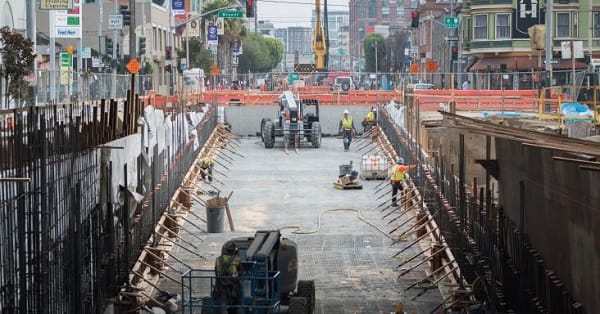
Construction on the now-completed Central Subway Portal on 4th Street
Construction on the now-completed Central Subway Portal on 4th Street
The San Francisco Municipal Transportation Agency (SFMTA), which manages all transportation in the city, including the Municipal Railway (Muni), completed the Central Subway tunnel portal entrance, which was the final element to the overall tunneling contract. This portion of the Central Subway Project was completed on-time and on-budget.
The portal, at 4th and Harrison streets, was initially called the “launch box” because it served as the entrance site of two 350-foot-long boring machines (TBMs). Each TBM tunneled 8,500 feet beneath SoMa, Union Square and Chinatown creating the Central Subway tunnels. The identical twin TBMs weighed-in at 750 tons each and were affectionately named Mom Chung — for Dr. Margaret “Mom” Chung, the nation’s first Chinese-American physician — and Big Alma — for San Francisco philanthropist and socialist “Big Alma” de Bretteville Spreckles.
Now that the TBMs have completed their 1.5-mile journeys, the launch box has been seismically and structurally reinforced creating the portal where the Muni Metro T Third Line Light Rail Vehicles (LRVs) will enter and exit the Central Subway.
The tunnel portal structure contract called for a final completion date of May 15. However, the crews met expectations by substantially completing the portal structure, constructing the twin tunnels and five cross passages a month earlier.
“It was not only imperative that the portal structure create San Francisco’s next generation of public transit,” said Ed Reiskin, SFMTA Director of Transportation. “It was crucial that we adhered to our commitment to the public. We promised to deliver on-time and on-budget, and the completion of this portion of the project is another milestone that demonstrates we deliver as promised.”
The project was complete within budget estimates of $241 million. The U.S. Department of Transportation announced approval of the Full Funding Grant Agreement of $942.2 million to fund nearly half of the Central Subway Project. The remaining budget is balanced by existing state and local grant funds.
The Central Subway is expected to open to the public in 2019 and will directly serve some of San Francisco’s most densely populated communities including: the Visitacion Valley in the Southeast, east to the Bayview/Dogpatch, and west to the city’s center.
More Rail
First Full MetroLink Rail Expansion Completed in 20 Years with $192M Airport Project
The project links two St. Louis-area airports by light rail while adding roadway and bike trail connections to improve regional access and mobility.
Read More →
Utilimarc Launches SmartReplace to Optimize Fleet Replacement Decisions
AI-powered SmartReplace helps fleets prioritize vehicle replacements, model budget scenarios, and build more defensible long-term strategies.
Read More →
Scenes from APTA TRANSform & EXPO 2026
Transit leaders, manufacturers, and industry professionals gathered in Chicago to explore new technologies, share ideas, and discuss the future of public transportation.
Read More →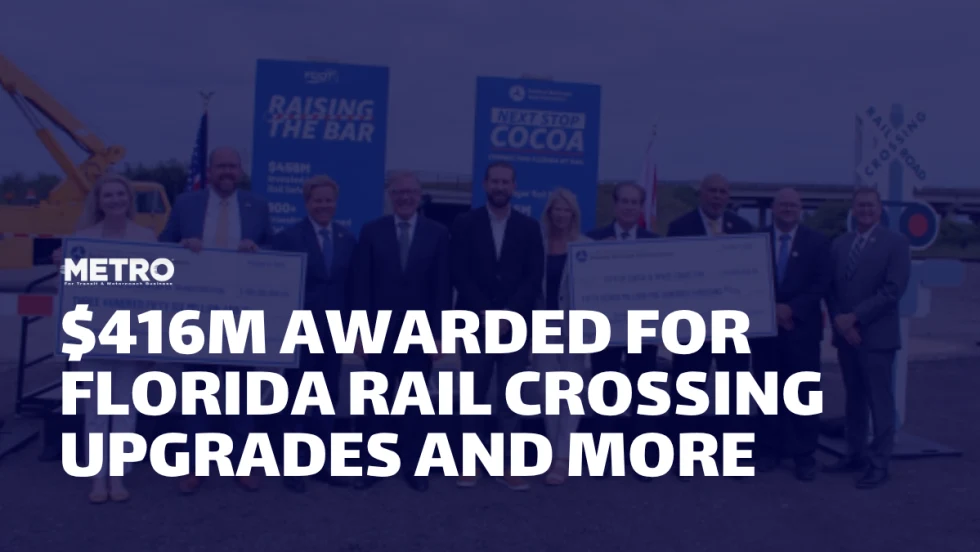
USDOT Awards $416 Million for Florida Rail Crossing Safety Upgrades, New Brightline Station
The projects aim to reduce risks for motorists and pedestrians at rail crossings while expanding passenger rail access along Florida’s Space Coast.
Read More →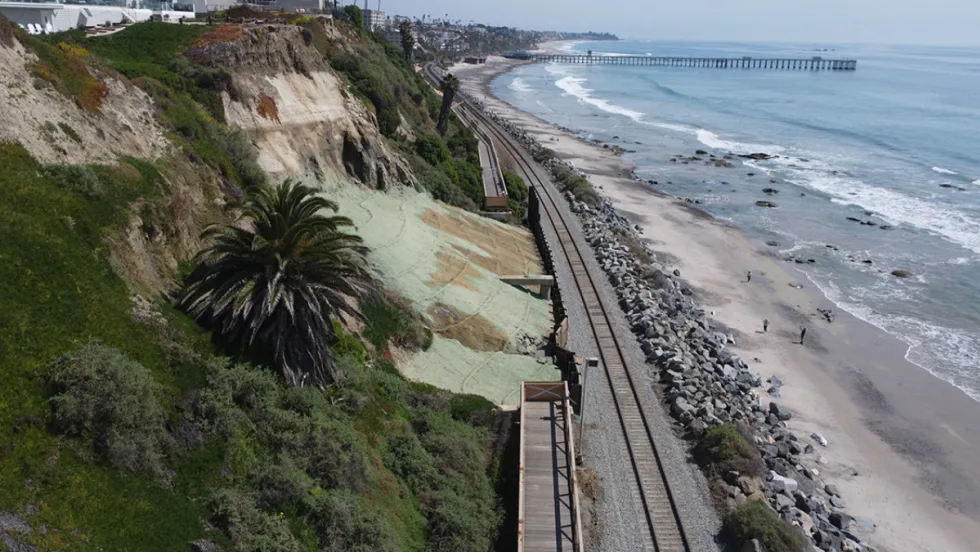
OCTA Declares Emergency to Protect Rail Corridor From Coastal Erosion
The California agency is accelerating shoreline protection and plans to place approximately 690,000 cubic yards of sand along the San Clemente coast to protect a key passenger and freight rail link.
Read More →
More Than a Summer Job: Building the Next Generation of Transit Talent
The Delaware River Port Authority and PATCO have transformed their internship program into a hands-on professional development experience that introduces students to the breadth of transportation careers — and creates a pipeline for future employees.
Read More →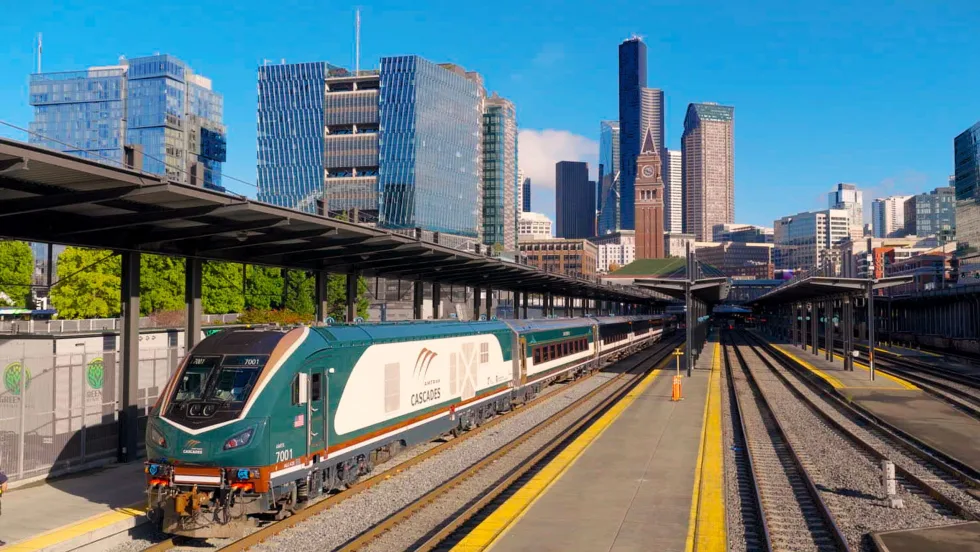
Airo Trains Make Their Amtrak Cascades Debut in the Pacific Northwest
Effective immediately, two cutting-edge Airo trainsets will join the Amtrak Cascades route, operating four daily trips between Vancouver, B.C., Seattle, Portland, and Eugene, Oregon, marking the first introduction of Airo trains into passenger service anywhere in the country.
Read More →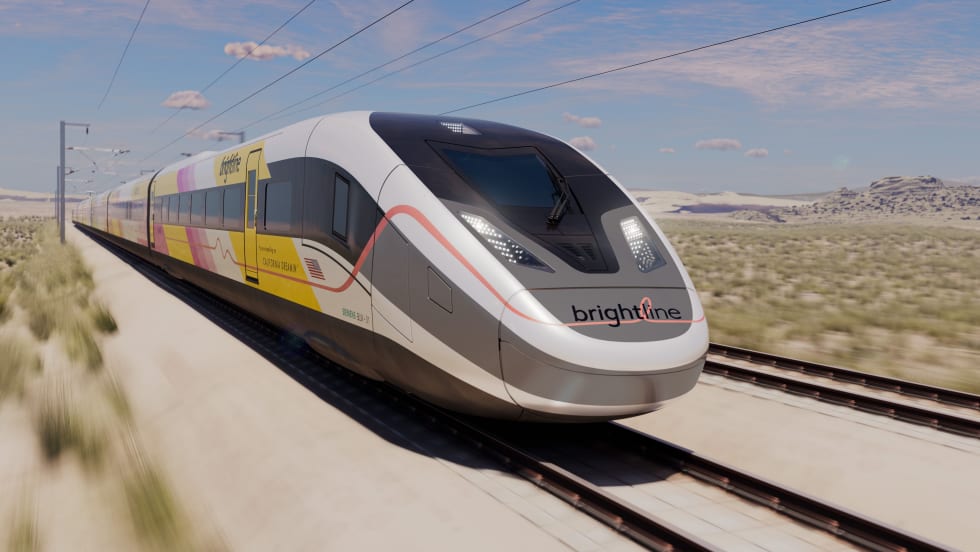
Florida's Brightline Announces Financial Restructuring
Brightline Florida says train operations will continue as normal as certain parent entities enter Chapter 11 and financial stakeholders provide $490 million in new long-term capital.
Read More →
ENC Lands MATA Contract and More in Biz Briefs
In this edition of Biz Briefs, we spotlight the latest developments shaping the future of mobility.
Read More →
Strada360’s Steve Lassey on Turning Transit Data Into Better Decisions
From breaking down data silos to preparing for AI, Strada360 CEO Steve Lassey discusses how transit agencies can use technology to improve operations, customer information, and long-term decision-making.
Read More →