




RELATED: [Video] Caltrans Takes Steps to Combat Copper Crooks
N.Y. subway train suspension caused by massive theft of copper cable
At least 500 feet of the valuable cable was discovered stolen from roughly 12 locations along the A train tracks near Howard Beach, and some signal equipment and track components were damaged as well by electrical current that could not flow through the cable.
May 27, 2015
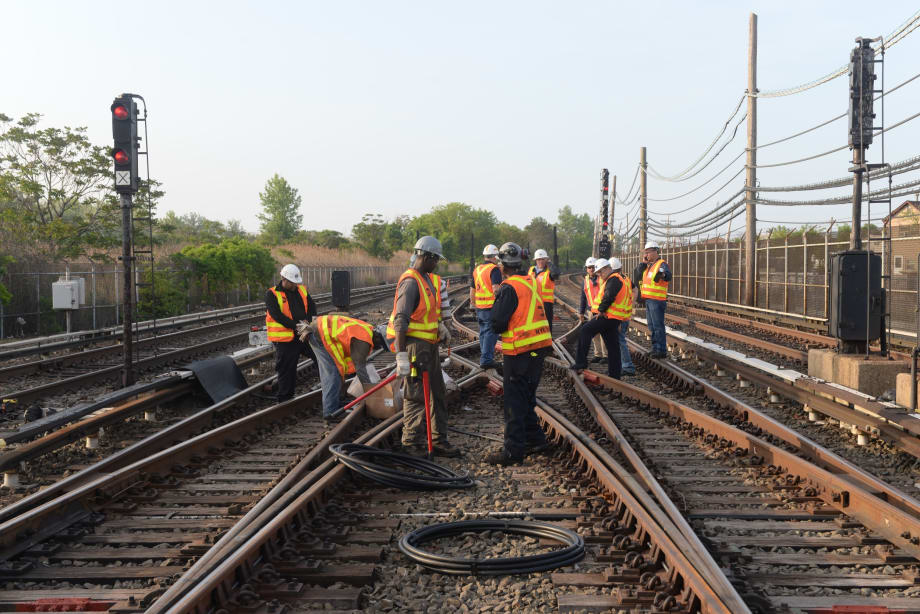
Photo courtesy: N.Y. MTA
3 min to read

Photo courtesy: N.Y. MTA
Hundreds of thousands of Metropolitan Transportation Authority (MTA) New York City Transit subway customers were victimized this morning by a massive theft of copper cable from A line subway tracks near Howard Beach, Queens. Limited A train service is being restored at this moment but residual delays will persist throughout the day.
“This morning’s service disruption was directly caused by the theft of cable from along the subway right of way. This led to delays and crowding along all 31 miles of the A train, and forced thousands of Rockaways customers to use shuttle buses to get to work,” said MTA New York City Transit President Carmen Bianco. “We are working closely with the NYPD Transit Bureau to help them investigate this crime and identify the culprits responsible.”
The loss of the subway power cables forced the MTA to suspend service between Rockaway Boulevard and Broad Channel stations and replace it with shuttle buses during the morning rush. While limited A train service is being restored, shuttle buses will continue until service fully resumes through the Rockaways. Service will be suspended and replaced by shuttle buses again tonight for more emergency repair work overnight.

Photo courtesy: N.Y. MTA
This crime also disrupted service along the entire length of the A and C lines. Subway trains stored in the Rockaway Park yard are trapped there and cannot be used for service. Trains in service on the A line cannot use the terminals at Far Rockaway-Mott Av and Rockaway Park-Beach 116 St to turn around, further limiting capacity along the line. Some A trains are terminating at Euclid Av, where the C usually terminates, forcing a reduction in C service as well.
The A and C lines carry 775,000 approximately customers per day, including 100,000 in the morning rush hour. The majority of those customers experienced delays and/or crowding due to this crime. The A train carries about 40,000 customers to and from the Rockaways each day, including 3,700 to Manhattan during the morning rush, none of whom were able to use the subways.

Photo courtesy: N.Y. MTA
The cable theft was discovered at 11:22 p.m. Tuesday night when a northbound A train lost power north of the Howard Beach station. Crews brought in another train behind it, and the estimated 150 customers on board were able to walk through the trains to get back to the Howard Beach station at 12:09 a.m.
The power cable was presumably stolen to be sold as scrap. At least 500 feet of the valuable cable was discovered stolen from roughly 12 locations along the A train tracks near Howard Beach, and some signal equipment and track components were damaged as well by electrical current that could not flow through the cable. Crews are working to rebuild the damaged infrastructure as quickly as possible.
More Rail
FRA Announces $5.3B in Rail Investments, Including $2B for Amtrak
Funding will support grade-crossing improvements, infrastructure upgrades, and new Amtrak equipment in 23 states.
Read More →
Finding the ‘Happy Medium’: Optimizing Maintenance Without Sacrificing Reliability
The key to maintenance optimization isn’t doing less work—it’s doing the right work at the right time on the right assets.
Read More →
OKC Streetcar Makes Zero-Fare Service Permanent
Ridership increased an average of 71% compared with the same period a year earlier during the fare-free pilot.
Read More →
DART Customer Satisfaction Reaches Six-Year High
Overall satisfaction rose to 74.9%, while the agency’s Net Promoter Score reached a record 33.7.
Read More →
How DART's GoPass Is Redefining Regional Mobility
Serving 14 transit agencies, GoPass simplifies multimodal travel by allowing riders to plan, pay for, and manage an entire trip through one app.
Read More →
Amtrak Board Advances Plan to Restructure Organization, Seeks Public Input
The proposal, developed by Amtrak management and approved by the board for further consideration, is intended to modernize the organization's structure while improving accountability, operational efficiency, and customer service.
Read More →
Biz Briefs: STV teams with Amtrak, Motorcoach Operators Boost Fleet and Land Contracts, and More
From manufacturers and suppliers to transit agencies and motorcoach operators, these updates offer a snapshot of the projects, partnerships and business moves driving the industry forward.
Read More →
Metra Celebrates 100 Years of Electric Rail, Looks to the Future
The event was also a celebration of recent reforms to public transportation in the Chicago area, changes that could be as transformative in the future as the major civic achievement a century ago, said officials.
Read More →
LA Metro Marks Banner Year, Sets Ambitious Goals for New Fiscal Year
Incoming LA Metro Board Chair and Los Angeles Mayor Karen Bass joined outgoing Board Chair Fernando Dutra and LA Metro CEO Stephanie Wiggins to review accomplishments from fiscal year 2026, which included the opening of new rail extensions, advancement of major transit projects, expanded safety programs, and new rider amenities.
Read More →
DART Taps Nathaniel P. Ford Sr. as Next President/CEO
Since 2012, Ford has served as the CEO of the Jacksonville Transportation Authority
Read More →