



Bombardier's joint venture to build 15 high speed trains for China
The contract for 15 eight-car CRH380D trainsets is valued at approximately 2.4 billion Chinese RMBs ($381 million U.S., 339 million euro).

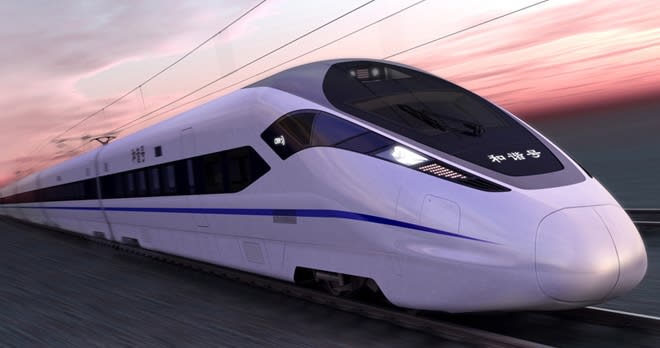
Bombardier Transportation announced today that its Chinese joint venture, Bombardier Sifang (Qingdao) Transportation Ltd. (BST), has been awarded a contract with China Railway Corp. (CRC) to supply 15 CRH380D very high speed trains for the country's rapidly growing high speed network.
The contract for 15 eight-car trainsets is valued at approximately 2.4 billion Chinese RMBs ($381 million U.S., 339 million euro).
Bombardier owns 50% of the shares in BST, which is consolidated by Bombardier Transportation's partner CSR Sifang Rolling Stock Co. Ltd. Based on previous orders, BST started delivering its newest generation high speed train CRH380D in the first quarter of 2015. This early follow on order shows the confidence of China Railways in BST's leading high tech product.
The new trainsets will be an integral part of an evolving high-speed rail capability in China. With a maximum operating speed of 380 km/h, the CRH380D is a new generation high speed electric multiple units developed by BST. It is powered by Bombardier ECO4 technology and a highly efficient Bombardier MITRAC propulsion and control system, both supplied by a separate Bombardier Chinese joint venture, Bombardier CPC Propulsion System Co. Ltd. (BCP).
The CRH380D EMU consists of eight aluminum carbody cars and is equipped with VIP seats, first class seats, second class seats and a dining car. The trainsets will be manufactured at Bombardier Sifang (Qingdao) Transportation production facilities in Qingdao, China. Engineering will take place in Qingdao and at Bombardier centers in Europe with project management and components provided from sites in Europe and China.
More Rail

New York MTA Advances Final Contract for Second Avenue Subway Expansion
Contract Four is the largest in the Second Avenue Subway Phase 2 project and includes construction of station infrastructure, tracks, and signals for the subway expansion, MTA officials said. Work on Contract Four will begin in 2027.
Read More →
San Diego MTS Breaks Monthly Trolley Ridership Record
Agency officials said July’s ridership indicates MTS’s continued recovery from the pandemic.
Read More →
Report Examines NJ TRANSIT Reliability, Funding Challenges
The Garden State Initiative analysis examines the roles of Amtrak infrastructure, fleet management, and agency operations while recommending a more performance-based approach to improving reliability.
Read More →
Stadler, CapMetro Sign Long-Term Rail Fleet Support Agreement
Beginning in 2027, Stadler will provide on-site technical expertise, spare parts support, training, and obsolescence management to help extend the reliability and longevity of CapMetro’s GTW fleet.
Read More →
Biz Briefs: Alstom Lands Canadian Contract, LYT to Supply California TSP, and More
In METRO's latest installment, we take a look at recent news from Complete Coach Works, Beep, FlixBus, and more partnerships making headlines across the transportation sector.
Read More →
CATS Gold Line Marks 5 Years of Service, 2.8M Passenger Trips
With a six-mile expansion planned, the Charlotte streetcar is positioned to connect more neighborhoods and major transit hubs across the region.
Read More →
Why Simulating Pedestrian Movement Has Become Essential for Modern Rail Stations
Pedestrian microsimulation is helping rail planners identify bottlenecks, test station designs, and prepare complex transit hubs for growing passenger volumes.
Read More →
Amtrak Begins Major Construction at New York’s Sunnyside Yard
The new maintenance facility will support Amtrak’s Airo trainsets while improving maintenance efficiency and turnaround times in New York.
Read More →
Chicago Leaders Unveil Plans for O’Hare Airport Express Train
The privately developed project would offer a 15-minute trip between downtown and O’Hare’s Terminal 2, with trains operating every 15 minutes on a dedicated track. The service would use battery-electric trains and three existing freight rail rights-of-way.
Read More →
OCTA Maps Out 30-Year Strategy to Protect Coastal Rail Corridor
The draft feasibility report identifies strategies to protect the coastal rail line for decades as the agency continues near-term stabilization and sand placement efforts.
Read More →