



Keolis, MBTA to combat winter with 47-piece snow-fighting arsenal
The purchase of $8.6 million in snow-fighting equipment by the agency, includes 10 snow fighters, six speed swings, six wheel loaders and 25 tractors.

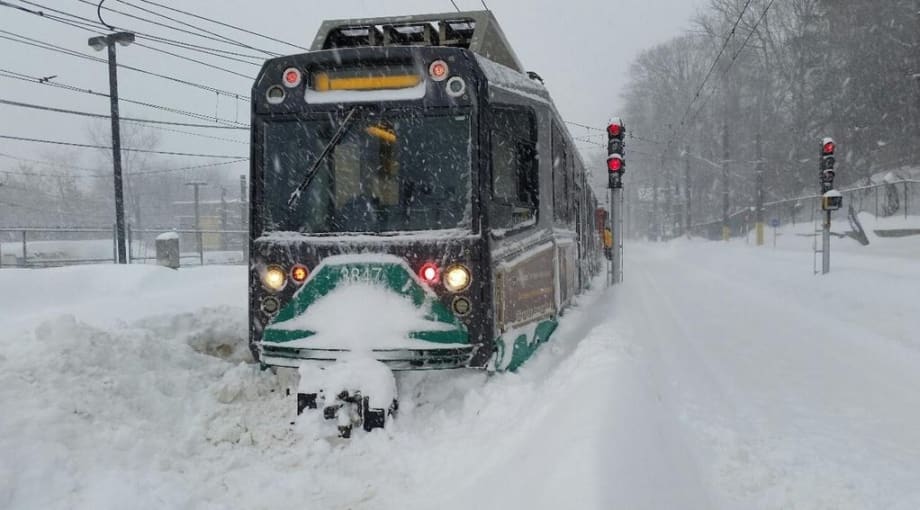
Purchasing new snow fighting equipment, creating dedicated snow response teams and centralizing passenger communications are among the actions being taken by Keolis Commuter Services and the Massachusetts Bay Transportation Authority (MBTA) to prepare the commuter rail system for winter in order to keep trains operating safely and to minimize impacts to passengers.
“Our passengers expect and deserve a safe, dependable commuter rail service year-round,” said Keolis GM Gerald C. Francis. “We are taking every necessary step to prepare for winter, with the goal of keeping the commuter rail system operating safely and keeping our passengers informed about any changes in service.”
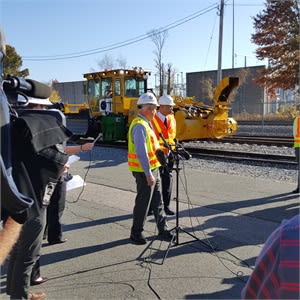
Photo of snow fighting equipment shown during Nov. 4 press event. Keolis
When snow and/or ice conditions are predicted, all Keolis departments will be placed on alert, with department heads coordinating all actions required for the storm.
Keolis senior management will determine the severity of an event using such factors as the existing snow base, the three-day forecast and the three-day temperature forecast. Weather events will be categorized as:
Level 1 – No impact or minor impact expected
Level 2 – Moderate impacts expected
Level 3 – Moderate to significant impacts expected
Level 4 – Significant impact – no revenue service
The Keolis Snow Manager and Snow Team will be activated, a radio command center will be established and, at Level 2 or greater, a Situation Room will be established as managers begin implementing relevant recovery activities, according to the resiliency plans.
Passengers will be notified as far in advance as possible about any changes to service or schedules.
During Level 4 storms, service will be halted until it can be safely restored, with non-revenue trains and snow removal equipment working round the clock to clear and remove snow.
Other key elements of the winter preparations include:
Creation of a centralized Passenger Information Center to ensure the information provided to the public is useful, accurate and timely via T-Alerts, social media (MBTA_CR), the official commuter rail mobile app, via the Customer Service call center, in stations, on board trains and through the news media.
Appointment of a manager dedicated to planning, coordinating and managing activities across all departments during major weather-related events.
Creation of cross-functional teams focused on snow removal at locations essential to accessing and operating the commuter rail system, including station entrances, platforms, maintenance facilities and essential switches on the main lines.
A dedicated weather desk to monitor weather conditions and provide up-to-date information to the organization.
The purchase of $8.6 million in snow-fighting equipment by the MBTA, including 10 snow fighters, six speed swings, six wheel loaders and 25 tractors.
Training to increase the number of staff able to operate the equipment used to remove snow. For each piece of equipment, at least three operators will be trained or licensed.
Replacing, refurbishing or making modifications to traction motors to ensure a full fleet of locomotives is available during the winter. Mesh material has been placed over all locomotive engine compartment vents to lessen the impact of snow or ice getting into engines. Refurbished traction motors have been triple dipped in a protective coating, adding three layers of protective coating where one existed before.
Placing into service by year end 40 new MPI locomotives, which are built with AC traction motors that are less susceptible to ingestion of light fluffy snow.
Conducting required safety inspections in advance to reduce the number of locomotives taken out of service during critical winter months.
Pre-treating passenger coach doors with de-icing solutions 12 to 24 hours before a winter event to minimize freezing.
Towns near layover facilities will be notified that locomotives may need to idle throughout the night during a winter event.
Following a major weather event, engineering teams will conduct system wide inspections of all routes, to quickly identify defects and needed repairs.
More Rail

New York MTA Advances Final Contract for Second Avenue Subway Expansion
Contract Four is the largest in the Second Avenue Subway Phase 2 project and includes construction of station infrastructure, tracks, and signals for the subway expansion, MTA officials said. Work on Contract Four will begin in 2027.
Read More →
San Diego MTS Breaks Monthly Trolley Ridership Record
Agency officials said July’s ridership indicates MTS’s continued recovery from the pandemic.
Read More →
Report Examines NJ TRANSIT Reliability, Funding Challenges
The Garden State Initiative analysis examines the roles of Amtrak infrastructure, fleet management, and agency operations while recommending a more performance-based approach to improving reliability.
Read More →
Stadler, CapMetro Sign Long-Term Rail Fleet Support Agreement
Beginning in 2027, Stadler will provide on-site technical expertise, spare parts support, training, and obsolescence management to help extend the reliability and longevity of CapMetro’s GTW fleet.
Read More →
Biz Briefs: Alstom Lands Canadian Contract, LYT to Supply California TSP, and More
In METRO's latest installment, we take a look at recent news from Complete Coach Works, Beep, FlixBus, and more partnerships making headlines across the transportation sector.
Read More →
CATS Gold Line Marks 5 Years of Service, 2.8M Passenger Trips
With a six-mile expansion planned, the Charlotte streetcar is positioned to connect more neighborhoods and major transit hubs across the region.
Read More →
Why Simulating Pedestrian Movement Has Become Essential for Modern Rail Stations
Pedestrian microsimulation is helping rail planners identify bottlenecks, test station designs, and prepare complex transit hubs for growing passenger volumes.
Read More →
Amtrak Begins Major Construction at New York’s Sunnyside Yard
The new maintenance facility will support Amtrak’s Airo trainsets while improving maintenance efficiency and turnaround times in New York.
Read More →
Chicago Leaders Unveil Plans for O’Hare Airport Express Train
The privately developed project would offer a 15-minute trip between downtown and O’Hare’s Terminal 2, with trains operating every 15 minutes on a dedicated track. The service would use battery-electric trains and three existing freight rail rights-of-way.
Read More →
OCTA Maps Out 30-Year Strategy to Protect Coastal Rail Corridor
The draft feasibility report identifies strategies to protect the coastal rail line for decades as the agency continues near-term stabilization and sand placement efforts.
Read More →