




RELATED: BYD breaks ground on vehicle plant expansion in Calif.
BYD enters mass transit market with low-cost train
The light rail technology is applicable to small and medium-sized cities, heavy traffic routes, CBD’s and routes connecting tourist attractions in large cities, according to the company.
October 19, 2016
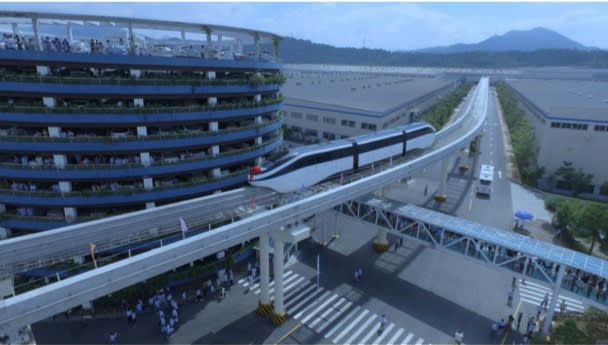
Bird's eye view of SkyRail from BYD global headquarters in Shenzhen, China.
1 min to read
Bird's eye view of SkyRail from BYD global headquarters in Shenzhen, China.
BYD marked the company's entrance into the mass transit market with the introduction of its new low-cost, light rail train for small and medium-sized cities.
"Mass transit systems are an indispensable solution to alleviate traffic congestion in cities,” said BYD president/cairman Wang Chuanfu at the October 13th launch ceremony. “As a rail transport option with relatively smaller passenger capacity, ‘SkyRail’ can complement existing public transport systems to create a layered transport system encompassing underground, roadway and elevated elements."
BYD set up an R&D team consisting of more than 1,000 people. As the result of an estimated $757 million investment over the past five years, BYD developed the light rail train, known as SkyRail.
As a mass transit alternative with relatively smaller passenger capacity, the company touted SkyRail's ability to deliver: capital expenditure 80% lower than a regular metro line, and cuts construction period by two-thirds, offers higher climbing ability and smaller turning radius, reduced noise to allow travel through architectural complexes. Additionally, the train allows for capacity between 10,000 to 30,000 passengers an hour (each way) and a high speed of up to 50 mph.
The light rail technology is applicable to small and medium-sized cities, heavy traffic routes, CBD’s and routes connecting tourist attractions in large cities, according to the company.
More Rail
FTA Ends Direct Oversight of MBTA Safety Actions
The federal agency closed its remaining special directive to the Massachusetts Department of Public Utilities following a safety review that began in 2022.
Read More →
Amtrak, CN Reach Agreements to Strengthen Passenger Rail Service, Safety
The agreement resolves a more than decade-long proceeding before the Surface Transportation Board concerning the terms and conditions for Amtrak services, such as the City of New Orleans, Illini/Saluki, and Wolverine.
Read More →
New York MTA Advances Final Contract for Second Avenue Subway Expansion
Contract Four is the largest in the Second Avenue Subway Phase 2 project and includes construction of station infrastructure, tracks, and signals for the subway expansion, MTA officials said. Work on Contract Four will begin in 2027.
Read More →
San Diego MTS Breaks Monthly Trolley Ridership Record
Agency officials said July’s ridership indicates MTS’s continued recovery from the pandemic.
Read More →
Report Examines NJ TRANSIT Reliability, Funding Challenges
The Garden State Initiative analysis examines the roles of Amtrak infrastructure, fleet management, and agency operations while recommending a more performance-based approach to improving reliability.
Read More →
Stadler, CapMetro Sign Long-Term Rail Fleet Support Agreement
Beginning in 2027, Stadler will provide on-site technical expertise, spare parts support, training, and obsolescence management to help extend the reliability and longevity of CapMetro’s GTW fleet.
Read More →
Biz Briefs: Alstom Lands Canadian Contract, LYT to Supply California TSP, and More
In METRO's latest installment, we take a look at recent news from Complete Coach Works, Beep, FlixBus, and more partnerships making headlines across the transportation sector.
Read More →
CATS Gold Line Marks 5 Years of Service, 2.8M Passenger Trips
With a six-mile expansion planned, the Charlotte streetcar is positioned to connect more neighborhoods and major transit hubs across the region.
Read More →
Why Simulating Pedestrian Movement Has Become Essential for Modern Rail Stations
Pedestrian microsimulation is helping rail planners identify bottlenecks, test station designs, and prepare complex transit hubs for growing passenger volumes.
Read More →
Amtrak Begins Major Construction at New York’s Sunnyside Yard
The new maintenance facility will support Amtrak’s Airo trainsets while improving maintenance efficiency and turnaround times in New York.
Read More →