




Related: Metro taps HDR to design emergency security ops center
LA Metro unveils new tunnel boring machine named Angeli
At the event Board Chair Fasana awarded TAP Cards to students who won contests to name the TBM and create an illustration for its tail shield.
October 21, 2016
Gary Leonard for LA Metro
3 min to read
Gary Leonard for LA Metro
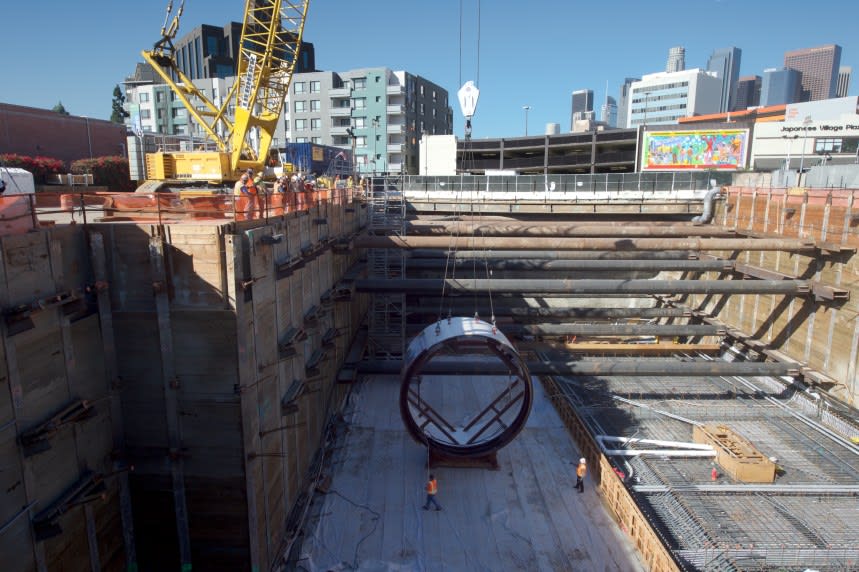
L.A. Metro joined elected officials and community stakeholders in Little Tokyo at the ceremonial naming and lowering of a segment of the tunnel boring machine (TBM) that will dig twin 1.1-mile underground rail tunnels under downtown Los Angeles. Excavation work will begin in January.
“This is a major milestone toward the completion of a vital project that truly connects the region by providing a one-seat ride to downtown Los Angeles for users of the Blue, Gold, and Expo lines,” said Metro Board Chair and Duarte City Council Member John Fasana. “The Regional Connector will reduce travel times for many Metro Rail riders and make our system much more convenient and attractive to those who want a transit alternative to driving.”
At the event Board Chair Fasana awarded TAP Cards to students who won contests to name the TBM and create an illustration for its tail shield. The winning name “Angeli” was submitted by eighth grade student Windsor McInerny, while the winning illustration was by Alexander Li.
The $1.55-billion Regional Connector Transit Project is a 1.9-mile underground light-rail tunnel that will connect the Blue, Expo, and Gold Lines in downtown Los Angeles and will include three new stations. The rail line is expected to serve 88,000 riders daily — including 17,000 new riders — and save commuters up to 20 minutes by reducing the need to transfer when traveling to and through downtown L.A. Construction is expected to be complete in 2021.
“The Regional Connector is a game changer for the entire region by connecting three light rail lines that already have more than 170,000 weekday boardings,” said Metro CEO Phillip A. Washington. “Measure R played a pivotal role in funding this project and helped us secure a federal grant and loan to build the infrastructure that will be enjoyed by generations to come.”
Naming of the TBM is a mining tradition that dates back to the 14th century. Saint Barbara, the patron saint for military engineers and miners, has been revered by underground workers as a symbol of protection and good luck for centuries. This homage evolved into the tradition of giving tunneling machines a female name before digging begins.
The TBM was manufactured in Germany by Herrenknecht AG. It weighs approximately 1,000 tons, is 450 feet long and is 21.5 feet in diameter. It will advance about 60 feet per day once digging begins and will take 16 to 18 months to excavate the twin 1.1-mile tunnels.
“Angeli” will begin its journey from the northeast corner of 1st and Alameda streets. The TBM will first dig the tunnel for the northbound tracks until it reaches 4th and Flower streets. From there, the TBM will be retrieved from underground and returned to Little Tokyo, where it will be re-launched to excavate the southbound tunnel.
Metro has contracted with Regional Connector Constructors, a joint venture between Skanska USA Civil West California District Inc., and Traylor Brothers Inc., to design and build the Regional Connector Transit Project.
More Rail
Trinity Metro Breaks Ground on $270M TEXRail Extension
The 2.1-mile extension will connect Fort Worth’s Medical District and Near Southside to downtown, surrounding communities, and Dallas-Fort Worth International Airport.
Read More →
Bringing Austin’s First Light Rail System to Life
Austin Transit Partnership CEO Greg Canally discusses the city's nearly 10-mile light rail project, its collaborative approach to project delivery, the importance of community engagement, and the milestones ahead as construction approaches in 2027.
Read More →
Metra Draft Plan Outlines Costs, Service Improvements for Regional Rail
The Systemwide Network Plan identifies infrastructure needs and potential investments to expand all-day, bidirectional rail service across the Chicago region.
Read More →
Amtrak Completes First Street Tunnel Upgrades, Restores Service
The nine-day construction project included replacing aging track infrastructure and modernizing switch systems near Washington Union Station.
Read More →
FRA Announces $2.3B for Passenger, Freight Rail Projects Nationwide
The CRISI Grant Program funding will support rail infrastructure improvements, safety upgrades, and projects aimed at improving freight and passenger rail service across 45 states and Washington, D.C.
Read More →
Caltrain’s Electrification Drives a New Era of Ridership Growth
The railroad’s shift to electric service has brought more frequent trains, stronger customer satisfaction, and increased ridership, earning it APTA’s Outstanding Public Transportation System award.
Read More →
FTA Advances $164M Broward County Commuter Rail Project
The proposed 10.5-mile commuter rail extension would connect Fort Lauderdale and Aventura, expanding passenger rail options in South Florida.
Read More →
New York MTA Launches Historic $1.9B Signal, Track Modernization Project
Funded in part by congestion pricing revenue, the project will replace nearly century-old signals along the A and C lines in Brooklyn and Queens.
Read More →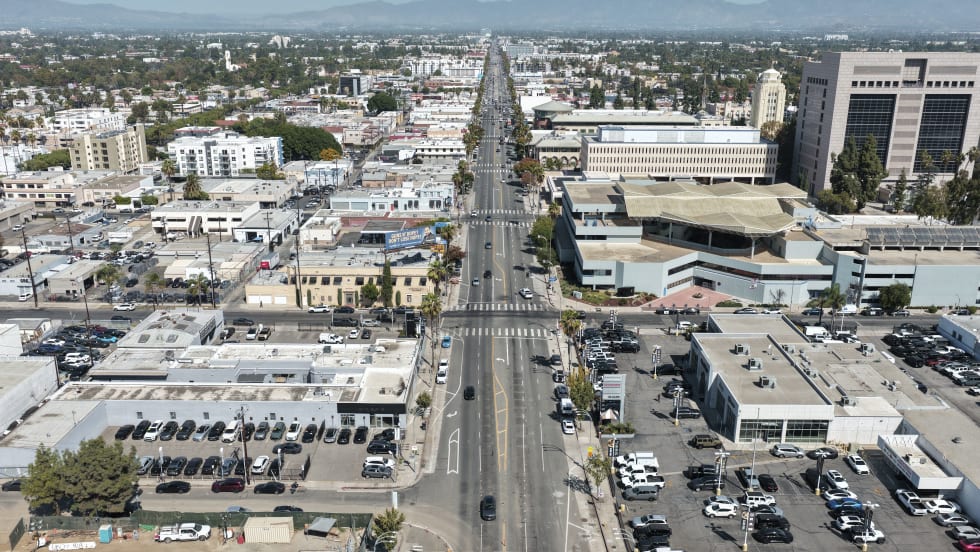
LA Metro Breaks Ground on East San Fernando Valley Light Rail Project
The 6.7-mile line will add 11 stations along Van Nuys Boulevard, expand access to jobs and regional transit connections, and support Metro’s broader efforts to improve mobility as rail ridership grows.
Read More →
CSA Group Releases Climate Resilience Standard for Transit, Passenger Rail
Developed with support from the Standards Council of Canada, CSA D700 guides assessing climate-related risks and planning adaptation measures for transit and passenger rail systems.
Read More →