




RELATED: Sound Transit light rail to run on 100% clean energy
Sound Transit adding 30 more Siemens light rail vehicles
The added vehicles, scheduled to arrive no later than 18 months after final delivery of a previous order placed last fall, will support the opening of Sound Transit’s Link extension projects to Federal Way and downtown Redmond in 2024.
May 1, 2017
WSP | Parsons Brinckerhoff
2 min to read
WSP | Parsons Brinckerhoff
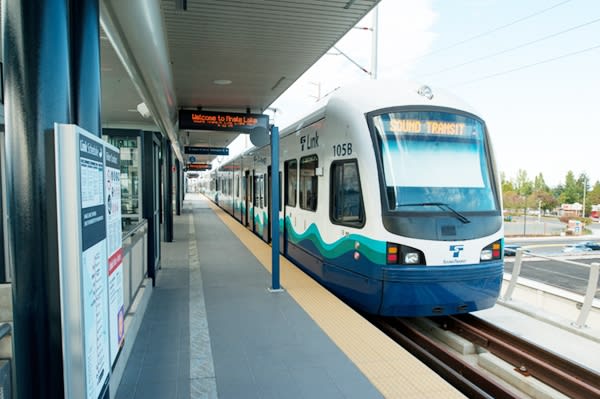
Seattle’s Sound Transit board of directors approved an order for 30 additional light rail vehicles from Siemens. The added vehicles, scheduled to arrive no later than 18 months after final delivery of a previous order placed last fall, will support the opening of Sound Transit’s Link extension projects to Federal Way and downtown Redmond in 2024.
“Ordering more Link cars earlier than planned is just one example of how we’re moving aggressively forward to build a light rail network that will serve up to 188 million riders a year by 2040,” said Sound Transit CEO Peter Rogoff. “By the time pre-revenue testing begins in 2024 on the first two Link extensions approved by voters last November, we’ll be ready.”
The $131 million contract amendment with Siemens enables Sound Transit to exercise an option to procure additional low-floor light rail vehicles (LRVs) under an order placed last year. The first LRVs from that order will be delivered in mid-2019, with subsequent vehicles arriving on a staggered schedule of two to three per month through the first quarter of 2024. As originally planned, 40 vehicles will be delivered and tested in time for the Northgate Link Extension opening in 2021, with the remainder arriving in time for deployment when testing begins on the Redmond and South King projects.
Manufactured in Sacramento, Calif., the new light rail vehicles will feature several improvements in on-board systems and passenger experience over the current fleet of 62 cars. Each of the new LRVs will provide 74 seats, with larger windows, extra standing room in the center aisle, more space under seats to stow luggage, and four bicycle hooks—twice as many as provided currently. Each car will come equipped with dynamic passenger information displays and LED destination signs will also be included.
The Sound Transit 3 plan included funding to purchase additional light rail vehicles. The new vehicles will ensure sufficient fleet capacity for service on the Federal Way and Redmond extensions and increase the total number of LRVs procured under this contract from 122 to 152 cars. The order will also allow the agency to take advantage of lower unit pricing options than would be available at a later date.
Sound Transit must triple the size of its current fleet as 94 miles of voter-approved extensions to its current light rail network are added over the next 24 years. By 2041, the agency will operate more than 116 miles of light rail lines to Lynnwood and Everett to the north, Bellevue, Redmond, Kirkland and Issaquah to the east, West Seattle Ballard to the west, and Federal Way, Fife and Tacoma to the south.
More Rail

New York MTA Advances Final Contract for Second Avenue Subway Expansion
Contract Four is the largest in the Second Avenue Subway Phase 2 project and includes construction of station infrastructure, tracks, and signals for the subway expansion, MTA officials said. Work on Contract Four will begin in 2027.
Read More →
San Diego MTS Breaks Monthly Trolley Ridership Record
Agency officials said July’s ridership indicates MTS’s continued recovery from the pandemic.
Read More →
Report Examines NJ TRANSIT Reliability, Funding Challenges
The Garden State Initiative analysis examines the roles of Amtrak infrastructure, fleet management, and agency operations while recommending a more performance-based approach to improving reliability.
Read More →
Stadler, CapMetro Sign Long-Term Rail Fleet Support Agreement
Beginning in 2027, Stadler will provide on-site technical expertise, spare parts support, training, and obsolescence management to help extend the reliability and longevity of CapMetro’s GTW fleet.
Read More →
Biz Briefs: Alstom Lands Canadian Contract, LYT to Supply California TSP, and More
In METRO's latest installment, we take a look at recent news from Complete Coach Works, Beep, FlixBus, and more partnerships making headlines across the transportation sector.
Read More →
CATS Gold Line Marks 5 Years of Service, 2.8M Passenger Trips
With a six-mile expansion planned, the Charlotte streetcar is positioned to connect more neighborhoods and major transit hubs across the region.
Read More →
Why Simulating Pedestrian Movement Has Become Essential for Modern Rail Stations
Pedestrian microsimulation is helping rail planners identify bottlenecks, test station designs, and prepare complex transit hubs for growing passenger volumes.
Read More →
Amtrak Begins Major Construction at New York’s Sunnyside Yard
The new maintenance facility will support Amtrak’s Airo trainsets while improving maintenance efficiency and turnaround times in New York.
Read More →
Chicago Leaders Unveil Plans for O’Hare Airport Express Train
The privately developed project would offer a 15-minute trip between downtown and O’Hare’s Terminal 2, with trains operating every 15 minutes on a dedicated track. The service would use battery-electric trains and three existing freight rail rights-of-way.
Read More →
OCTA Maps Out 30-Year Strategy to Protect Coastal Rail Corridor
The draft feasibility report identifies strategies to protect the coastal rail line for decades as the agency continues near-term stabilization and sand placement efforts.
Read More →