




RELATED: Hyperloop One reveals vision for Dubai transport system
Hyperloop One mark's first successful full test of high-speed system
The vehicle coasted above the first portion of the track for 5.3 seconds using magnetic levitation and reached nearly 2Gs of acceleration, while achieving the Phase 1 target speed of 70mph.
July 14, 2017
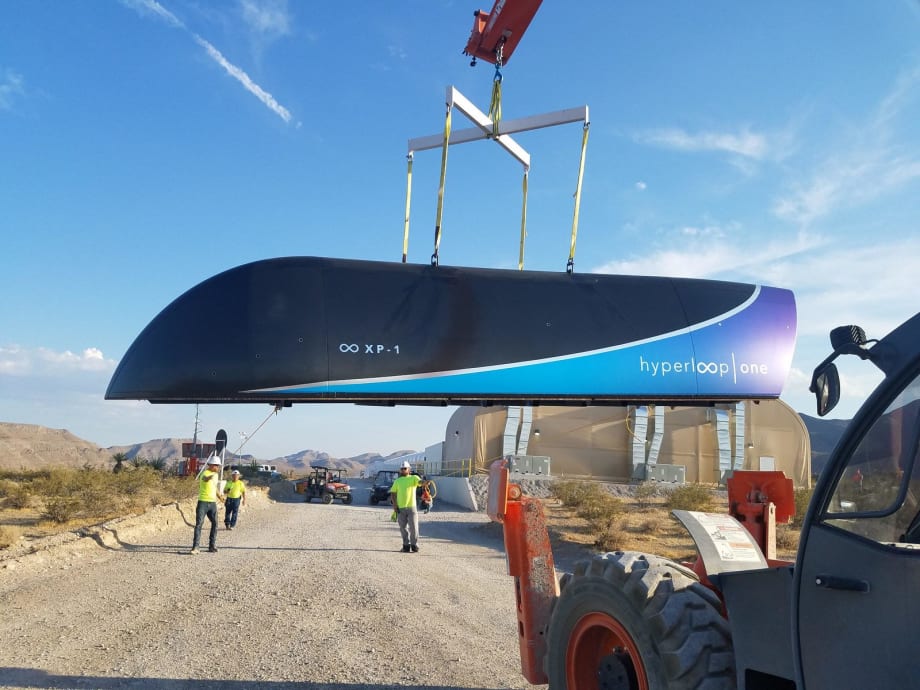
In addition to announcing the private test, Hyperloop One also unveiled the prototype of its Pod that will work within the integrated system. Photo: Hyperloop One
2 min to read
In addition to announcing the private test, Hyperloop One also unveiled the prototype of its Pod that will work within the integrated system. Photo: Hyperloop One
Hyperloop One announced the successful completion of the world's first full systems Hyperloop test in a vacuum environment. This test was Phase 1 of a multi-Phase program and was privately conducted on May 12, 2017 at the company's test track, "DevLoop," in the Nevada Desert.
The vehicle coasted above the first portion of the track for 5.3 seconds using magnetic levitation and reached nearly 2Gs of acceleration, while achieving the Phase 1 target speed of 70mph.
The company is now entering the next campaign of testing, which will target speeds of 250 mph.
"Hyperloop One has accomplished what no one has done before by successfully testing the first full scale Hyperloop system. By achieving full vacuum, we essentially invented our own sky in a tube, as if you're flying at 200,000 feet in the air," said Shervin Pishevar, co-founder/executive chairman of Hyperloop One.
In this historic moment, Hyperloop One tested all the system's components, including its highly efficient motor, vehicle suspension, magnetic levitation, electromagnetic braking, vacuum pumping system and more, proving the full system's components operate successfully as a single integrated unit in a vacuum. Nearly 200 engineers, fabricators, welders, etc. dedicated thousands of hours to make this test successful.
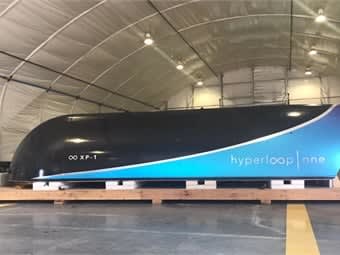
Using electromagnetic propulsion and magnetic levitation, the Pod will transport passengers and cargo inside the tube. Photo: Hyperloop One
In addition to announcing the private test, Hyperloop One also unveiled the prototype of its Pod that will work within the integrated system. Using electromagnetic propulsion and magnetic levitation, the Pod will transport passengers and cargo inside the tube. Hyperloop One's Pod is the only vehicle in the world that, with the company's proprietary linear electric motor, achieves autonomous high-speed propulsion and levitation in a controlled low-pressure environment. Made of structural aluminum and a lightweight carbon fiber, the shell measures 28 feet long.
Hyperloop One will continue to run tests at DevLoop in the coming months to validate its next-generation components and software. The next phase of testing will showcase the Pod gliding along a longer track at faster speeds.
"Hyperloop One will move people and things faster than at any other time in the world," continued Pishevar. "With Hyperloop One, the world will be cleaner, safer and faster. It's going to make the world a lot more efficient and will impact the ways our cities work, where we live and where we work. We'll be able to move between cities as if cities themselves are metro stops."
To view the historical test and never-before-seen b-roll from DevLoop, click here.
More Rail

New York MTA Advances Final Contract for Second Avenue Subway Expansion
Contract Four is the largest in the Second Avenue Subway Phase 2 project and includes construction of station infrastructure, tracks, and signals for the subway expansion, MTA officials said. Work on Contract Four will begin in 2027.
Read More →
San Diego MTS Breaks Monthly Trolley Ridership Record
Agency officials said July’s ridership indicates MTS’s continued recovery from the pandemic.
Read More →
Report Examines NJ TRANSIT Reliability, Funding Challenges
The Garden State Initiative analysis examines the roles of Amtrak infrastructure, fleet management, and agency operations while recommending a more performance-based approach to improving reliability.
Read More →
Stadler, CapMetro Sign Long-Term Rail Fleet Support Agreement
Beginning in 2027, Stadler will provide on-site technical expertise, spare parts support, training, and obsolescence management to help extend the reliability and longevity of CapMetro’s GTW fleet.
Read More →
Biz Briefs: Alstom Lands Canadian Contract, LYT to Supply California TSP, and More
In METRO's latest installment, we take a look at recent news from Complete Coach Works, Beep, FlixBus, and more partnerships making headlines across the transportation sector.
Read More →
CATS Gold Line Marks 5 Years of Service, 2.8M Passenger Trips
With a six-mile expansion planned, the Charlotte streetcar is positioned to connect more neighborhoods and major transit hubs across the region.
Read More →
Why Simulating Pedestrian Movement Has Become Essential for Modern Rail Stations
Pedestrian microsimulation is helping rail planners identify bottlenecks, test station designs, and prepare complex transit hubs for growing passenger volumes.
Read More →
Amtrak Begins Major Construction at New York’s Sunnyside Yard
The new maintenance facility will support Amtrak’s Airo trainsets while improving maintenance efficiency and turnaround times in New York.
Read More →
Chicago Leaders Unveil Plans for O’Hare Airport Express Train
The privately developed project would offer a 15-minute trip between downtown and O’Hare’s Terminal 2, with trains operating every 15 minutes on a dedicated track. The service would use battery-electric trains and three existing freight rail rights-of-way.
Read More →
OCTA Maps Out 30-Year Strategy to Protect Coastal Rail Corridor
The draft feasibility report identifies strategies to protect the coastal rail line for decades as the agency continues near-term stabilization and sand placement efforts.
Read More →