



Find out why BART's longest-serving employee finds joy in his work
In the spring of 1970 when Larry Williams first came to work for BART, he was — in his own words — "just a kid."...
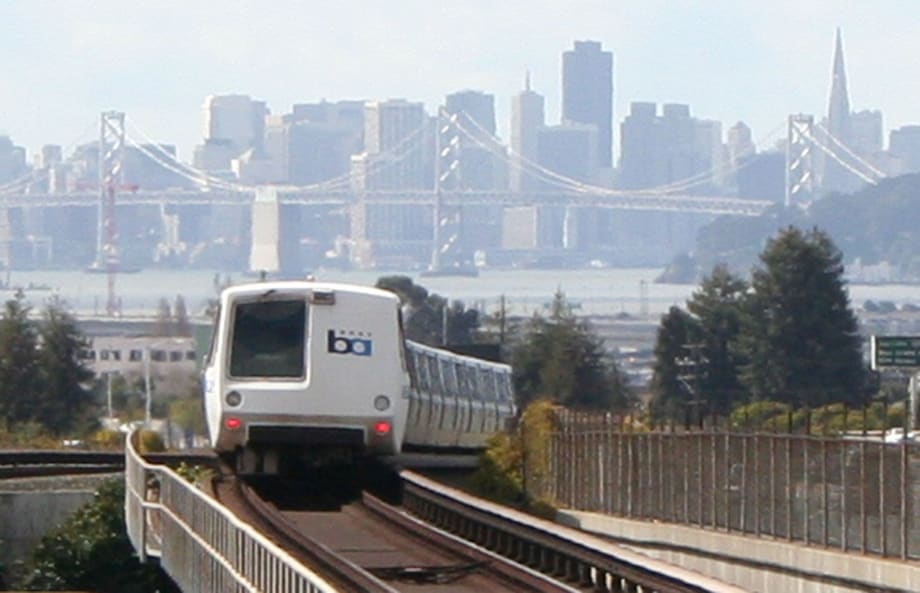
One thing that isn’t different since Larry Williams became a train operator — at least yet — is the trains themselves; kindly known as the “legacy” trains, they are nearing the end of their useful lives. Photo: BART
One thing that isn’t different since Larry Williams became a train operator — at least yet — is the trains themselves; kindly known as the “legacy” trains, they are nearing the end of their useful lives. Photo: BART
In the spring of 1970 when Larry Williams first came to work for Bay Area Rapid Transit (BART), he was — in his own words — "just a kid."
Fresh out of Berkeley High School, he was hunting for a job. The new transit district had a position in the mail room, but Williams saw more. He saw opportunity.
"It was an exciting time," Williams recalls. He signed up to be in BART's first-ever class of train operators. And he hasn't stopped yet. That's 47 years and counting, making Williams BART's longest-serving employee. And if you have ridden along the Richmond-Fremont route in the mornings in the last few decades, he has probably been your operator.
"My job brings me joy," Williams said. "If you are a positive person and you love what you do, you'll never work a day in your life." If you are thinking Larry Williams must have some kind of superpowers to last so long in a job — not just any job, but THIS job — you would be right.
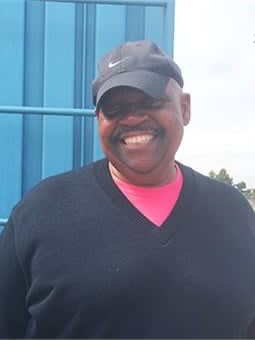
BART train operator Larry Williams knows the “regulars” from his route, if not by name, at least by faces. Photo: BART
Williams can close his eyes and be back as a Berkeley High student, staring at "this humongous hole in the ground" where the Bay Area's new subway would go. Or back to his childhood, living in front of Santa Fe Railroad tracks where he'd drop a penny to flatten it. Or to the first toy he ever remembers playing with — a train, of course. "Trains have been part of my whole life," Williams says. "So having a career with BART was a dream come true."
In his first years at BART, Williams recalled, a bunch of train operators held epic ping-pong battles after work. As one of the youngest (and an initially terrible player) he got razzed as the Big Rookie. He practiced and practiced, and by the next year, he could hold his own. But the nickname Big Rook stuck.
When he reflects on the differences between BART nearly a half-century ago and now, Williams believes one of the biggest impacts is that of portable technology. "There's a whole vast world out there to be explored and people are chained to their devices,” he says. “That is way too much power to give to an inanimate object. I used to notice people talking more to each other on their commutes, there would be the regulars who knew each other. They would read newspapers on the train. Now people seem to have so much stress. But stress can only get to you if you make a decision to let it."
One thing that isn’t different — at least yet — is the trains themselves; kindly known as the “legacy” trains, they are nearing the end of their useful lives. Has the Big Rook driven one of the new Fleet of the Future trains, which will begin rolling out for passenger service later this year?
Nope. And in no hurry. Classic, practical Big Rook. “I’ll do the training and drive them when I need to,” he said. “It’s not going to be smooth in the beginning, I can tell you that, because with anything new it takes a while. We didn’t get these (original) cars done overnight. But we got the bugs out steady. And we were the new kids on the block at the time, the first computerized train system. My first runs only went from Fremont as far as MacArthur because we didn’t have the whole system built. These things take time. We’ll get there.”
Are there any Big Rook catchphrases that the public could listen for on his train?
“I try to be clear and understandable, but I can put on my smooth operator voice, too,” he said, demonstrating in a manner that could be a smooth-jazz radio station DJ. “I have to be the responsible one,” like the captain of a ship, he says. And, he is not above getting on the intercom and calling them out if someone is hanging from handrails or otherwise “acting the fool.” You may know him from his sheer happy nature. “I will give you a safe ride and also try to put a little pep in your step,” he says. Now you can say "hi" back to Big Rook, too.
Linda Vasquez, an assistant chief transportation officer who started at BART not too long after him in 1974, credits temperament and dedication for Williams' longevity.
"He's a good operator. He gets along with everybody, and he takes pride in his work," she said. "You have to like what you do to be able to keep doing it for so long, and to find satisfaction in it. You have to be able to go with the flow."
Another longtime colleague, Assistant Chief Transportation Officer Paula Fraser, recalls working with Williams at the Richmond train yard in the early 1980s. "There were not many women there at the time, and he was one of the most accepting, welcoming people there," she said. "To this day, he still has that enthusiasm and love for the people of the Bay Area. His energy is contagious."
On a recent Monday morning, Williams started the shift at his regular time of 3:45 am (“I don’t’ mind getting up early,” he says. “It gives you more time to enjoy the rest of the day.” ) He drove the train to Fremont, about an hour-long trip, then took a short break before the return leg. “On my way to Hollywood!” he said with a laugh and a smile. He’s a humble guy who wasn’t even aware he held the title of longest-serving employee until now. On the train from Fremont back to Richmond, his rich, deep voice gave the announcement for each station: “Next stop, Bay Fair,” he called out. “This is a Richmond train.” Solid. Calm. In charge.
Williams knows the “regulars” from his route, if not by name, at least by faces. Seeing happy faces makes him happy. “If you’re operating a train and you’re not a people person, you are probably in the wrong job,” he says.
One pressing questions remains: Does Big Rook have a retirement date in mind? "When it's not fun anymore,” he says. “I'm still having fun. My vistas are wide open.”
More Rail
Amtrak, CN Reach Agreements to Strengthen Passenger Rail Service, Safety
The agreement resolves a more than decade-long proceeding before the Surface Transportation Board concerning the terms and conditions for Amtrak services, such as the City of New Orleans, Illini/Saluki, and Wolverine.
Read More →
New York MTA Advances Final Contract for Second Avenue Subway Expansion
Contract Four is the largest in the Second Avenue Subway Phase 2 project and includes construction of station infrastructure, tracks, and signals for the subway expansion, MTA officials said. Work on Contract Four will begin in 2027.
Read More →
San Diego MTS Breaks Monthly Trolley Ridership Record
Agency officials said July’s ridership indicates MTS’s continued recovery from the pandemic.
Read More →
Report Examines NJ TRANSIT Reliability, Funding Challenges
The Garden State Initiative analysis examines the roles of Amtrak infrastructure, fleet management, and agency operations while recommending a more performance-based approach to improving reliability.
Read More →
Stadler, CapMetro Sign Long-Term Rail Fleet Support Agreement
Beginning in 2027, Stadler will provide on-site technical expertise, spare parts support, training, and obsolescence management to help extend the reliability and longevity of CapMetro’s GTW fleet.
Read More →
Biz Briefs: Alstom Lands Canadian Contract, LYT to Supply California TSP, and More
In METRO's latest installment, we take a look at recent news from Complete Coach Works, Beep, FlixBus, and more partnerships making headlines across the transportation sector.
Read More →
CATS Gold Line Marks 5 Years of Service, 2.8M Passenger Trips
With a six-mile expansion planned, the Charlotte streetcar is positioned to connect more neighborhoods and major transit hubs across the region.
Read More →
Why Simulating Pedestrian Movement Has Become Essential for Modern Rail Stations
Pedestrian microsimulation is helping rail planners identify bottlenecks, test station designs, and prepare complex transit hubs for growing passenger volumes.
Read More →
Amtrak Begins Major Construction at New York’s Sunnyside Yard
The new maintenance facility will support Amtrak’s Airo trainsets while improving maintenance efficiency and turnaround times in New York.
Read More →
Chicago Leaders Unveil Plans for O’Hare Airport Express Train
The privately developed project would offer a 15-minute trip between downtown and O’Hare’s Terminal 2, with trains operating every 15 minutes on a dedicated track. The service would use battery-electric trains and three existing freight rail rights-of-way.
Read More →