




RELATED: High-Speed Rail at a Crossroads
California bullet train plan shows cost increases
Increases affect each segment of the project ranging from 20% to 35% and show revised schedules that would push out delivery dates.
March 12, 2018
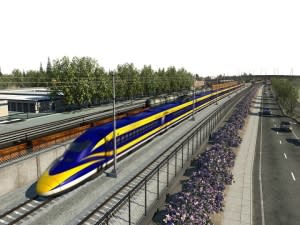
The draft business plan transparently identifies the project’s challenges, which include longer schedules and higher costs due in large part to inflation, increased contingencies and construction delays in the Central Valley.
California High-Speed Rail Authority
3 min to read
The draft business plan transparently identifies the project’s challenges, which include longer schedules and higher costs due in large part to inflation, increased contingencies and construction delays in the Central Valley.
California High-Speed Rail Authority
With its new leadership in place, the California High-Speed Rail Authority release the Draft 2018 Business Plan that “transparently acknowledges the project’s challenges and outlines a sensible path forward that will continue to put thousands of Californians to work building the nation’s first high-speed rail system.”
“The Draft 2018 Business Plan presents a strategy to implement the nation’s first truly high-speed rail system in the face of challenges that projects around the world of similar magnitude and complexity faced and successfully overcome," said the authority’s CEO Brian Kelly. “The plan reflects our commitment to apply lessons learned and make organizational improvements necessary to deliver this project to initiate high-speed rail service between the Silicon Valley and the Central Valley as soon as possible, while completing environmental work and making important investments in Southern California.”
The draft business plan acknowledges cost increases affecting each segment of the project ranging from 20% to 35% and revised schedules that would push out delivery dates for the Silicon Valley to Central Valley Line and Phase 1 System. The draft plan acknowledges and responds to changed circumstances and emphasizes a new way of doing business moving forward.
In the face of these challenges, the plan proposes to continue an investment strategy that builds infrastructure, linked over time, to provide mobility, economic and environmental benefits to Californians, and initiate high-speed rail service as soon as possible, according to the authority.
Toward that end, the draft business plan identifies the following investment priorities:
Meet its Commitments to Federal Funding Partner: The authority will complete the 119-mile segment in the Central Valley and complete environmental review for the entire Phase 1 System between San Francisco to Los Angeles/Anaheim by 2022, as required by the federal grant agreement.
Extend the Valley-to-Valley Service from San Francisco to Bakersfield: The draft business plan recognizes the high ridership and revenue potential of linking the Silicon Valley with the Central Valley between San Francisco and Bakersfield.
Deliver 224 Miles of High-Speed Rail Ready Infrastructure for Use by 2027: The draft business plan proposes to construct high-speed rail ready infrastructure in the Central Valley (Madera to Bakersfield) and in Silicon Valley (San Francisco to Gilroy) to reduce travel times for existing passenger rail systems, expand clean, electrified service, and prepare the corridors for testing and potential early high-speed rail operations.
Continue Bookend Investment in Southern and Northern California: The draft business plan continues to prioritize improving Los Angeles Union Station, the Burbank to Anaheim corridor and the electrification of the Caltrain corridor in the Bay Area.
The draft business plan transparently identifies the project’s challenges, which include longer schedules and higher costs due in large part to inflation, increased contingencies and construction delays in the Central Valley.
Although high-speed rail continues to face many challenges — major progress has been made on many fronts, including:
20 active construction sites with thousands of Californians working along 119 miles in the Central Valley.
Completion of three structures.
Hundreds of businesses planning, designing and building the system — including small businesses, disadvantaged businesses and disabled veteran businesses — with more than 1,699 craft laborers dispatched to work on Central Valley construction projects.
The positive economic benefits from the program are tremendous, including $6 billion in total economic activity in California to date. Once operational, high-speed rail will breathe new life into local economies by encouraging the movements of residents and visitors between the major regions of the state like never before, while at the same time, protecting California’s environment.
“Building the nation’s first high-speed rail system, consistent with the will of the California voters, remains a tremendous challenge, but it is achievable if we remain committed to getting this transformative project done,” said Kelly.
The authority is now seeking public comment as part of a 60-day public comment period that began March 9 and closes May 7, 2018.
To view the plan, click here.
More Rail

Stadler, CapMetro Sign Long-Term Rail Fleet Support Agreement
Beginning in 2027, Stadler will provide on-site technical expertise, spare parts support, training, and obsolescence management to help extend the reliability and longevity of CapMetro’s GTW fleet.
Read More →
Biz Briefs: Alstom Lands Canadian Contract, LYT to Supply California TSP, and More
In METRO's latest installment, we take a look at recent news from Complete Coach Works, Beep, FlixBus, and more partnerships making headlines across the transportation sector.
Read More →
CATS Gold Line Marks 5 Years of Service, 2.8M Passenger Trips
With a six-mile expansion planned, the Charlotte streetcar is positioned to connect more neighborhoods and major transit hubs across the region.
Read More →
Why Simulating Pedestrian Movement Has Become Essential for Modern Rail Stations
Pedestrian microsimulation is helping rail planners identify bottlenecks, test station designs, and prepare complex transit hubs for growing passenger volumes.
Read More →
Amtrak Begins Major Construction at New York’s Sunnyside Yard
The new maintenance facility will support Amtrak’s Airo trainsets while improving maintenance efficiency and turnaround times in New York.
Read More →
Chicago Leaders Unveil Plans for O’Hare Airport Express Train
The privately developed project would offer a 15-minute trip between downtown and O’Hare’s Terminal 2, with trains operating every 15 minutes on a dedicated track. The service would use battery-electric trains and three existing freight rail rights-of-way.
Read More →
OCTA Maps Out 30-Year Strategy to Protect Coastal Rail Corridor
The draft feasibility report identifies strategies to protect the coastal rail line for decades as the agency continues near-term stabilization and sand placement efforts.
Read More →
The Business Voice Behind Public Transportation
As chair of APTA’s Business Members Board of Governors, Ray Melleady explains how more than 850 business members are partnering with transit agencies to advance funding, innovation, and industry-wide collaboration.
Read More →
FRA Announces $5.3B in Rail Investments, Including $2B for Amtrak
Funding will support grade-crossing improvements, infrastructure upgrades, and new Amtrak equipment in 23 states.
Read More →
Finding the ‘Happy Medium’: Optimizing Maintenance Without Sacrificing Reliability
The key to maintenance optimization isn’t doing less work—it’s doing the right work at the right time on the right assets.
Read More →