




RELATED: Amtrak to enhance customer experience at D.C. Union Station
Amtrak unveils 'premium' customer lounge design for Moynihan Hall
Will offer more spacious boarding conditions, dedicated customer waiting areas with private restrooms, and complimentary Wi-Fi ...
January 24, 2019
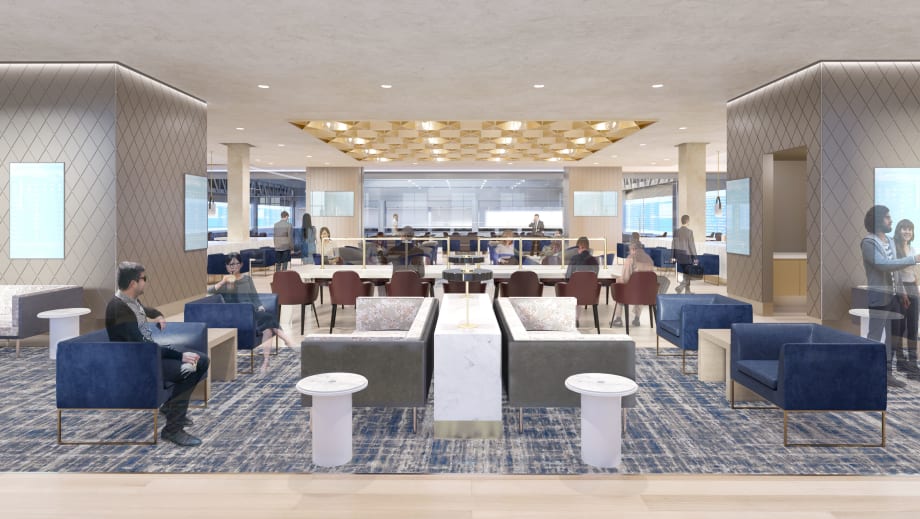
Rendering of Amtrak's Metropolitan Lounge in Moynihan Train Hall. Image: Amtrak
2 min to read
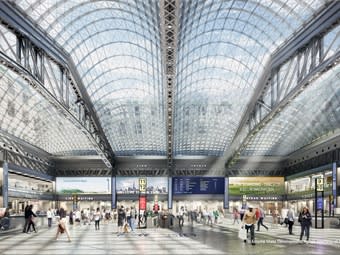
Rendering of Moynihan Train Hall center of concourse. Image: SOM-Volley
Amtrak has reached a key milestone in its plan to enhance the customer experience at its future home in the Moynihan Train Hall, part of New York's Penn Station, with the completion of planning and design for its premium passenger space, the Metropolitan Lounge (formerly ClubAcela) by releasing artist renderings of the space. The Metropolitan Lounge will serve Amtrak’s premium customers, providing them with added amenities and a high-quality passenger experience.
The expansion of Amtrak’s New York City operations to the Moynihan Train Hall will offer enhanced passenger facilities for Amtrak’s Northeast Corridor and long-distance travelers, including more spacious boarding conditions, dedicated customer waiting areas with private restrooms, complimentary Wi-Fi in all customer spaces, dedicated lactation lounge for nursing mothers, combined ticketing and baggage area.
Rendering of Amtrak's Metropolitan Lounge in Moynihan Train Hall. Image: Amtrak
The Metropolitan Lounge at Moynihan Train Hall will also include priority boarding, dedicated customer service agents, comfortable seating and tables with access to electrical outlets and USB ports, a dedicated family seating area, expanded food and beverage offerings, a business center and multiple conference rooms as part of the Executive Conference Center, and a 20-foot-tall balcony overlooking the Train Hall.
The Moynihan Train Hall, which partners Amtrak with the New York State Empire State Development Corp., expands the nation’s busiest train station, New York Penn Station, into the historic James A. Farley Post Office building to relieve crowding and improve passenger comfort and security. The Farley Post Office building sits across 8th Avenue from Penn Station and was designed by the same architecture firm, McKim, Mead, and White, as the original, iconic Penn Station.
The Train Hall is expected to open to the public in early 2021.
More Rail
Amtrak, CN Reach Agreements to Strengthen Passenger Rail Service, Safety
The agreement resolves a more than decade-long proceeding before the Surface Transportation Board concerning the terms and conditions for Amtrak services, such as the City of New Orleans, Illini/Saluki, and Wolverine.
Read More →
New York MTA Advances Final Contract for Second Avenue Subway Expansion
Contract Four is the largest in the Second Avenue Subway Phase 2 project and includes construction of station infrastructure, tracks, and signals for the subway expansion, MTA officials said. Work on Contract Four will begin in 2027.
Read More →
San Diego MTS Breaks Monthly Trolley Ridership Record
Agency officials said July’s ridership indicates MTS’s continued recovery from the pandemic.
Read More →
Report Examines NJ TRANSIT Reliability, Funding Challenges
The Garden State Initiative analysis examines the roles of Amtrak infrastructure, fleet management, and agency operations while recommending a more performance-based approach to improving reliability.
Read More →
Stadler, CapMetro Sign Long-Term Rail Fleet Support Agreement
Beginning in 2027, Stadler will provide on-site technical expertise, spare parts support, training, and obsolescence management to help extend the reliability and longevity of CapMetro’s GTW fleet.
Read More →
Biz Briefs: Alstom Lands Canadian Contract, LYT to Supply California TSP, and More
In METRO's latest installment, we take a look at recent news from Complete Coach Works, Beep, FlixBus, and more partnerships making headlines across the transportation sector.
Read More →
CATS Gold Line Marks 5 Years of Service, 2.8M Passenger Trips
With a six-mile expansion planned, the Charlotte streetcar is positioned to connect more neighborhoods and major transit hubs across the region.
Read More →
Why Simulating Pedestrian Movement Has Become Essential for Modern Rail Stations
Pedestrian microsimulation is helping rail planners identify bottlenecks, test station designs, and prepare complex transit hubs for growing passenger volumes.
Read More →
Amtrak Begins Major Construction at New York’s Sunnyside Yard
The new maintenance facility will support Amtrak’s Airo trainsets while improving maintenance efficiency and turnaround times in New York.
Read More →
Chicago Leaders Unveil Plans for O’Hare Airport Express Train
The privately developed project would offer a 15-minute trip between downtown and O’Hare’s Terminal 2, with trains operating every 15 minutes on a dedicated track. The service would use battery-electric trains and three existing freight rail rights-of-way.
Read More →