METRO Magazine Logo
MenuMENU
SearchSEARCH

Time Running Out for Commuter Rail Positive Train Control Fix

While 29% of U.S. systems are targeting to complete installation by the deadline, potential fines of up to $25,000 a day could await those that don’t comply if an extension isn’t passed.

by Janna Starcic, Executive Editor
October 5, 2015
Time Running Out for Commuter Rail Positive Train Control Fix

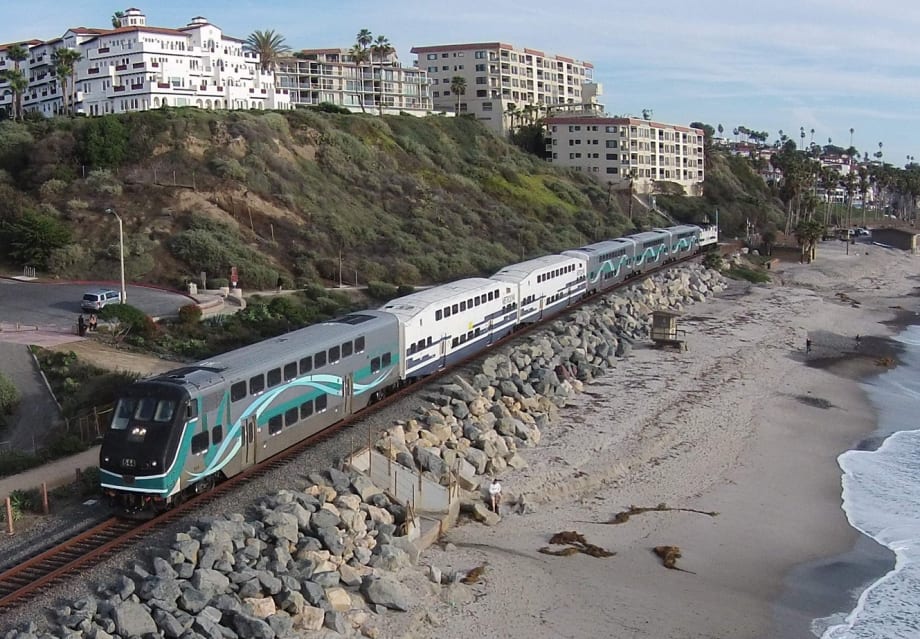
In mid-June, Southern Calif.’s Metrolink launched PTC in a Revenue Service Demonstration across the entire 341-mile network the agency owns.

5 min to read


In mid-June, Southern Calif.’s Metrolink launched PTC in a Revenue Service Demonstration across the entire 341-mile network the agency owns.

There are currently 23 commuter railroads operating in the U.S. and only 29% of them are targeting to complete installation of positive train control technology (PTC) by the federally mandated deadline of Dec. 31, 2015, according to the American Public Transportation Association (APTA). Full implementation of PTC for all commuter lines is projected by 2020.

PTC technology is designed to automatically stop or slow a train before accidents caused by human error occur, including train-to-train collisions, derailments caused by excessive speed and unauthorized incursions.

Milestones
While the status of PTC implementation across the industry is bleak, there are some bright spots. In mid-June, Southern Calif.’s Metrolink launched PTC into Revenue Service Demonstration (with passengers on board) across the entire 341-mile network the agency owns. This accomplishment makes it the first railroad in the nation to have PTC running during regular service on all of its hosted lines and remains on track to become the nation’s first passenger rail system to have a fully operational, interoperable, and certified PTC system in place.

Ad Loading...

The current cost for developing, installing and deploying PTC on Metrolink  totals $216.4 million, with funding coming from a combination of federal, state and local sources. Approximately 85% of the funds were state and local dollars.

Another passenger rail network making significant strides with its PTC project is the Southeastern Pennsylvania Transportation Authority (SEPTA). In July, members of Pennsylvania’s federal delegation (Sen. Robert Casey Jr. and Reps. Chaka Fattah, Pat Meehan and Ryan Costello) toured SEPTA’s suburban Philadelphia PTC testing facility. During the tour, the lawmakers viewed demonstrations of on-board and track-side PTC communication equipment and rode in technology-equipped railcars along a working test track.

“There’s nothing like seeing this up close,” said Sen. Casey of the tour. “I think we all have a better understanding of what positive train control means; a better sense of some of the challenges in making sure it is implemented.”

Challenges
But positive stories about PTC are few and far between as many commuter rail systems struggle to overcome the numerous challenges posed by the expensive and complex undertaking.

Ongoing challenges commuter railways face include, availability of the wireless spectrum. APTA has asked Congress to direct the Federal Communications Commission to provide free radio spectrum for PTC.

“A number of transit agencies have been unsuccessful at completing negotiations with spectrum holders,” says Brian Tynan, APTA’s director, government relations.

Ad Loading...

The limited number of suppliers of PTC technology is another hurdle. Those companies with proven capability to deliver the equipment in use in the U.S., according to a Federal Railroad Administration (FRA) report, include: General Electric Transportation Systems, Wabtec Railway Electronics Systems, Alstom Signaling Solutions and Siemens Rail Automation.

Another challenge is the potential for radio interference. Differing technologies used by railroads operate with different communication protocols in similar frequency bands, which can lead to desensitization, according to an FRA report.

Funding
Perhaps the greatest challenge with regard to implementation of the rail safety technology is how to pay for it. According to APTA, conservative estimates are that $3.48 billion is needed to implement PTC nationally on commuter rail. This does not include the cost of purchasing radio spectrum. So far, the industry has spent $950 million and Congress has only provided $50 million, says Tynan.

The transportation advocacy group is calling on Congress to provide 80% of PTC costs on commuter railroads.

Fifty percent of commuter rail systems say they were deferring other capital programs to implement PTC, such as bridge rehabilitation, signal upgrades, track improvements and safety projects at railroad crossings, according to APTA data. Additionally, commuter railroads argue that the “PTC mandate could have the unintended consequence of degrading system safety by requiring the deferral of needed state of good repair projects in order to pay for initial phases of PTC.”

Funding is one of the many issues Chicago’s commuter railroad Metra is contending with as it works to fulfill the PTC mandate. During his testimony before a Congressional subcommittee this summer, Metra Executive Director/CEO Donald Oreseno said implementation of the rail safety technology is expected to cost the railroad more than $350 million.

Ad Loading...

In addition to the substantial upfront capital cost of PTC implementation, he said, the operating cost is estimated to be more than $15 million annually.

“With all of these obstacles in mind, it should come as no surprise that no railroad has installed a fully functioning, interoperable PTC system to date,” Orseno says.

Despite challenges, SEPTA aiming to meet PTC deadline

The Southeastern Pennsylvania Transportation Authority (SEPTA) is working hard to meet the PTC mandate. “The safety enhancements offered by PTC are critically important for the safe operation of SEPTA’s Regional [commuter] Rail system,” says SEPTA GM Joseph M. Casey. “Barring any unforeseen technical challenges or concerns that arise during testing, we will be in full compliance by the deadline. It will be a photo finish, but we will make it.”

When completed, SEPTA will have made a capital investment of $328 million and committed years of intense work to upgrade signals, communication systems, and vehicles to implement a viable and reliable PTC system across its 230-mile Regional Rail network.

The authority shares almost 81 miles of track with four freight lines. Three of SEPTA’s 13 Regional Rail lines operate on Amtrak-owned track. Because a significant portion of SEPTA’s commuter rail system operates in Amtrak territory, the authority is installing Amtrak’s PTC technology — Advanced Civil Speed Enforcement System (ACSES).

Adopting ACSES, however, presented SEPTA with an additional challenge on its West Trenton Line, which uses CSX track. CSX is installing IETMS, an entirely different PTC technology that is not compatible with ACSES. To resolve this major impediment, SEPTA and CSX agreed to physically separate their operations — SEPTA completed construction on its own track through CSX territory on the West Trenton Line in August. This additional PTC-related project costs $28 million and is partially funded with $10 million in federal TIGER Grant funding.

To meet the Dec. 31, 2015 PTC deadline, SEPTA doubled its ongoing interlocking modernization and Automatic Train Control (ATC) installation efforts immediately following the passage of the Rail Safety Improvement Act. Using in-house forces to install ATC gave SEPTA the flexibility to simultaneously engage third-party design and construction contractors for ACSES installation. This concurrent approach to PTC implementation was not only cost-effective; it allowed SEPTA to successfully meet key PTC benchmarks while completing ATC installation in accordance with its PTC implementation plan.

Work continues on the installation of ATC/PTC throughout the SEPTA Regional Rail network and training of roadway workers, train and engine crews, vehicle mechanics, signal maintainers and dispatchers is in progress. SEPTA started modifying and testing its 359-vehicle fleet in April, beginning with its 40-year-old Silverliner IV railcars, which comprises the majority of SEPTA’s fleet. The retrofit and testing process, which has been slower in the older trains, is scheduled to be completed by November.  – Heather Redfern



Deadline, penalties
Meanwhile, the railroad industry awaits action on the Senate’s surface transportation bill, approved in July, which included a provision that would extend the federal deadline for railroads to install PTC to 2018.

If no extension materializes, the FRA will enforce the Dec. 31, 2015, federally mandated PTC deadline.

During a Congressional Subcommittee hearing, FRA Acting Administrator Sarah Feinberg outlined the following penalty guidelines:

Ad Loading...

“Starting Jan. 1, 2016, FRA will impose penalties on railroads that have not fully implemented PTC. Penalties may be assessed per violation, per day and may be raised or lowered depending on mitigating or aggravating factors. The total amount of penalty each railroad faces will depend upon the amount of implementation progress the railroad has made.”

These fines and civil penalties, built into the regulation, can set a commuter railroad back as much as $25,000 a day. Potential violations outlined in the regulations include a fine of $15,000 to $25,000 for failure to equip locomotives.

“Some of those fines can even be applied to individuals,” says APTA’s Tynan. “An individual safety officer, who would have to certify that the train is full safety equipped, may not want to do that if [he/she] could be subject to a $25,000 fine.”

Members of Pennsylvania’s federal delegation (Sen. Robert Casey Jr. and Reps. Chaka Fattah, Pat Meehan and Ryan Costello) were given an up close view of SEPTA’s PTC technology during a facility tour in July.

Additionally, he says there is concern about whether or not railroads can operate after the deadline. An example of a worst-case scenario come Jan. 1, would be if a freight railroad makes a determination that commuter rail service operating on the freight railroad’s tracks cannot continue, he explains. Another scenario would be that the commuter railroad itself determines that it cannot operate without having PTC fully implemented.

“Our commuter railroads are very concerned about the approaching deadline,” Tynan says. “They have been looking at the regulations and their liability insurance to see what their obligations are.”

Subscribe to Our Newsletter

More Security and Safety

A CTA railcar in a Chicago station
Security and Safetyby StaffMarch 11, 2026

CTA Sends Expanded Security Plan to FTA, Boosts Policing Hours by 75%

The Plan is CTA's formal response to an FTA Special Directive issued in December and details how the agency will significantly expand the law enforcement surge it launched.

Read More →
Anthony Incorvati cover photo for METROspectives
Security and Safetyby Alex RomanMarch 5, 2026

The Future of Transit Safety with AXIS Communications’ Anthony Incorvati

Learn how technology is moving beyond passive recording to become an active operational tool.

Read More →
A photo of rail tracks in Ottawa, Canada

Building a National Framework for Transit Safety and Consistency

On a recent episode of METROspectives, METRO Magazine’s Executive Editor Alex Roman sat down with Ana-Maria Tomlinson, Director of Strategic & Cross-Sector Programs at the CSA Group, to explore a bold initiative aimed at addressing those challenges: the development of a National Code for Transit and Passenger Rail Systems in Canada.

Read More →
Ad Loading...
Chicago Metra train on tracks
Security and Safetyby StaffFebruary 27, 2026

Chicago's Metra Rail Announces 41 Safety Blitzes in 2026

During a safety blitz, Metra employees will visit one of the railroad’s 243 stations during the morning rush hour, distributing educational materials on train and grade-crossing safety, answering questions, and listening to riders’ safety concerns.

Read More →
A CDTA bus in service.
Security and Safetyby StaffFebruary 26, 2026

New York's CDTA Launches Ambassador Program

Operated in partnership with Tech Valley Security, trained CDTA Ambassadors will be on select routes and will rotate throughout CDTA’s route network. Their presence is intended to provide customers with an approachable, visible resource focused on assistance and engagement.

Read More →
Safety officers at a CATS light rail station
Security and Safetyby StaffFebruary 25, 2026

North Carolina's CATS Makes It Easier for Riders to Report Concerns

Customers have always been able to report concerns through the CATS Customer Service line or the “Report a Problem to CATS” feature in the CATS-Pass mobile app; however, CATS has also integrated a Text-a-Tip line, giving riders multiple, easy-to-use channels to get support.

Read More →
Ad Loading...
2026 Disaster Response Guide Call for Experts is Open.
Safetyby StaffFebruary 9, 2026

Disaster Readiness Starts Before the Storm [Call for Experts]

The 2026 Disaster Response Guide is officially underway, and we’re now opening a Call for Insights and Experts.

Read More →
A Société de transport de Montréal articulating public transit bus.
Security and Safetyby StaffFebruary 4, 2026

Montreal’s STM Expands Text Message Safety Reporting to Bus Network

The agency opens its text message safety reporting system to buses, enabling discreet, non-urgent reports across Montreal’s entire transit network.

Read More →
A graphic with an image of the CATS Blue Line and text reading "FTA Cites 18 Safety Violations at CATS Following Federal Audit."
Security and Safetyby StaffFebruary 3, 2026

Federal Transit Administration Cites 18 Safety Violations at CATS Following Audit

The audit found multiple safety compliance failures at the Charlotte agency, citing elevated assault risks and ordering corrective action within 30 days.

Read More →
Ad Loading...
Security and Safetyby StaffJanuary 22, 2026

Researchers Identify Top Risk Factors for Pedestrian-vehicle Crashes at Massachusetts Bus Stops

While their comprehensive analysis of bus stops focused on Massachusetts, the researchers are excited about the generalizability of the findings and application to other locations.

Read More →