




Related: Is Enough Being Done to Stop the Assault on Bus Operators?
D.C. Metro to test use of video screens showing surveillance cameras
The move is part of a multi-layered response that also includes enhanced fare enforcement by plain clothes and uniformed transit police officers, outreach campaigns, the installation of plexiglass dividers to protect bus operators, and enhanced penalties for those found guilty of assault.
August 13, 2015
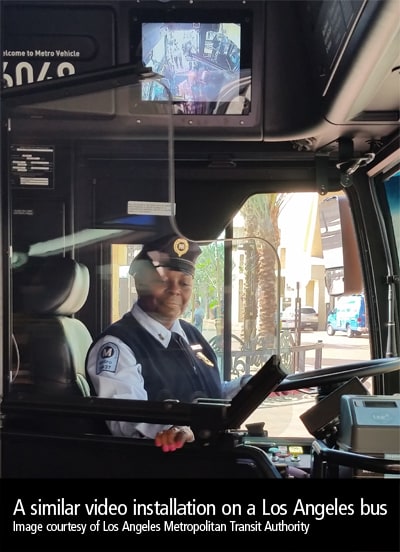
A similar installation on an LA Metro bus. photo courtesy LA Metro
2 min to read
A similar installation on an LA Metro bus. photo courtesy LA Metro
As part of its ongoing effort to enhance the safety and security of bus operators and passengers, the Washington Metropolitan Area Transit Authority (Metro) plans to test the use of video monitors on board buses as a deterrent to prevent fare evasion and bus operator assaults. The move is part of a multi-layered response that also includes enhanced fare enforcement by plain clothes and uniformed transit police officers, outreach campaigns — including targeted outreach in public schools — the installation of plexiglass dividers to protect bus operators, and enhanced penalties for those found guilty of assault.
Video monitors will be installed on 22 articulated Metrobuses as part of the pilot program. The monitors will allow passengers to see exactly what the security cameras are recording in real time. One 8.4-inch screen will be installed above the bus operator so that riders can see themselves as they board, and one 19-inch screen will be mounted behind the driver facing the passenger cabin with a four-camera display of the bus interior.
“Metrobus operator assaults not only put our employees at risk, but also impact the safety of everyone else onboard the bus," said Metro Interim GM/CEO Jack Requa. “Through this effort, we want to remind riders that all activity aboard our buses is captured by the cameras and see whether the presence of the new video monitors has an additional deterrent effect.”
The 22 selected buses are all assigned to the X2 route, which runs along H Street from Benning Road to Gallery Place and Lafayette Square. The route is among the systems' busiest with an average weekday ridership of 12,180 trips.
Four X2 bus operators have been assaulted in 2015, which is more incidents than any other route.
Several other transit agencies have deployed buses with video monitors that show passengers the camera footage, including Los Angeles County Metropolitan Transportation Authority, Massachusetts Bay Transportation Authority and Hampton Roads Transit.
The increased presence of law enforcement officers, combined with the video display pilot program and increased availability of bus safety shields as new buses enter service, will strengthen Metro’s ongoing efforts to enhance Metrobus safety.
More Security and Safety

Transit Agencies Highlight Safety Gains at National Summit
Leaders from 15 major transit systems shared crime-reduction results and safety initiatives while discussing the role of continued federal support.
Read More →
DART Launches Major Security, Fare Enforcement Initiative
The 90-day demonstration will deploy coordinated security teams at five light rail stations while testing controlled access and gathering data to guide future investments.
Read More →
RTD Launches NextRide App to Consolidate Trip Planning, Fares, Security Reporting
The app expands on RTD’s existing NextRide web application and allows customers to view real-time vehicle locations and service alerts, purchase and store digital fares, and access customer support.
Read More →

TAPTCO Updates OSHA Compliance Training for Transit Maintenance Operations
The revamped program addresses 26 OSHA standards for maintenance facilities, with TAPTCO pointing to training, documentation, and everyday shop hazards as continuing challenges for transit operations.
Read More →
Sponsored•August 18, 2026
How VaporVision Adds Value to Transit Door Systems
Wabtec engineers explain how the system improves doorway detection, strengthens diagnostics and gives transit agencies and OEMs greater operating flexibility.
Read More →
FRA Announces $5.3B in Rail Investments, Including $2B for Amtrak
Funding will support grade-crossing improvements, infrastructure upgrades, and new Amtrak equipment in 23 states.
Read More →
Chicago, Maryland Expand Non-Law-Enforcement Safety, Rider Support
The CTA and MTA are launching new programs aimed at de-escalation, crisis response, rider assistance, and greater transparency.
Read More →
LA Metro, City of West Hollywood, and Partners Advance Smarter Bus Lane Enforcement
The award-winning partnership combines AI-powered detection with human oversight to improve bus reliability, accessibility, and enforcement efficiency.
Read More →
LA Metro Reports 57% Decline in Homelessness on Transit System Since 2024
The agency's latest homelessness count offers new data on how care-based services and cross-sector partnerships can complement traditional transit security strategies.
Read More →
FTA Launches 'Transit Moves America' Dashboard to Highlight Agency Safety and Performance
The online dashboard transforms National Transit Database information into a public-facing resource that allows users to compare transit agencies on key operational and safety metrics.
Read More →