Improving public transit safety for women and the impact of ride-hailing services
Thoughts on the impact of inclusion after a visit to the International Transport Forum in Leipzig, Germany.
by By Giles K. Bailey
June 28, 2018
Part of any debate about the safety of the transport system must inevitably focus on the issues faced by females, as well as other potentially vulnerable travelers.
Public Domain
6 min to read
Part of any debate about the safety of the transport system must inevitably focus on the issues faced by females, as well as other potentially vulnerable travelers.
Public Domain
The International Transport Forum (ITF) is an associated agency of the Organization for Economic Co-operation and Development (OECD). It is based in Paris, and for many years the ITF has held its annual conference in Leipzig, Germany at the end of May. This year’s conference had the theme of “Safety & Security.”
The annual ITF conference attracts ministers of transport from many of the participating OECD countries, as well as a range of commercial partners, commentators, consultants, and media, totaling over 1,200 attendees. As well as open plenary and specialist sessions, the ministerial participants have sessions to develop and agree global policy aims in transport.
Ad Loading...
For many years the ITF has held its annual conference in Leipzig, Germany at the end of May.
The conversations and debates during the event generate reflections on the state of the overall transport network and the improvements in safety over the last few decades for travelers, but also a number of old, as well as new, challenges that the industry faces.
Part of any debate about the safety of the transport system must inevitably focus on the issues faced by females, as well as other potentially vulnerable travelers. There were several sessions at the Forum that advanced these issues and highlighted great activities and practice from around the world, as well as the role of women in delivering and planning excellence in all modes of transport. Thus, progress is generally being made across our industry.
A particular session looked at transport innovation and the safety and security of women. The majority of public transport users in the U.S. are women and this raises a number of questions about our transport systems.
Firstly, why does providing good access to transport for women matter? It may seem obvious, but beyond basic issues of social equality in society, women represent half of the population in most countries, and thus, to various degrees are a key component of local labor forces. Excluding women from adequate transport depresses the efficiency of society, as well as its productive ability to cater for all of the population’s needs and generate more wealth. Furthermore, women traditionally access some social services to a greater degree than men. This includes schools, regarding children; household shopping; and extended social services to support families. While this is also changing in many societies, increased barriers to women’s access to these services decreases their ability to efficiently fulfil these roles in society as well as their wider ability to contribute to society.
Ad Loading...
However, the lack of adequate and useful transport services for women remains a real barrier in many societies. The issues include safe pedestrian areas to access local services in road based transport situations; personal safety on shared transport — whether perceived or real; the cost of taxi services where public or private transport is not available; the cost of some public transport services themselves; and a lack of access to driver’s licenses as well as private vehicles for their own use.
Excluding women from adequate transport depresses the efficiency of society, as well as its productive ability to cater for all of the population’s needs and generate more wealth.
BCT
The issues can be overwhelming in many emerging economies and prevent access to employment by women, but are also a real issue in the developed world where issues, such as night time safety; level access for travelers with children or heavy shopping; listening and acting on the safety concerns of women; and the service design of local services which may concentrate on city center commuters rather than dispersed local traffic needs can affect the access of female passengers.
However, a particular issue that I would raise is how innovation in the public transport market may be ultimately affecting the role of women passengers. We are in the era where small vehicle transport, other new shared modes, as well as the eventual and possibly near-term arrival of autonomous vehicles in some form, will radically alter much of the landscape of the transport marketplace.
The impact of small vehicles, or ride-hailing companies
Small vehicles, whether Uber, Lyft, Grab, Ola, or others, and whether they are private to one traveler or a group or shared amongst various travelers, offer the ability to provide a much more personal travel experience and door-to-door service that significantly reduces waiting in public places, walking with luggage, and the generally necessary assumptions and compromises about travelling on public transport in a larger public vehicular space. It could be argued that these services are especially useful for meeting the challenges faced by concerned women travelers. They offer privacy and directness. These services could even be designed and operated specifically around the needs of women travelers. This logic could also be applied to other vulnerable traveler groups. Is this an issue that the transport system needs to address or at least provide more options to female travelers?
Ad Loading...
I’m an avid supporter of public transport systems, however, is it not always seen as the role of transport operators and designers to improve the relative competitiveness and general service offer of their systems, so that women travelers feel as safe as male travelers and equally provided with the services that they need to access their trip requirements. However, this should be the case as it provides a holistic service that can meet many of the other potentially unexpressed needs of the wider population of travelers who also want a safe travelling environment, as well as access to a range of destinations.
There is a further risk of the rise of small vehicle transport. These services while often expected to be cheaper than classic taxi services tend to be more expensive than traditional public transport. They are somewhat of an exclusive offer and thus, acquire a price premium. If they are also deemed the “safer” or more “appropriate” choice for women travelers, and as they expand across the transport landscape, are we again putting a price premium on the ability of women to travel, and thus, access all of the key elements of society and the economy that were outlined at the start of this article? Is this really as fair an opportunity for female traveler as it may otherwise seem to be?
Ride-hailing services, while often expected to be cheaper than classic taxi services, tend to be more expensive than traditional public transport.
Via Ford
Another issue is the dynamic of what happens within a small shared vehicle, in terms of customer and driver behavior. An eight-seat small van does not offer the personal anonymity of a big bus or a train carriage. Who you are sharing the trip with, how specifically it delivers you to perhaps your home’s front door or place of work, and how much of your personal travel pattern is visible to other passengers in this small vehicle will be an issue of concern to many travelers, but particularly female travelers. Again, how do these services need to be designed, managed, and operators trained to be aware of and react to these types of issues? And, do public authorities have the data to understand how often these situations are arising in the current operation of these types of services?
And then there is the rise of autonomous vehicles. Do these vehicles potentially entrench the current state of the transport network and again potentially offer vulnerable travelers enhanced privacy — and safety, but at an additional cost of travel?
The transport industry, including public transport, is facing unprecedented change, as well as opportunity from new service offers. This is an exciting time. However, are we offering women a safer, more secure, and effective transport system as a result of these changes, or entrenching division and restricted transport options for half of our population?
Today’s riders—and the communities you serve—expect more from public transit. While ADA compliance is required, leading transit agencies know that true accessibility also means delivering dignity, efficiency, and a better rider experience. This whitepaper reveals why forward thinking agencies nationwide choose the Low Floor Frontrunner as their first choice for ADA compliant vehicles—setting a new standard with passenger first design, faster boarding, improved safety, and unmatched operational performance.
Fred Ferguson, president and CEO of the American Bus Association (ABA), discussed how the industry prepares for emergencies, the growing recognition of motorcoaches as critical infrastructure, and steps operators can take to strengthen disaster readiness.
The approved contract modification will increase funding for transit security officer services to a total not-to-exceed amount of $32.1 million, ensuring a continued and visible security presence across DART’s buses, trains, stations, and facilities.
The Siemens CBTC System, Trainguard MT, in compliance with New York Subway Interoperability Interface Specifications, enables trains to run as close as 90 seconds apart, using next-generation signaling and continuous communication to keep operations moving seamlessly.
According to the new quarterly data, there were double-digit reductions in five of the eight serious crime categories, including aggravated assaults and robberies.
The project, finalized on February 12, provides the city with two different configurations of high-definition cameras to outfit 16 buses in the Pretzel City Area Transit fleet.
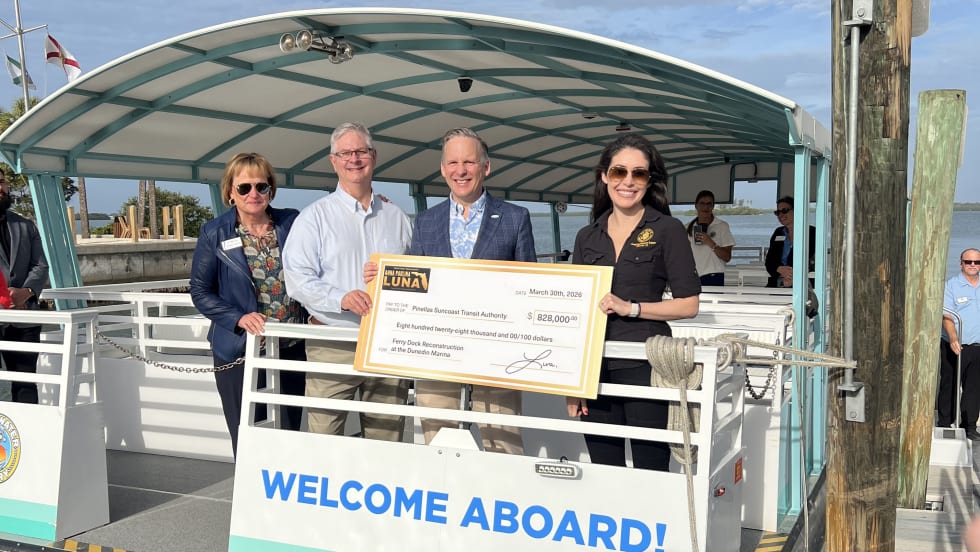
The funds will specifically reconstruct the portion of the pier used by PSTA’s Clearwater Ferry, creating a permanent dock for the ferry service, which serves as an important transportation and tourism link to other Pinellas County communities.