



NYC Transit warns against walking, riding between subway cars
Seven people died while walking or riding between subway cars in 2018, including four people in December alone.

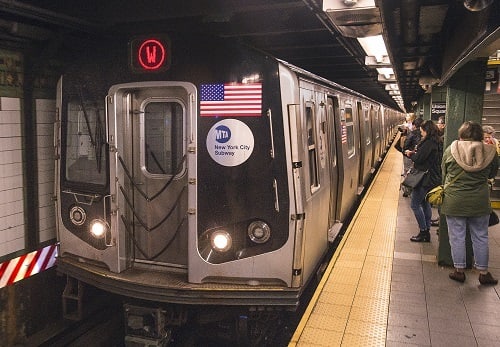
The first responder investigation and recovery work associated with these fatalities — during which power needs to be cut from the tracks — can also cause significant train delays and crowding conditions on platforms.
Patrick Cashin
The first responder investigation and recovery work associated with these fatalities — during which power needs to be cut from the tracks — can also cause significant train delays and crowding conditions on platforms.
Patrick Cashin
MTA NYC Transit officials are warning customers of the dangers of walking or riding between subway cars, with a new public service announcement campaign that started last week and continues to be in development.
Seven people died while walking or riding between subway cars in 2018, including four people in December alone. Five people died during such activity in 2017, and another five in 2016.
Digital displays in stations began airing a PSA last week that stated simply and directly: “3 people have died this month walking between moving subway cars. Don’t take the risk. Please ride safely.” The PSA was later updated to note four people after an incident on Dec. 29, and starting today says “7 people died in 2018…”
An announcement in subway cars that began this week says: “Hello everyone. It’s against the rules and very dangerous to ride or walk between train cars, unless it’s an emergency, or if you’re directed by a police officer or MTA crew member. Have a safe day, and thank you for riding with us.”
“Riding or walking between subway cars without supervision is dangerous and can cost a person their life,” NYC Transit President Andy Byford said in a statement. “It’s not worth it and we’re urging our customers not to do it.”
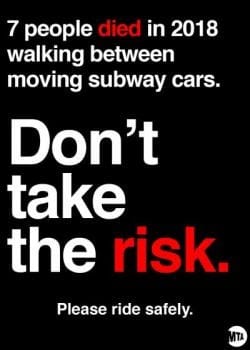
Transit officials are also working on in-car signage to reinforce and amplify the message that stepping between subway cars without official supervision is dangerous.
Transit officials are also working on in-car signage to reinforce and amplify the message that stepping between subway cars without official supervision is dangerous. Existing signage already notes that the act is prohibited.
The first responder investigation and recovery work associated with these fatalities — during which power needs to be cut from the tracks — can also cause significant train delays and crowding conditions on platforms. There were approximately 500 delays in 2018 recorded as being caused by a person killed while between moving train cars, including about 190 delays from one incident alone, in which a person died on Dec. 21 while walking between cars on the 2 line near 110 St.
More Security and Safety

Transit Agencies Highlight Safety Gains at National Summit
Leaders from 15 major transit systems shared crime-reduction results and safety initiatives while discussing the role of continued federal support.
Read More →
DART Launches Major Security, Fare Enforcement Initiative
The 90-day demonstration will deploy coordinated security teams at five light rail stations while testing controlled access and gathering data to guide future investments.
Read More →
RTD Launches NextRide App to Consolidate Trip Planning, Fares, Security Reporting
The app expands on RTD’s existing NextRide web application and allows customers to view real-time vehicle locations and service alerts, purchase and store digital fares, and access customer support.
Read More →

TAPTCO Updates OSHA Compliance Training for Transit Maintenance Operations
The revamped program addresses 26 OSHA standards for maintenance facilities, with TAPTCO pointing to training, documentation, and everyday shop hazards as continuing challenges for transit operations.
Read More →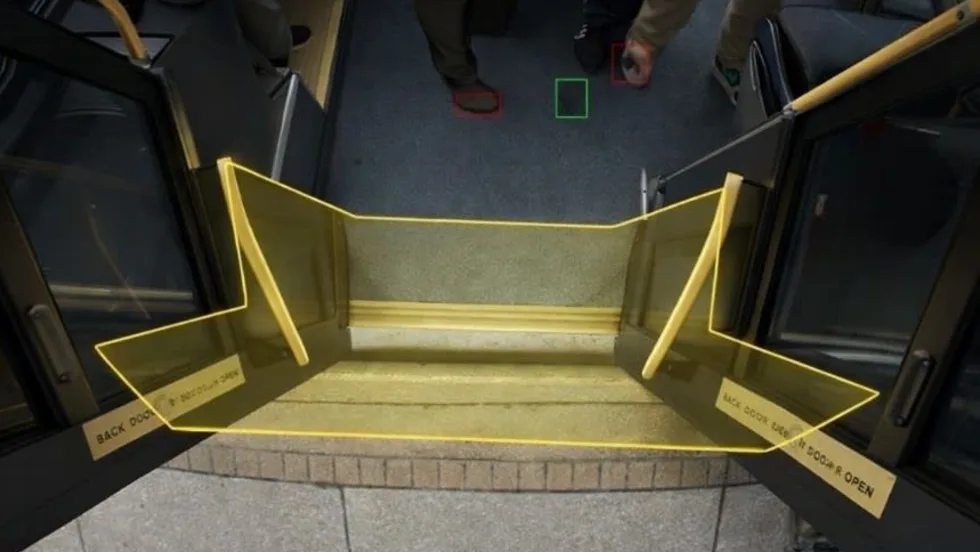
How VaporVision Adds Value to Transit Door Systems
Wabtec engineers explain how the system improves doorway detection, strengthens diagnostics and gives transit agencies and OEMs greater operating flexibility.
Read More →
FRA Announces $5.3B in Rail Investments, Including $2B for Amtrak
Funding will support grade-crossing improvements, infrastructure upgrades, and new Amtrak equipment in 23 states.
Read More →
Chicago, Maryland Expand Non-Law-Enforcement Safety, Rider Support
The CTA and MTA are launching new programs aimed at de-escalation, crisis response, rider assistance, and greater transparency.
Read More →
LA Metro, City of West Hollywood, and Partners Advance Smarter Bus Lane Enforcement
The award-winning partnership combines AI-powered detection with human oversight to improve bus reliability, accessibility, and enforcement efficiency.
Read More →
LA Metro Reports 57% Decline in Homelessness on Transit System Since 2024
The agency's latest homelessness count offers new data on how care-based services and cross-sector partnerships can complement traditional transit security strategies.
Read More →
FTA Launches 'Transit Moves America' Dashboard to Highlight Agency Safety and Performance
The online dashboard transforms National Transit Database information into a public-facing resource that allows users to compare transit agencies on key operational and safety metrics.
Read More →