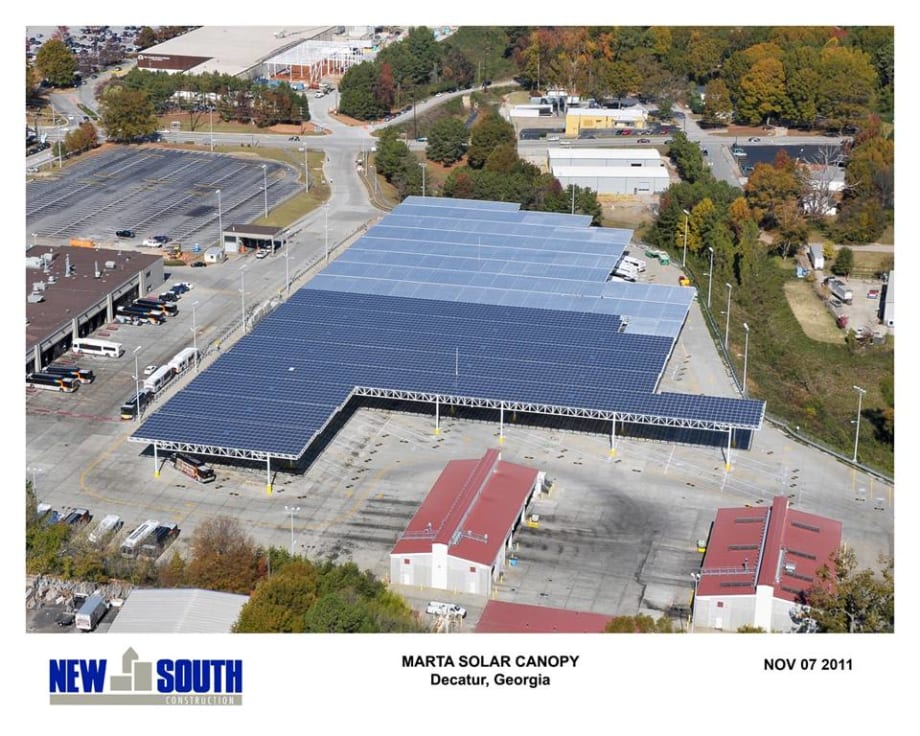
The solar panels generate enough electricity to offset a significant portion of this facility's annual electricity consumption and have the same environmental benefit as planting more than 285 acres of trees a year.
The Metropolitan Atlanta Rapid Transit Authority (MARTA) unveiled its solar canopy installation project at the Laredo Bus Facility. The federally funded project, finished on time and within budget, is the largest solar canopy in Georgia and the second largest structure of its kind at a public transportation system.
In 2009 MARTA received a $10.8 million federal grant under the American Recovery and Reinvestment Act's Transit Investments for Greenhouse Gas and Energy Reduction (TIGGER) Program. Thanks to this funding, the project has created new "green-collar" jobs in metro Atlanta and is harnessing clean, renewable solar power to operate the Laredo Bus Facility in a significantly more energy-efficient and cost-effective way.
Ad Loading...
The solar panels generate enough electricity to offset a significant portion of this facility's annual electricity consumption and have the same environmental benefit as planting more than 285 acres of trees a year.
The turnkey project includes photovoltaic (PV) cells that cover 220 bus parking stalls and feature perforated panels to filter sunlight. The canopies are equipped with light-emitting diodes (LEDs) light fixtures to provide ample lighting for safety and maintenance activities at night.
In addition to producing power, the shade structures will reduce summertime temperatures between 20 and 30 degrees underneath the canopies, lower bus fuel consumption, reduce the need for air-conditioning and enhance the general work environment for MARTA operators, maintenance and facilities personnel.
The Laredo Bus Facility Solar Canopy joins MARTA's growing sustainability program which includes a fleet of clean-fuel buses, water reclamation and harvesting operations, the installation of LED lighting and a waste recycling program.
Advances in data and analytics are giving transit agencies new opportunities to refine maintenance practices, improve efficiency and make more informed decisions about asset performance.
Deck: In Part 2 of a two-part conversation, AC Transit’s director of maintenance joins co-hosts Alex Roman and Mark Hollenbeck to discuss his maintenance team’s work with various types of vehicle, training, augmented reality, and more.
In this Consultant Roundtable, Carmen C. Cham shares insights on how agencies can create spaces that are intuitive, connected and built for long-term impact.
The Siemens CBTC System, Trainguard MT, in compliance with New York Subway Interoperability Interface Specifications, enables trains to run as close as 90 seconds apart, using next-generation signaling and continuous communication to keep operations moving seamlessly.
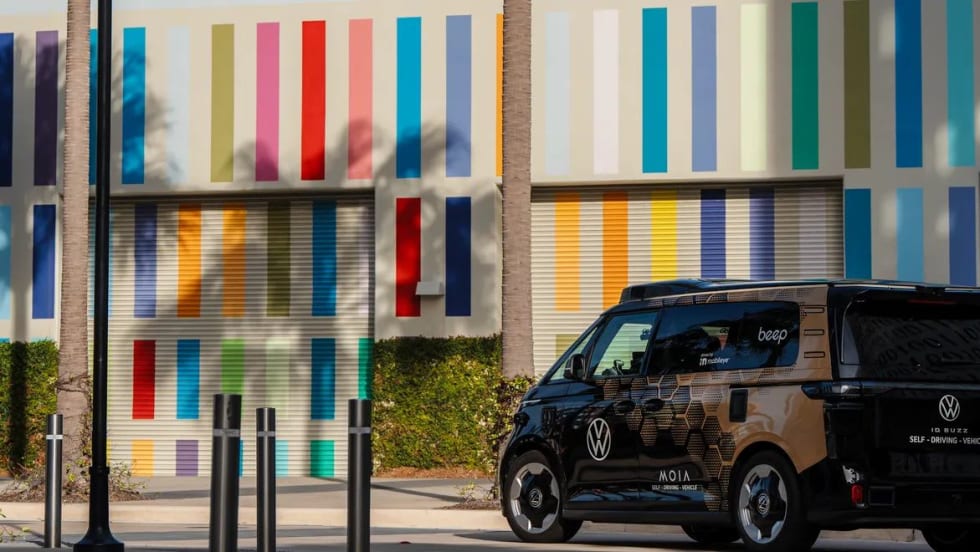
Through the strategic partnership, MOIA America will provide MOIA’s turnkey autonomous mobility solution. This includes purpose-built, autonomous-ready ID. Buzz vehicles equipped with the self-driving system developed by Mobileye, as well as operator training and enablement.
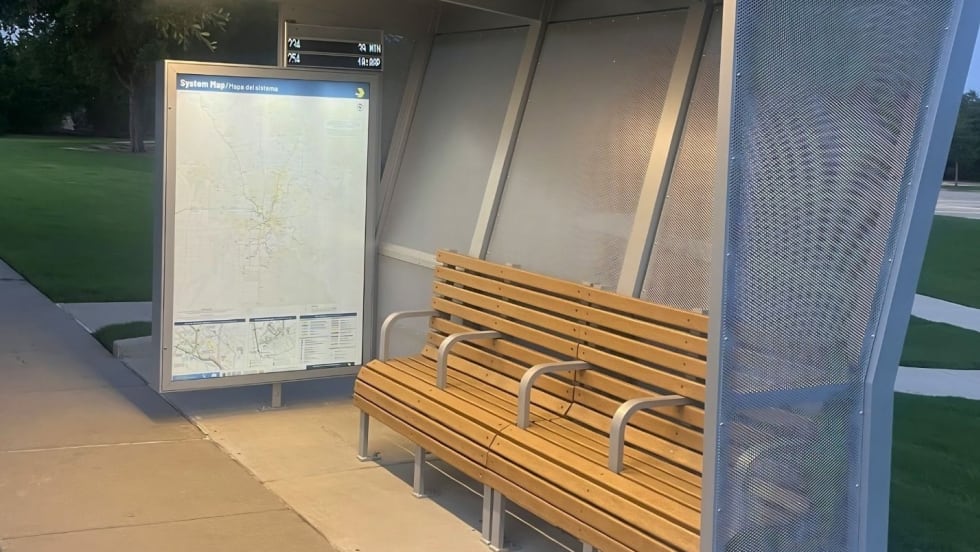
Officials said the project delivers a fully integrated passenger environment featuring improved solar-powered LED lighting, real-time arrival information, and a precision-engineered shelter designed to withstand the Texas climate.
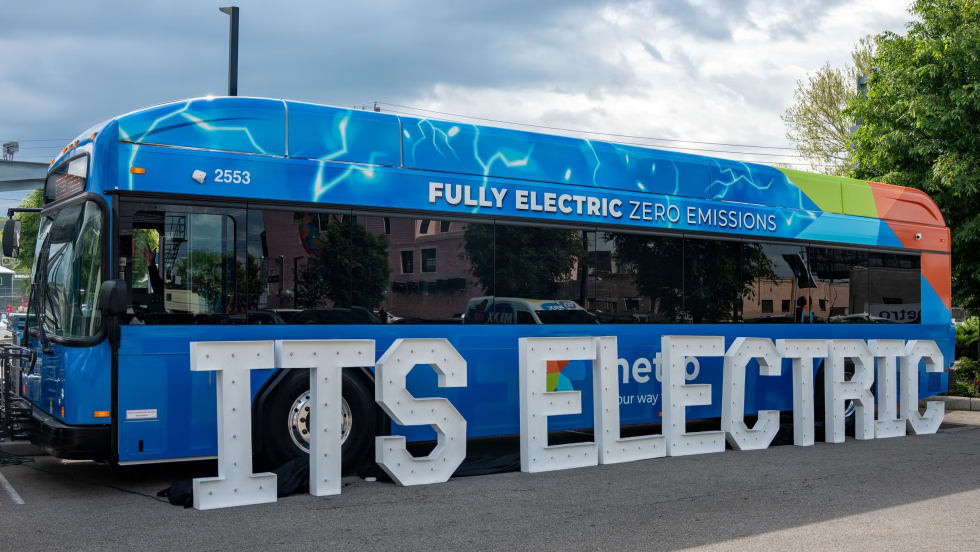
Two battery-electric buses entered service on Earth Day, with four additional vehicles expected to join the fleet this summer. Seven more buses are planned for the end of 2027, bringing Metro’s total zero-emission fleet to 13.
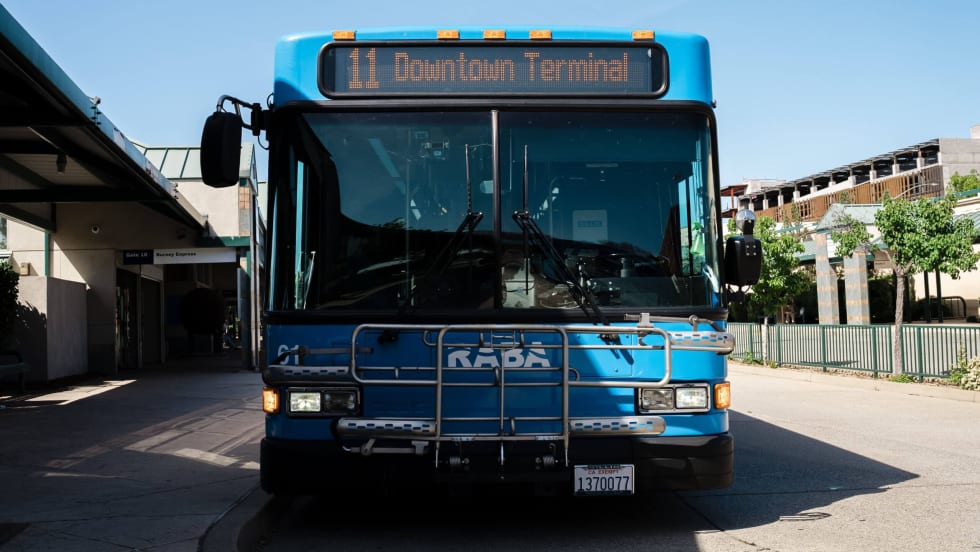
With this launch, RABA is also now live on Cal-ITP Benefits, becoming the ninth transit agency in California to join the platform and the first small transit provider in the state to offer automated, real-time low-income fare eligibility verification through Tap2Ride.