




Related: Detroit's SMART Deploys Alt-Fueled Paratransit Fleet
ROUSH CleanTech develops extended range tank for Ford E-450
With 64 usable gallons of propane autogas, the new tank holds 56% more fuel than the standard 41-usable gallon tank option.
September 17, 2015
2 min to read
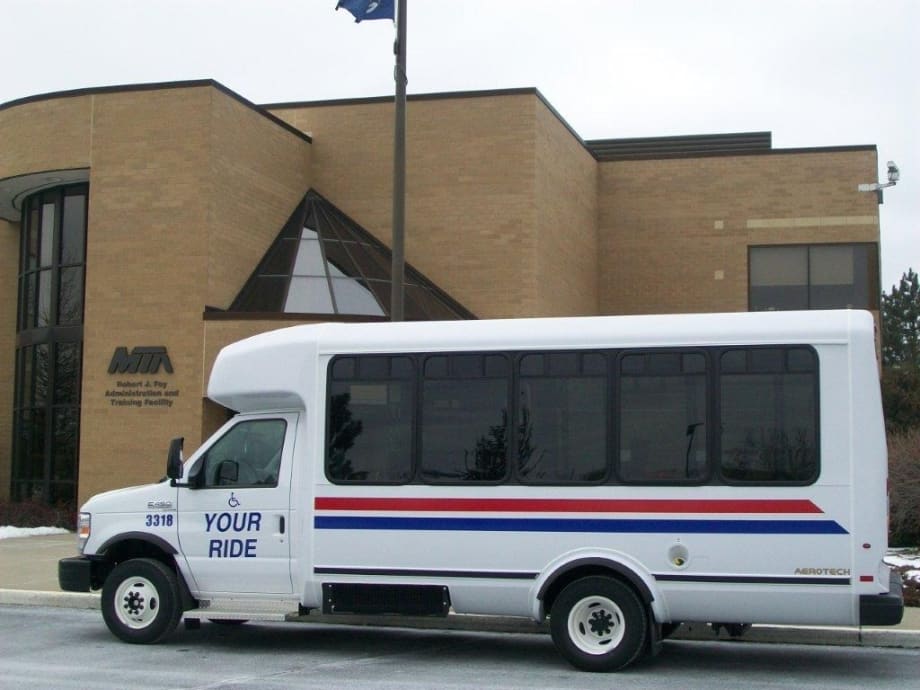
ROUSH CleanTech developed an extended range fuel tank for the Ford E-450 chassis, which allows transit agencies to make fewer trips to the pump. With 64 usable gallons of propane autogas, the new tank holds 56% more fuel than the standard 41-usable gallon tank option.
“We listened to our paratransit customers who wanted the Ford E-450 chassis, yet also needed more autogas fuel capacity,” said Todd Mouw, VP, sales and marketing. “With this extended range fuel tank, we offer the longest driving range for this model — plus an extended warranty for those customers.”
Built on Ford’s 6.8-liter V10 engine, the Ford E-450 with extended range fuel system comes with an extended five-year, 100,000-mile warranty exclusively for the transit industry.
Mich.’s Flint Mass Transportation Authority has incorporated 101 standard range tank E-450s since 2011. The transit agency, which pays 75 cents per gallon for propane, saves about $70,000 per vehicle in fuel and maintenance during their normal lifecycle of 10 years and 350,000 miles, compared to conventionally fueled counterparts.
Cleveland Regional Transit Authority recouped its investment of 20 Ford E-450 propane autogas-fueled shuttles and is now saving $21,000 in total operating costs. ROUSH CleanTech expects most customers will purchase the new larger-sized tank since it provides more range in addition to higher fuel cost savings.
Historically, propane autogas costs up to 40% less than gasoline and 50% less than diesel.
Each of the extended range shuttles will emit about 91,000 fewer pounds of carbon dioxide over its lifetime compared to conventionally fueled counterparts.
ROUSH CleanTech Ford E-450s are California Air Resources Board and Environmental Protection Agency compliant and have completed Federal Transit Administration’s New Model Bus Testing Program (Altoona Testing). Altoona-tested vehicles can be purchased using a transit agency’s FTA funds.
“With a strong backlog of more than 200 orders, we will begin shipping the Ford E-450 with the extended range fuel tank option in October 2015,” said Mouw.
More Technology

From Hardware to Digital Partner: Luminator Charts Its Next Chapter
CEO Magnus Friberg discusses Luminator’s shift toward becoming a digital partner, the growing importance of software and interoperability, and how AI can help agencies improve operations and passenger experience.
Read More →
Beyond the Checklist: A Structured Approach to Transit Maintenance
Reliability-Centered Maintenance helps transit agencies move beyond routine checklists to focus limited resources on the assets and failures that have the greatest impact on safety, reliability, and service.
Read More →
NJ TRANSIT Advances Bus Technology Upgrades Across Statewide Fleet
More than 1,500 buses now feature upgraded technology designed to improve arrival predictions and provide free Wi-Fi, with deployment expected to reach nearly 2,000 buses by the end of 2026.
Read More →

Building a Flexible Path to Transit Electrification
John Hroncich discusses BAE Systems’ modular and scalable approach, lessons learned from decades of real-world operations, and how agencies can identify electrification strategies that fit their fleets.
Read More →
Biz Briefs: Alstom Lands Canadian Contract, LYT to Supply California TSP, and More
In METRO's latest installment, we take a look at recent news from Complete Coach Works, Beep, FlixBus, and more partnerships making headlines across the transportation sector.
Read More →
Sponsored•September 8, 2026
From Legacy Silos to Conversational Intelligence
What if transit leaders could ask any operational question and get a trusted answer in seconds? Conversational AI is transforming how agencies use their data.
Read More →
USDOT Announces Rail Vehicle Replacement Grants, Chattanooga AV Shuttle Funding
More than $191 million in federal funding will help three transit agencies replace aging rail vehicles and support a new autonomous shuttle service in Chattanooga.
Read More →
Bus Tech Talk: Keeping Transit Technicians Ahead of the Technology Curve
LA Metro’s Obed Mejia discusses technician training, evolving maintenance technology, fleet replacement, and strategies for getting the most out of today’s transit fleets.
Read More →
Biz Briefs: RIPTA Unveils New Frontrunners, Clevland RTA Adds New Siemens, and More
In METRO's latest installment, we take a look at recent news from Siemens, Prevost, Dodge, and more partnerships making headlines across the transportation sector.
Read More →
Why Simulating Pedestrian Movement Has Become Essential for Modern Rail Stations
Pedestrian microsimulation is helping rail planners identify bottlenecks, test station designs, and prepare complex transit hubs for growing passenger volumes.
Read More →