



Zero-emission New Flyer bus deliveries increase by 48% in 2016
Including hybrid-electric propulsion, New Flyer has now delivered over 6,400 buses driven by electric motors to the North American transit industry over the past 20 years.

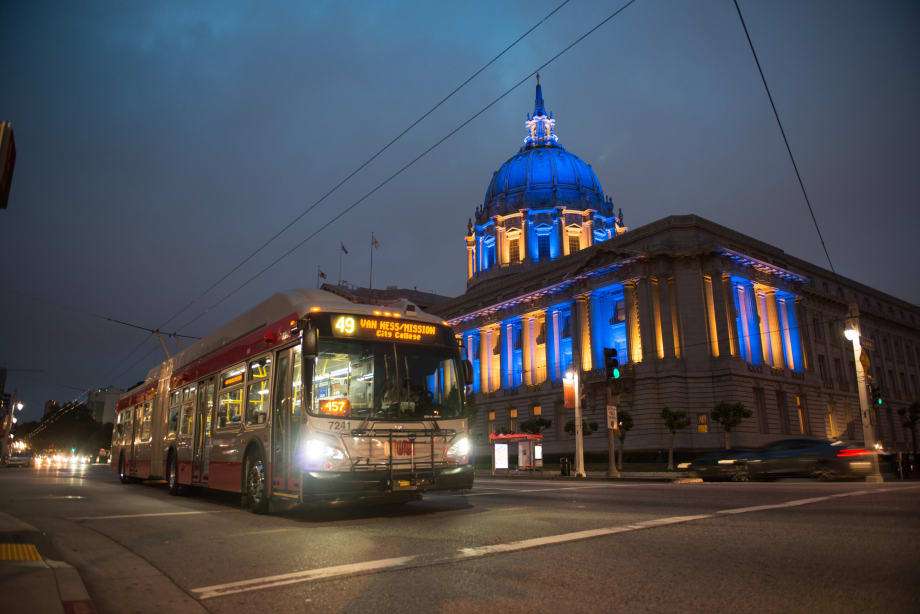
All photos courtesy New Flyer
All photos courtesy New Flyer
New Flyer of America Inc., a subsidiary of New Flyer Industries Inc., announced that deliveries of zero-emission buses (ZEBs) in 2016 reached their highest level in company history, delivering 213 equivalent units (EUs) in 2016. This ZEB milestone was a dramatic increase of 48% from 144 ZEB EU’s delivered in 2015, and represents 8.3% of New Flyer’s total heavy-duty transit bus production in 2016.
“New Flyer believes that zero emission acceptance has now hit a breakthrough level for the heavy-duty transit market in 2016,” said Wayne Joseph, president, New Flyer. “We estimate that approximately 255 EU’s of the heavy-duty transit bus deliveries in 2016 were zero emission, and New Flyer is proud to have delivered more than 83%.”
New Flyer manufactures all three current types of ZEBs, including: battery-electric, trolley-electric, and hydrogen fuel-cell electric buses. This unprecedented design and manufacturing capability allows transit authorities the ability to optimize charging method, infrastructure and range capability for their specific needs.
All New Flyer ZEBs are based on the proven Xcelsior® heavy-duty transit bus platform, driven by electric motors, and share common electric accessories. Including hybrid-electric propulsion, New Flyer has now delivered over 6,400 buses driven by electric motors to the North American transit industry over the past 20 years.
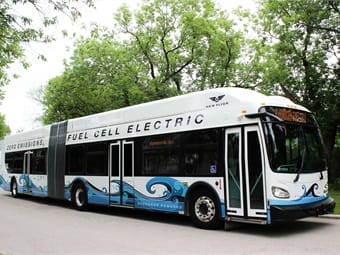
New Flyer has developed a strong portfolio of clean-air solution partners with industry technology leaders including Siemens, BAE, Allison, XALT Energy, A123 Systems, Vanner, Thermo King, EMP, Parker, Vossloh-Kiepe, Shunk, and Cummins, according to the company. In addition, New Flyer’s focus on emissions reduction includes propulsion systems with the latest generation of hydrogen fuel cells from Ballard Power Systems and Hydrogenics.
New Flyer’s clean-air solutions expanded in 2016, with the delivery of the industry’s first OEM installation of the Cummins ISL-G Near-Zero NOx engine into the Xcelsior platform. New Flyer understands that that the natural evolution of emission reduction is different for every transit property, therefore will continue to dedicate themselves to offer the broadest, best and most reliable clean air solutions in the industry on a proven platform.
New Flyer is also currently validating North America’s first 60-foot articulated battery-electric bus with a hydrogen fuel-cell range extender, complemented by dual driven axles for enhanced traction, at the Federal Transit Administration’s Altoona proving grounds.
A zero-emission transit bus is able to eliminate 1,690 tons of CO2 over its 12-year lifespan, which is equivalent to taking 27 cars off the road for each ZEB. Additionally, each ZEB also eliminates approximately 10 tons of nitrogen oxides and 350 pounds of particulate matter, improving air quality in the communities served.
More Technology

From Hardware to Digital Partner: Luminator Charts Its Next Chapter
CEO Magnus Friberg discusses Luminator’s shift toward becoming a digital partner, the growing importance of software and interoperability, and how AI can help agencies improve operations and passenger experience.
Read More →
Beyond the Checklist: A Structured Approach to Transit Maintenance
Reliability-Centered Maintenance helps transit agencies move beyond routine checklists to focus limited resources on the assets and failures that have the greatest impact on safety, reliability, and service.
Read More →
NJ TRANSIT Advances Bus Technology Upgrades Across Statewide Fleet
More than 1,500 buses now feature upgraded technology designed to improve arrival predictions and provide free Wi-Fi, with deployment expected to reach nearly 2,000 buses by the end of 2026.
Read More →

Building a Flexible Path to Transit Electrification
John Hroncich discusses BAE Systems’ modular and scalable approach, lessons learned from decades of real-world operations, and how agencies can identify electrification strategies that fit their fleets.
Read More →
Biz Briefs: Alstom Lands Canadian Contract, LYT to Supply California TSP, and More
In METRO's latest installment, we take a look at recent news from Complete Coach Works, Beep, FlixBus, and more partnerships making headlines across the transportation sector.
Read More →
From Legacy Silos to Conversational Intelligence
What if transit leaders could ask any operational question and get a trusted answer in seconds? Conversational AI is transforming how agencies use their data.
Read More →
USDOT Announces Rail Vehicle Replacement Grants, Chattanooga AV Shuttle Funding
More than $191 million in federal funding will help three transit agencies replace aging rail vehicles and support a new autonomous shuttle service in Chattanooga.
Read More →
Bus Tech Talk: Keeping Transit Technicians Ahead of the Technology Curve
LA Metro’s Obed Mejia discusses technician training, evolving maintenance technology, fleet replacement, and strategies for getting the most out of today’s transit fleets.
Read More →
Biz Briefs: RIPTA Unveils New Frontrunners, Clevland RTA Adds New Siemens, and More
In METRO's latest installment, we take a look at recent news from Siemens, Prevost, Dodge, and more partnerships making headlines across the transportation sector.
Read More →
Why Simulating Pedestrian Movement Has Become Essential for Modern Rail Stations
Pedestrian microsimulation is helping rail planners identify bottlenecks, test station designs, and prepare complex transit hubs for growing passenger volumes.
Read More →