



Sound Transit floating bridge tech for light rail wins award
Light rail vehicles will travel across the Homer M. Hadley Memorial Bridge over Lake Washington. It will be the first light rail line in the world to operate on a floating bridge.

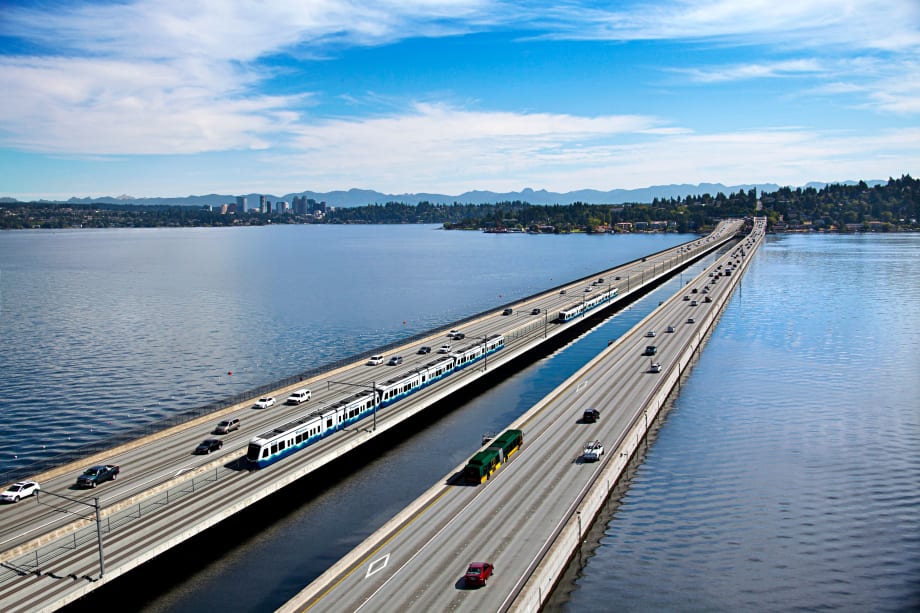
Sound Transit’s light rail system from downtown Seattle to Redmond via I-90, light rail vehicles will travel across the Homer M. Hadley Memorial Bridge over Lake Washington. Photo: Sound Transit
Sound Transit’s light rail system from downtown Seattle to Redmond via I-90, light rail vehicles will travel across the Homer M. Hadley Memorial Bridge over Lake Washington. Photo: Sound Transit
Sound Transit's technology to enable light rail trains to travel across Lake Washington on the I-90 floating bridge has received a 2017 Best of What's New award from Popular Science.
As part of the East Link project, a 14-mile extension of Sound Transit’s light rail system from downtown Seattle to Redmond via I-90, light rail vehicles will travel across the Homer M. Hadley Memorial Bridge over Lake Washington. It will be the first light rail line in the world to operate on a floating bridge.
WSP USA led and managed a multidisciplinary team, including the University of Washington and the Transportation Technology Center Inc., to conceive and develop an innovative concept from computer modeling and analysis through detailed design and prototype testing of a “track bridge” technology that will enable light rail vehicles to transition from the fixed to the floating sections of the I-90 bridge. Trains will travel on a 1.1-mile floating span linked via transition spans to concrete box girder approach spans on either end.
The structural system is subject to dynamic, multidimensional movement of the bridge deck at the existing expansion joints, due to changing lake elevations, vehicle traffic loading, wind, waves and, for extreme conditions, the breaking of anchor cables, all of which were addressed in the design. Development of the design required the collaboration of a team consisting of track and structural engineers, computer modelers, research specialists and special trackwork fabricators, working with construction experts, to take the project from concept through full-scale prototype testing.
The WSP team conceived, developed and demonstrated a novel concept, the Curved Element Supported Rail (CESuRa) system, which works through the interaction of curved and rotating track supports, which automatically adjust for multi-directional movements of the supporting bridge deck. This innovative approach addressed yaw, pitch and roll movements and will provide a smooth alignment and profile under all movement combinations.
The track bridge concept was tested by operating two Link light rail vehicles at up to 55 miles per hour across two prototype track bridges at the Transportation Technology Center in Pueblo, Colorado in 2013.
East Link is now under construction, with completion expected in 2023.
More Technology
Frontrunner Bus Group Introduces XF Low-Floor Bus with Enhanced Accessibility
The new mid-sized bus features a full flat-floor design, eight-inch curbside step-in height, and zero-entry rear ramp to improve passenger access and operational flexibility.
Read More →
Building a Flexible Path to Transit Electrification with BAE's John Hroncich
John Hroncich discusses BAE Systems’ modular and scalable approach, lessons learned from decades of real-world operations, and how agencies can identify electrification strategies that fit their fleets.
Read More →
Scenes from APTA TRANSform & EXPO 2026
Transit leaders, manufacturers, and industry professionals gathered in Chicago to explore new technologies, share ideas, and discuss the future of public transportation.
Read More →
Biz Briefs: New Flyer Secures Additional 100-Bus Order from WMATA and More
In METRO's latest installment, we also take a look at recent news from Masabi, MCI, Samsara, and more partnerships making headlines across the transportation sector.
Read More →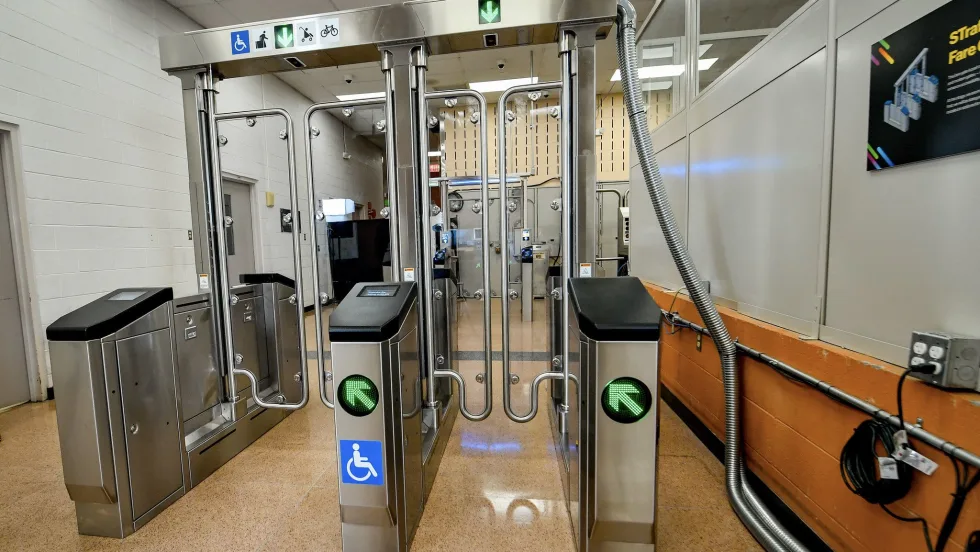
MTA Fare Gate Pilot Reduces Fare Evasion by 35%
Following a 20-station pilot, the agency plans to install new fare gates at 20 additional subway stations as part of a $1.1 billion modernization initiative.
Read More →
California Law Extends AC Transit’s Bus Lane Camera Enforcement
The new law allows AC Transit to continue using forward-facing bus cameras to enforce parking violations in bus-only lanes and at bus stops.
Read More →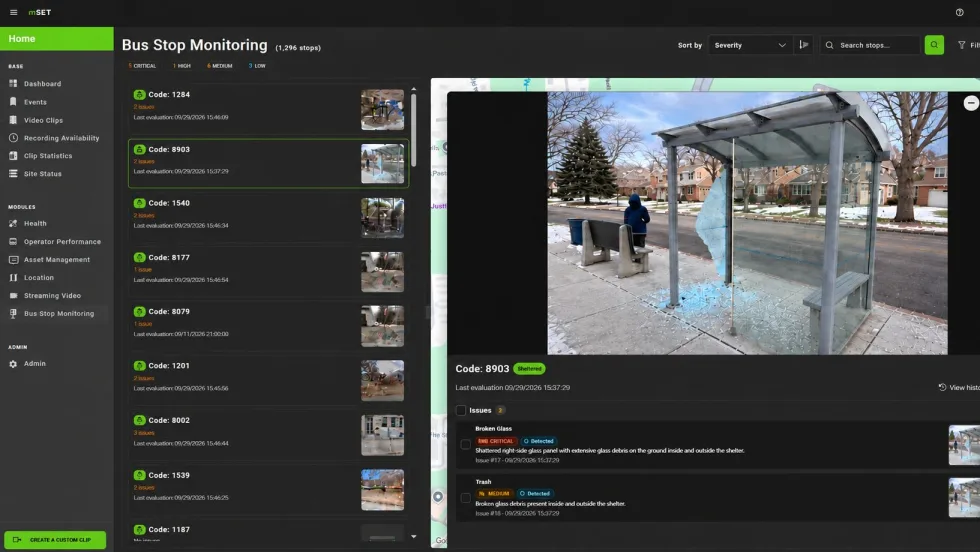
Biz Briefs: Luminator Launches AI Technology to Monitor Bus Stop Conditions and More
In METRO's latest installment, we also take a look at recent news from Masabi, Troman Industries, ioki, CCW, and more partnerships making headlines across the transportation sector.
Read More →
Public Transit Conference Returning to GFX in 2027, Call for Papers Now Open
The Call for Papers is now open, allowing transit agency professionals and industry experts to help shape the PTC educational program by submitting session ideas for consideration.
Read More →
ENC Lands MATA Contract and More in Biz Briefs
In this edition of Biz Briefs, we spotlight the latest developments shaping the future of mobility.
Read More →
Strada360’s Steve Lassey on Turning Transit Data Into Better Decisions
From breaking down data silos to preparing for AI, Strada360 CEO Steve Lassey discusses how transit agencies can use technology to improve operations, customer information, and long-term decision-making.
Read More →