



Cummins announces availability of X12-powered MCI coaches in 2019
The X12 boasts an innovative sculpted block design that results in a remarkably low engine weight of 2,150 lbs., by eliminating unnecessary mass without compromising rigidity and performance.

Cummins Inc. announced that beginning in 2019, X12-powered motorcoaches will be available for delivery from Motor Coach Industries (MCI), a subsidiary of New Flyer Industries Inc. (NFI Group).
“Over the years of working with MCI, we’ve learned that coach customers expect their engines to provide the power they need in the lightest, smallest, most fuel efficient package that keeps them on the road,“ said Laura Chasse, GM for Cummins North America Bus Engine Business.
To meet these needs, the Cummins X12 boasts an innovative sculpted block design that results in a remarkably low engine weight of 2,150 lbs., by eliminating unnecessary mass without compromising rigidity and performance. Delivering up to 455 hp (339 kW), the X12 power-to-weight ratio of 0.21 hp per lb. (0.35 kW per kg) surpasses similar-sized products in the coach market.
Derived from the X15 engine, the XPI fuel system is scaled down in size for the 12-liter platform, but retains all the same robust characteristics. Along with the XPI fuel system, the Variable Geometry Turbocharger is central to the X12 engine architecture, providing versatility to meet the challenges of light-urban, suburban or intercity drive cycles while delivering best-in-class uptime.
The X12 uses the latest Single Module™ aftertreatment system, which takes up to 60% less space and weighs up to 40% less than prior aftertreatment configurations. Combined engine and aftertreatment weight for the X12 is around 2,340 lb. — significantly lower than that of any other heavy-duty engine.
Each of the technology decisions made with the X12 has allowed for a reduced size and weight of the overall system, offering more room in the engine compartment, which is better from a serviceability standpoint. “We are always looking for ways to improve the service and maintenance efficiency for technicians,” said Patrick Scully, MCI executive VP, sales and marketing. “Validation work for the new engine has been underway since 2017 and will continue through to product launch in 2019, but by providing the latest technologies and the lightest heavy-duty engine in its class, we expect our customers to experience the lowest total cost of ownership with MCI coaches.”
The X12 will be available in J4500, D-Series, Commuter Coach, and Inmate Specialty Coaches starting in 2019.
More Technology
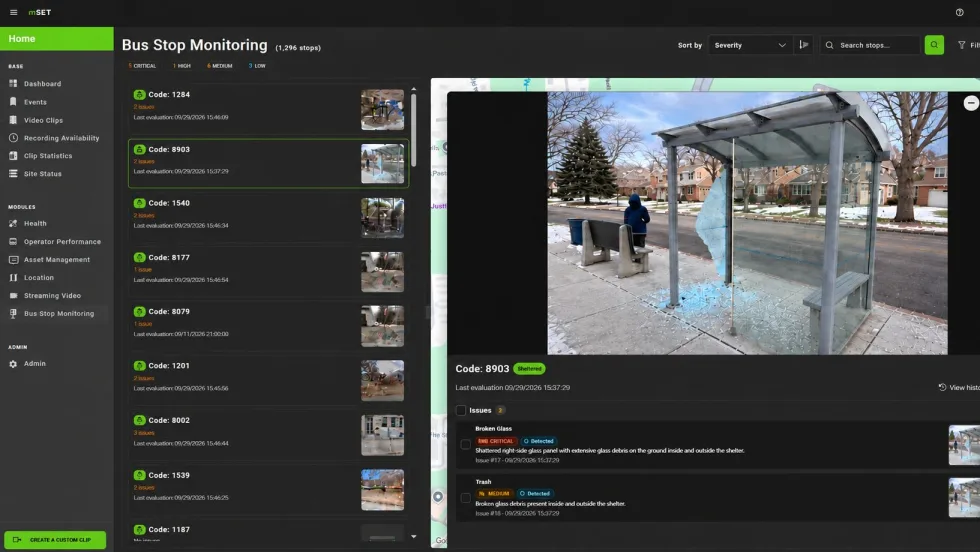
Biz Briefs: Luminator Launches AI Technology to Monitor Bus Stop Conditions and More
In METRO's latest installment, we also take a look at recent news from Masabi, Troman Industries, ioki, CCW, and more partnerships making headlines across the transportation sector.
Read More →
Public Transit Conference Returning to GFX in 2027, Call for Papers Now Open
The Call for Papers is now open, allowing transit agency professionals and industry experts to help shape the PTC educational program by submitting session ideas for consideration.
Read More →
ENC Lands MATA Contract and More in Biz Briefs
In this edition of Biz Briefs, we spotlight the latest developments shaping the future of mobility.
Read More →

Strada360’s Steve Lassey on Turning Transit Data Into Better Decisions
From breaking down data silos to preparing for AI, Strada360 CEO Steve Lassey discusses how transit agencies can use technology to improve operations, customer information, and long-term decision-making.
Read More →
Almaviva Looks to Open Architecture to Advance Transit Technology
Eric Reese discusses how interoperability, open architecture, and modular design can help transit agencies control costs, reduce vendor lock-in, and upgrade technology without starting over.
Read More →
Driving Smarter Paratransit
John Hanlon shares how AlphaRoute is leveraging AI-powered technology to help paratransit providers optimize operations, support frontline staff, and enhance the rider experience.
Read More →
From Hardware to Digital Partner: Luminator Charts Its Next Chapter
CEO Magnus Friberg discusses Luminator’s shift toward becoming a digital partner, the growing importance of software and interoperability, and how AI can help agencies improve operations and passenger experience.
Read More →
Beyond the Checklist: A Structured Approach to Transit Maintenance
Reliability-Centered Maintenance helps transit agencies move beyond routine checklists to focus limited resources on the assets and failures that have the greatest impact on safety, reliability, and service.
Read More →
NJ TRANSIT Advances Bus Technology Upgrades Across Statewide Fleet
More than 1,500 buses now feature upgraded technology designed to improve arrival predictions and provide free Wi-Fi, with deployment expected to reach nearly 2,000 buses by the end of 2026.
Read More →
Building a Flexible Path to Transit Electrification
John Hroncich discusses BAE Systems’ modular and scalable approach, lessons learned from decades of real-world operations, and how agencies can identify electrification strategies that fit their fleets.
Read More →