



Web Extra: Universities creating bike-friendly environments
Transit operators from California, Texas, Illinois and Colorado are making it easy for students and faculty to commute to and get around campus by bicycle, offering a wide variety of service, ranging from bike repair stations to folding bicycle promotions.


May 10 was National Bike to Work Day. However, for many universities, every day offers the chance to commute to work and class by bike. We wanted to find out more about what bike-friendly features and services university transit operators offer to students and faculty, and it turns out there’s a wide variety, ranging from bike repair stations to folding bicycle promotions.
Here are their responses:
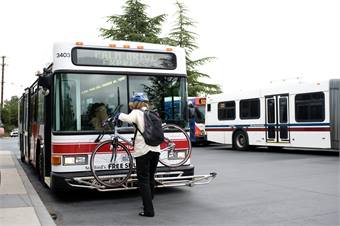
“Stanford University is designated a platinum-level bicycle friendly university by the League of American Bicyclists. The university’s commitment to bicycling is reflected in its Marguerite shuttle service, which offers free transit to the campus community and the public.
Stanford’s bicycle program includes services to support safe biking in conjunction with taking transit, including having bike racks available on all 47 Stanford Marguerite buses, which travel around Stanford University and Stanford Medical Center, with connections to transit stations and nearby communities; free bike safety classes; a folding bicycle promotion for eligible commuters, which enables bicyclists to take their bike to their seat; a free one-week folding bike rental and a $100 subsidy toward the purchase of selected folding bikes at the Campus Bike Shop; 'Thriving at Stanford Without a Car,' a publication that includes transit and bike options and estimated travel times; Commute Club rewards for eligible commuters who use alternative transportation, including taking transit and/or bicycling; and free "How to load a bike on a bus" demonstrations.”
Lisa Kwiatkowski, marketing and TDM outreach manager,Stanford University parking & transportation services
Stanford University
Stanford, Calif.
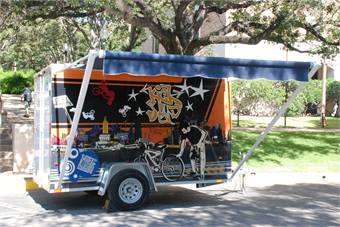
“At the University of Texas at Austin, bicycles are a popular form of transportation around the campus and the city. Bicycling is a significant component of the university’s plan to reduce local traffic congestion and air pollution. Each year we continue to work on improving bicycling on campus. Over the years we have added several services and amenities making it much easier to travel by way of bicycle. We furnish Cycle-Safe bicycle lockers for convenient and safe bicycle storage throughout campus. We also provide the use of tools and air pumps free of charge. Some pumps are even installed at racks making it convenient to pump up tire(s) while parked. For those who forget their U-lock or [if] it has malfunctioned, a cyclist can check out a U-lock to rent for free. We also operate a one-stop shop called The Kickstand [pictured above], where cyclists can check out U-locks, use tools, get help with minor bike adjustments and purchase basic bicycle accessories at discounted prices.”
Blanca Juarez, alternative transportation manager, parking and transportation services
University of Texas at Austin
Austin, Texas
“MTD works closely with the communities of Champaign, Urbana, and Savoy, the University of Illinois and the Champaign County Regional Planning Commission on long-range transportation plans that include both transit and bicycling components. Master plans include continued growth of bike lanes; bicyclists’ ability to coordinate with public transportation is important for the success of both alternative transportation modes.
Every MTD vehicle has a bike rack with room for two bicycles. Policy also allows riders to bring aboard foldable bicycles stowed away to prevent interference. MTD facilities have numerous bicycle racks.
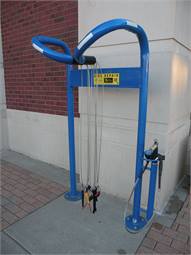
In addition to the many bike parking locations, there is Bike Repair Station at Illinois Terminal [pictured]. The repair station includes most tools needed to make quick repairs to keep bicyclists moving.
MTD works closely with bicycling advocacy groups as well as the communities of Champaign, Urbana, and Savoy and the University of Illinois to educate and encourage cyclists. Each year, MTD participates with these organizations in National Bike to Work Day, Bike and Walk to School Day, and a giveaway of bicycle lights at our ‘Light the Night’ event in the fall.
The League of American Bicyclists has named Champaign-Urbana Mass Transit District a Silver Level Bicycle Friendly Business. At our main office building there is bicycle parking, a bicycle repair locker with tools to make most repairs, and shower facilities for bicyclists’ use. Employees are encouraged to bicycle to work and each year on National Bike to Work Day, riders get treats when they arrive at work.”
Jan Kijowski, marketing director
Champaign-Urbana Mass Transit District
Champaign, Ill.
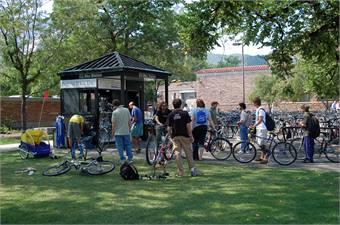
“[We offer] free 48-hour bike rentals for students, faculty and staff. Once you register your bike for a one-time $10 fee you get free repairs from trained mechanics at our bike station; access to a wide selection of professional grade bike tools and work stands; $2 bike tubes if we can't patch your tube; and free mobile mechanic services. We come to you and fix your bike.
We are adding a second bike station in mid-August to help keep up with our high demand.”
Brandon C. Smith, sustainable transportation program manager
University of Colorado Boulder
Boulder, Colo.
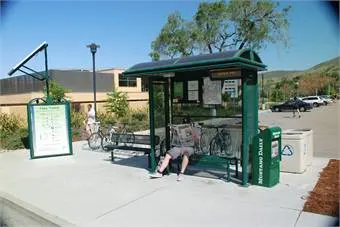
“At Cal Poly we provide approximately 6,500 bike racks throughout campus. Peak Racks makes our campus standard but we also have covered bike racks at most of our residence halls. [We also provide] 234 secure bike lockers located throughout campus; bike fix-it stations, bike racks located at bus shelters; the Rail Road Safety Trail, which links the campus to the city of San Luis Obispo; and “Walk Your Bike” zones in locations with heavy pedestrian traffic.
[Additionally,] city and regional buses that serve Cal Poly are equipped with bike racks.”
Susan Rains, commuter and access services coordinator, university police department
California Polytechnic State University
San Luis Obispo, Calif.
More Bus

Improving Transit Safety and Reliability Through AI
Hayden AI’s Chief Growth Officer, Charley Territo, discusses how AI-powered camera enforcement is helping transit agencies keep bus lanes and stops clear, improve accessibility, and move from pilot programs to full-scale deployments.
Read More →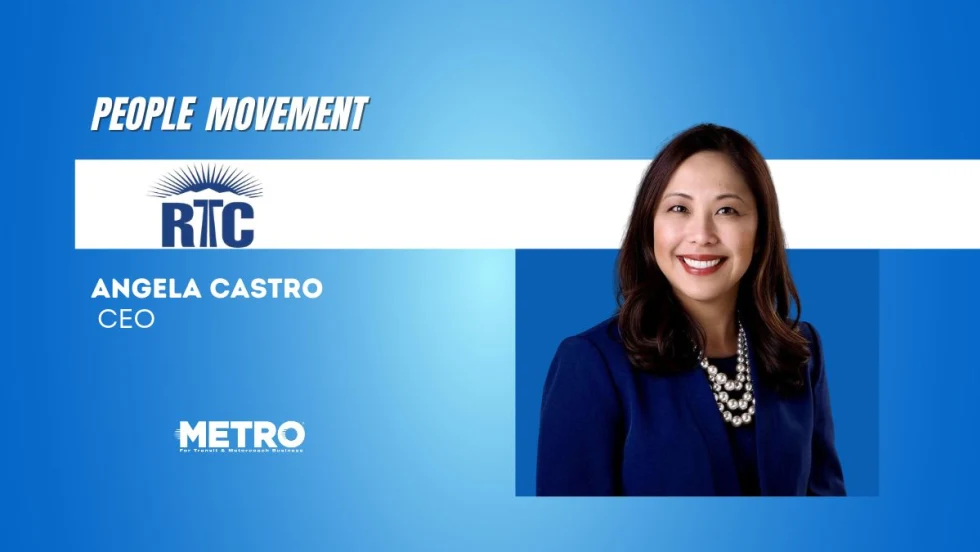
Castro to Lead RTC of Southern Nevada and More in People Movement
In this edition, we also cover recent appointments and announcements at the STV, MCI, and more, showcasing the individuals helping to shape the future of transportation.
Read More →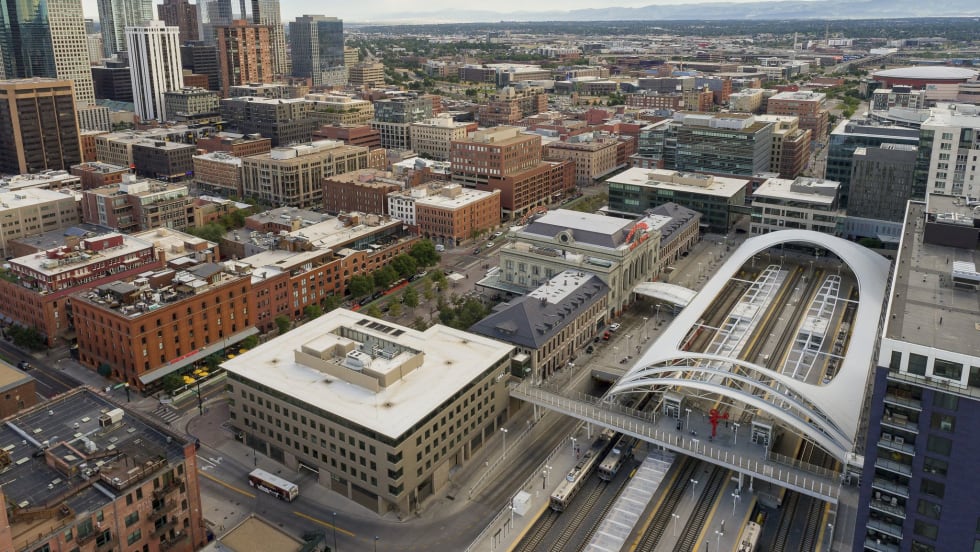
Study: Denver RTD Generates $2.1 Billion in Annual Economic Activity
An economic impact study finds the agency supports approximately 17,500 jobs, delivers $1.6 billion in annual community and mobility benefits, and generates $2.42 in economic value for every dollar invested.
Read More →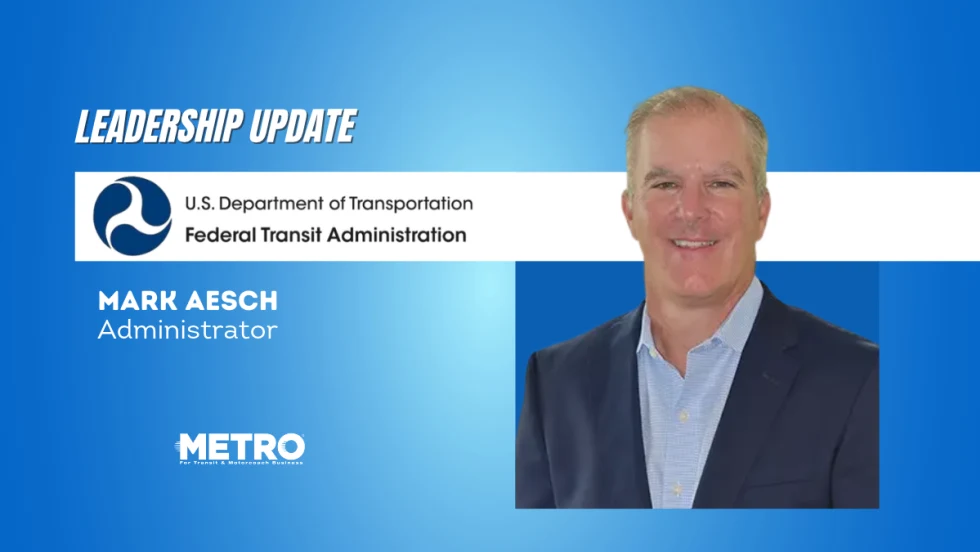
Mark Aesch Nominated to Lead Federal Transit Administration
The former Rochester transit chief and TransPro founder, who has also contributed to METRO Magazine, brings decades of industry experience and a focus on performance, accountability, and financial sustainability to the nomination.
Read More →
Pierce Transit Moves to Expand Fleet Following Proposition 1 Approval
The agency authorized the purchase or refurbishment of up to 60 buses to support a 47% service expansion, as voters nationwide approved billions in new transit funding.
Read More →
Transit Expands Agency Partnerships, Reaching 200 Official App Partners
COO Jake Sion discusses Transit’s growth, the success of its Transit Royale program, and how technology is helping agencies improve the rider experience.
Read More →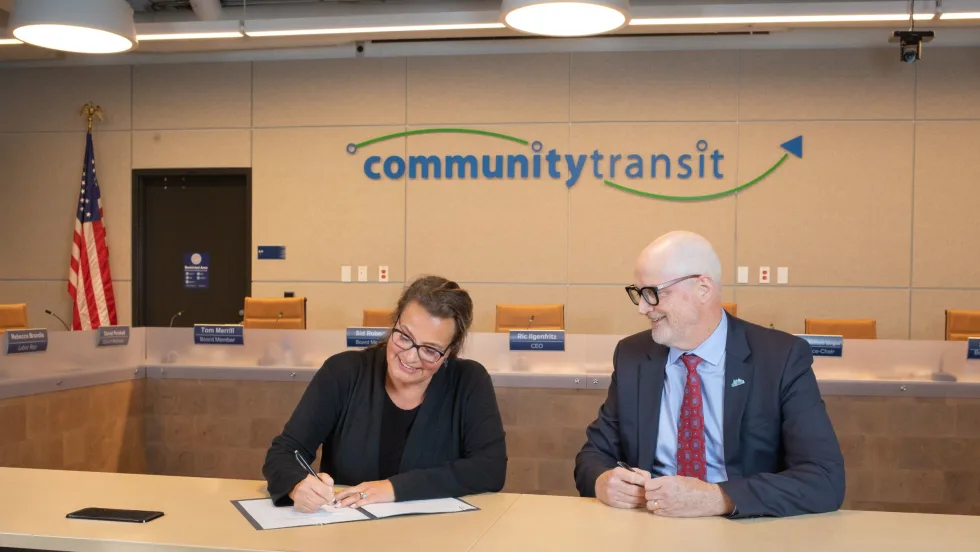
Everett Transit, Community Transit Approve Consolidation of Services
The agreement will bring Everett Transit into Community Transit’s network in April 2027, with plans to increase bus service by 50% by 2031 and expand regional connections.
Read More →
Brian Dickson on Building Stronger, More Resilient Transportation Organizations
Bus Business Consultants Founder Brian Dickson discusses the leadership principles, operational discipline, and strategic planning that separate transportation companies positioned for long-term success from those stuck in survival mode.
Read More →
LA Metro Breaks Ground on Vermont BRT Project
The 12.4-mile corridor is projected to serve 66,200 daily riders, reduce travel times by up to 24%, and create the nation's busiest bus rapid transit corridor.
Read More →
Roman Cornell on ABC Companies’ Evolution and the Future of Passenger Transportation
The company’s CEO discusses carrying forward a third-generation family legacy, ABC’s continued evolution in passenger transportation, support for increasingly complex fleets, and how technology and continued investment could help operators improve uptime.
Read More →