



TransLoc unveils new version of OnDemand
Provides an Uber-like mobile experience for passengers and drivers, while giving transit administrators the most effective platform to operate a state-of-the-art demand-response system.


A new release of TransLoc OnDemand enables university transit providers to have a complete, automated, mobile-centric solution that meets the needs of students and simplifies the process.
TransLoc OnDemand provides an Uber-like mobile experience for passengers and drivers, while giving transit administrators the most effective platform to operate a state-of-the-art demand-response system. Within a single interface, passengers can see all available fixed-route options and request on demand rides with a single click. Drivers are guided along the most efficient route and no longer have to coordinate pickup locations while on the move. OnDemand’s fully-automated dispatch and smart ridesharing capabilities bring new levels of efficiency and have proven to help agencies provide more rides, drive fewer miles and reduce Safe Ride operating expenses.
OnDemand has recently been deployed at select universities where the results are exceeding even the most optimistic expectations, ushering in the new era of mobility and transit technology.
New York University (NYU) recently replaced their existing system with OnDemand to run their point-to-point Safe Ride program in Manhattan. In the first month the number of passengers served per day has increased by 32% and rider wait times have decreased by 15%. In addition, these improvements were obtained without adding a single vehicle or driver to their existing safe ride program.
Emory University recently upgraded their safe ride program using TransLoc OnDemand. Within a month the number of rides given per week has gone up 53%, and inbound dispatcher calls have gone down 49%. Like NYU, the gains at Emory have been achieved without increasing the number of miles driving or adding a single new vehicle to the system.
TransLoc OnDemand is helping university transit officials do more with less. OnDemand makes it possible to provide more rides, satisfy more passengers and surpass technical expectations; all while driving fewer miles and reducing overall safe ride expenses.
More New Mobility

From Hardware to Digital Partner: Luminator Charts Its Next Chapter
CEO Magnus Friberg discusses Luminator’s shift toward becoming a digital partner, the growing importance of software and interoperability, and how AI can help agencies improve operations and passenger experience.
Read More →
Biz Briefs: Alstom Lands Canadian Contract, LYT to Supply California TSP, and More
In METRO's latest installment, we take a look at recent news from Complete Coach Works, Beep, FlixBus, and more partnerships making headlines across the transportation sector.
Read More →
CharterUP’s Armir Harris on Technology, AI, and the Future of Group Mobility
In a recent episode of METROspectives, CharterUP Founder/CEO Armir Harris discussed the company’s evolution from an online charter bus marketplace into a technology platform supporting public- and private-sector mobility and much more.
Read More →
Jacksonville’s NAVI Project Charts a New Course for Autonomous Public Transportation
Through its NAVI program, JTA is showing how autonomous vehicles, intelligent infrastructure, and coordinated operations can work together to deliver everyday public transportation.
Read More →
Biz Briefs: Luminator Marks Milestone and More
From manufacturers and suppliers to transit agencies and motorcoach operators, these updates offer a snapshot of the projects, partnerships and business moves driving the industry forward.
Read More →
New Tricks for Old Bureaucracies: Joshua Schank on Making Transit Innovation Stick
Former LA Metro Chief Innovation Officer Joshua Schank discusses why good ideas aren't enough, how transit agencies can overcome resistance to change, and why today's challenges demand more innovation.
Read More →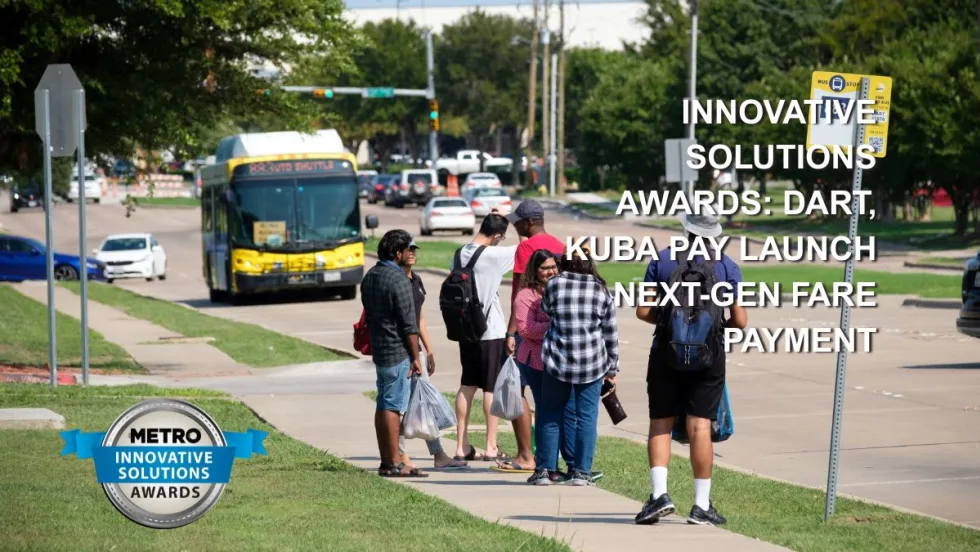
How DART's GoPass Is Redefining Regional Mobility
Serving 14 transit agencies, GoPass simplifies multimodal travel by allowing riders to plan, pay for, and manage an entire trip through one app.
Read More →
Biz Briefs: OCTA Taps Clean Energy for Hydrogen Station, Stadler to Supply Via Rail Vehicles, and More
From manufacturers and suppliers to transit agencies and motorcoach operators, these updates offer a snapshot of the projects, partnerships and business moves driving the industry forward.
Read More →CharterUP Expands Into New Mobility and Autonomous Transportation
Vice President of New Mobility Stephen Joos discusses how CharterUP is leveraging its nationwide transportation network, technology platform, and autonomous vehicle partnerships to expand into workforce mobility, campus shuttles, and transit solutions.
Read More →
METRO Magazine Announces 2026 Innovative Solutions Awards Winners
Projects Recognized for Advancing Mobility Through Technology, Accessibility, Workforce Innovation, and Operational Excellence
Read More →