




RELATED: Portland St. U. transportation center earns $15M grant
U. of Oregon partners with TriMet on light rail project
The university's Sustainable City Year Program will engage hundreds of students in transit and transportation development plans.
March 6, 2017
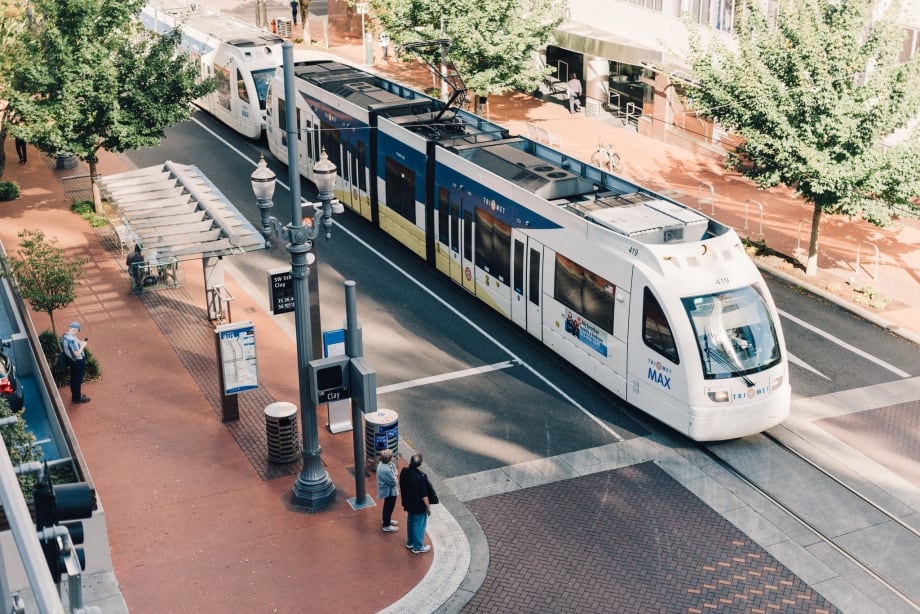
TriMet's MAX light rail service. Photo: TriMet
3 min to read
TriMet's MAX light rail service. Photo: TriMet
The University of Oregon’s Sustainable City Year Program (SCYP) has announced its partnership with TriMet for the 2017-2018 academic year. Starting in September 2017, TriMet and the University will begin coordinating on dozens of multidisciplinary projects that will focus on the Southwest Corridor Light Rail Project (SWC). The project aims to bring transit, bicycle, roadway and pedestrian improvements to communities in southwest Portland and southeast Washington County. Several SWC project partners will participate in the SCYP year, including Metro, Washington County, Oregon Department of transportation, and the Cities of Portland, Tigard, and Tualatin.
"The Southwest Corridor is growing quickly, and so is the need for better transportation choices, housing options, and access to parks and nature,” said Elissa Gertler, Metro Planning and Development Director. “The students' energy and fresh perspectives will be a big help as we work to meet growing demand."
Students will explore concepts related to urban mobility, climate change, environmental habitat and restoration, urban design and placemaking, and public outreach. The partner agencies have proposed projects that investigate policies for autonomous vehicles, creation of a renewable energy districts, redefining regional transit projects as habitat corridors, and public outreach for conceptual design support within communities.
Now in its eighth year, the Sustainable City Year Program seeks to apply students’ innovation, ingenuity, and fresh perspectives, to local governments and agencies seeking a transition to a more sustainable future. The model, now being implemented in 27 universities across the country, typically links the students from the University of Oregon with an Oregon city, county, special district, or partnership of governments for an entire academic year. This will be the first year that the UO is partnering with a transit agency.
In a typical SCYP year, more than 500 students across 12 disciplines work on dozens of partner-directed projects. By the end of the partnership, student will have devoted over 40,000 hours to helping TriMet realize its sustainability goals.
About the Southwest Corridor Light Rail Project
The proposed 12-mile transit line between Downtown Portland, Tigard, and Tualatin will provide faster, more frequent service to a growing corridor.
The project will improve connections to key destinations, including Portland State University, OHSU, Portland Community College Sylvania, the Tigard Triangle, Kruse Way and Tualatin.
A fast growing corridor with more than 10% of the region’s population.
The area is expected to grow by over 70,000 residents and 60,000 jobs by 2035.
With congestion expected to double in the next 20 years, it’s the last major corridor in the region without high-capacity rail service.
Roads, sidewalks and bikeways will also be constructed or improved along the project alignment.
Cost is estimated at $2.4 billion with 50 percent of the funding coming from the Federal government.
Construction expected to begin in 2021 with the project opening in 2025
More Bus

More Than a Summer Job: Building the Next Generation of Transit Talent
The Delaware River Port Authority and PATCO have transformed their internship program into a hands-on professional development experience that introduces students to the breadth of transportation careers — and creates a pipeline for future employees.
Read More →
LA Metro Board Awards 220 Battery-Electric Bus Contract to ENC
The contract, which is the largest base award of battery-electric buses by a U.S. transit agency, will be built in Southern California, sustaining good jobs as LA prepares to welcome the world in 2028
Read More →
Public Transit Conference Returning to GFX in 2027, Call for Papers Now Open
The Call for Papers is now open, allowing transit agency professionals and industry experts to help shape the PTC educational program by submitting session ideas for consideration.
Read More →
Indian River Transit’s Community-Focused Approach Earns National Recognition
Named APTA’s 2026 Outstanding Public Transportation System in its size category, Florida’s Indian River County transit system continues to grow ridership through fare-free service and a focus on evolving community needs.
Read More →
ENC Lands MATA Contract and More in Biz Briefs
In this edition of Biz Briefs, we spotlight the latest developments shaping the future of mobility.
Read More →
From Surviving to Thriving: Building Stronger Transportation Organizations
Bus Business Consultants founder Brian Dickson shares lessons on leadership, organizational health, and creating options for long-term success in a changing transportation industry.
Read More →
Everett Transit, Community Transit Outline Consolidation Agreement
The proposed agreement calls for a 50% increase in bus service in Everett, a new microtransit zone, continued paratransit service, and the transfer of Everett Transit operations to Community Transit.
Read More →
SEPTA Details Accelerate Vision for Transit System
The plan outlines investments in trolley modernization, new Metro and Regional Rail vehicles, accessible stations, and more frequent bus and rail service.
Read More →
Report: Transit Bus Manufacturing Supports 34,100 Jobs, $5.1B in GDP
The “Buses Mean Business” report examines the transit bus manufacturing industry’s economic footprint, supply chain, and rising demand for vehicle replacements.
Read More →
Biz Briefs: New Flyer Delivers in Columbus, Houston, Beep and Freebee Merge, and More
In this edition of Biz Briefs, we spotlight the latest developments shaping the future of mobility.
Read More →