



Tailored Programs Educate Public on Transit Options
Programs aimed at young children use field trips and visual effects-filled presentations to extol the benefits of using transportation, while others geared toward seniors use discussions and training to help them make the sometimes difficult transition from driving.
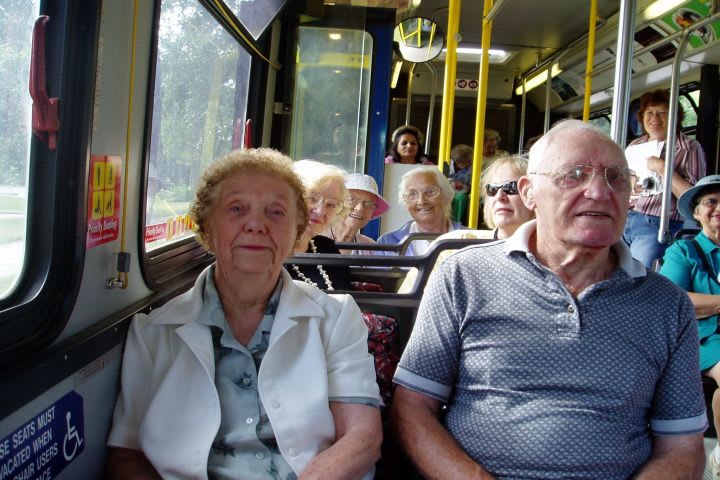
[IMAGE]MET11education-seniors.jpg[/IMAGE] Lori Eaton spends her afternoons hurling giant smoke rings, racing marbles and bringing pig lungs back to life — all in the name of public transportation. Though it may appear that she is a magician by trade, Eaton is actually one of many transit educators across North America instructing the public on the use and benefits of public transportation.
The program Eaton works for, “ET: Protector of the Planet,” is an interactive DVD program featured at the Everett, Wash.-based Imagine Children’s Museum. The program, which premiered in May, has already garnered a Promising Practice Award from the MetLife Foundation and Association of Children’s Museums.
It is just one of many innovative programs that transit authorities across North America have implemented in recent years in an effort to educate the public on the use and benefits of public transit, increase ridership, make the streets safer, the environment less polluted and life better overall in their communities.
Engaging a young audience
Because these programs vary in their audiences, their approaches and activities also vary. The programs for children, for example, tend to adopt a highly varied, fast-paced and playful approach. Museum staffers, who collaborated with Everett Transit to create the “ET” program, like to refer to the element of playfulness that engages their young audience during the program as the “wow factor.”
“That is our claim to fame here at the Children’s museum,” says Executive Director Nancy Johnson. “Because we know that’s how [children] remember it, we try to bring in props that have huge visual effects.”
Such visual effects include the aforementioned smoke rings and pig lungs, which are interspersed throughout the hour-long program in live demonstrations, to show the effect that air pollution can have on the human body and, thus, the importance of public transit in reducing that pollution.
Throughout the “ET” program, Eaton, education manager at the Imagine Children’s Museum, also interacts with the characters in the DVD program, which captivates her young audience. “The students participating in the program think that it’s very magical,” she says. “It really gets them engaged.”
Other programs aimed at educating children on the benefits of public transportation include the Corpus (Texas) Christi Regional Transportation Authority’s (CCRTA) Youth Educational Program. As part of the program, local schoolchildren receive coloring books, get a chance to sit in a bus driver’s seat, visit bus yards, meet with mechanics and experience a bus wash. In addition, the children get a chance to eat lunch with the bus drivers.
Like the Children’s Museum, Kristi Peña, CCRTA’s interim manager of customer programs/communications/marketing, has also found it helpful to keep activities fast-paced, highly-varied and playful for young audiences. “They feel really important sitting next to a bus operator,” she says. “We also have a mascot — a big bumble bee — that they really get excited over.”
When working with older students, Peña changes her approach. She tailors each school campus visit to the particular group of students she is educating. For a high school economics class, she once handed out information on CCRTA’s rider demographics and asked students to answer specific questions based on the data for a graded assignment.
“A lot of the older kids feel like it’s not cool to ride the bus,” Peña says. “I try to get them out of that mode. When you’re on the bus, you can learn more about people and about our city — you wouldn’t get that anywhere else but on a bus.”
Travel training for adults
Adult programs similarly take on a more serious approach, especially the new Introduction to Travel Training Course administered by Easter Seals Project ACTION (ESPA), a federally-funded organization dedicated to increasing mobility for people with disabilities under the Americans with Disabilities Act (ADA).
The Easter Seals travel-training course is a three-day program that teaches travel trainers like Eaton and Peña how to better educate the public about transit services and includes an entire curriculum that was prepared by a curriculum design board. Every participant in the program, which premiered in March in Portland and Chicago, benefits from the highly detailed curriculum, says Karen Wolf-Branigin, training and technical assistance manager for ESPA.
Travel trainers are provided “a wealth of information,” says Wolf-Branigin. “They have workbooks that they use. We give them a CD with all the information that we’ve used during the course, plus a lot of resource materials.”
In addition to attending numerous workshops and classes at a designated hotel, travel trainers taking the course hit the streets and partake in group exercises that mirror common challenges seniors and disabled individuals face on a daily basis.
But, it is important to note that the formal nature of the Easter Seals course is attributable to the fact that it is dedicated to teaching transit professionals.
Other courses on public transportation given to adult prospective riders can be less formal. Steve Jaffe, a transit educator for the Los Angeles County Metropolitan Transportation Authority’s (L.A. Metro) “Seniors on the Move Program,” likes to keep his audience of seniors engaged with light-hearted fare.
About 15 times a year, his groups travel to a local rail facility, have their photos taken for a senior reduced fare ID card, attend a workshop called “Bus 101,” learn about local transit options and view a film, “Seniors Day Out.”
“The whole thing is actually a very fun day,” Jaffe says. “Part of the reason for the trip is to make it fun. We talk about this topic, but we keep it light. And there’s a lot of humor throughout.”
Jaffe recalls one woman who joked once about a tree jumping in front of her car. “I asked, ‘Has anyone recently decided to stop driving?’ And a woman raised her hand,” Jaffe says. “I asked, ‘Well how’d you choose?’ And she said, ‘Well you know trees these days are very disrespectful. The other day I was driving. I had one jump out and hit my car. Trees are very aggressive.’ People often talk about aggressive drivers or kids that are driving really fast.”
[PAGEBREAK] Aging population challenges
The groups Jaffe teaches may joke about trees jumping in front of their cars and talk about planning fun trips with friends using public transit, but Jaffe knows to tread carefully when discussing with his groups the more serious reasons why the program is in existence. Unlike transit for children, transit for the elderly has become an extremely controversial issue.
In January 2004, 87-year-old George Russell Weller was charged with vehicular manslaughter after he plowed his car into a farmer’s market in Santa Monica, Calif., after mistaking the gas pedal for the brake, killing 10 people and injuring 63 others. What followed was a heated nationwide debate about senior driving.
According to L.A. Metro’s ADA Compliance Officer Chip Hayzen, it is for this reason that “Seniors on the Move” has remained a significant program since its inception in 2003 by Access Para Transit Services and the Los Angeles County Commission on Aging.
The program also saves the city money by reducing rides requested for Access Paratransit, the ADA-mandated paratransit program for Los Angeles County, says Jaffe. The average cost for a trip on a paratransit van is $40 as opposed to $2 for a trip on a fixed-route bus.
The goal of the program was to alleviate the monetary burden on the city from paratransit costs by encouraging more seniors to utilize fixed-route bus services. Furthermore, that burden will only grow as the population of senior citizens in the entire country continues to skyrocket.
According to a report commissioned by the National Institute on Aging, “65+ in the United States: 2005,” the U.S. population of those age 65 and over is expected to double within the next 25 years. By 2030, 72 million people will be age 65 or older, many of whom will no longer be able to drive.
“Most paratransit [services] now are experiencing a huge ballooning of client base and trip requests,” says Margaret Dorey, accessible transit coordinator for the Edmonton Transit System (ETS) in Alberta,Canada.
ETS also has an educational program geared toward seniors — “Seniors on the Go,” which it launched last year. “We’re quite aware of what people here are calling the ‘Gray Tsunami’ that’s coming,” Dorey added. “And, [we’re] quite aware that we have a huge balloon coming up of people who probably haven’t been using public transit a lot, since they were children.”
One more reason to keep the transit educational programs targeted at seniors as light-hearted as possible is because losing the ability to drive is a touchy subject for many seniors. “That’s really kind of a 900-pound gorilla in the passenger seat for older drivers,” L.A. Metro’s Jaffe says. “There are a lot of people who are beginning to reach an age where they need to think about not driving anymore, and many people are really frightened of that.”
In an unthreatening but direct approach, Jaffe discusses with his groups the physical problems that often affect the vision, reaction time, flexibility, and strength of the elderly, as well as warning signs for older drivers.
Gauging success
Jaffe says L.A. Metro’s senior program has already inspired the creation of “Seniors on the Move” clubs at several local senior centers. These clubs organize social outings, which utilize public transit to make bus riding more enjoyable for seniors.
Edmonton’s senior program has surpassed all of Dorey’s predictions. “We thought that there was going to be interest in this mostly because it was a free charter,” she says. “What we hadn’t anticipated was the interest in finding out more about the conventional system. We actually booked out all of our available trips within about 10 days. We had quite a waiting list.”
Peña says the Corpus Christi RTA has seen an increase on their fixed-route, which is up 3,000 riders from last year.
Of the Imagine Children’s Museum’s program, Eaton says that at the program’s premiere, the Mayor of Everett had asked the schoolchildren why someone would ride the bus and not a single child raised a hand. After the program, she says, just about every child had a reason.
More Paratransit

Biz Briefs: RIPTA Unveils New Frontrunners, Clevland RTA Adds New Siemens, and More
In METRO's latest installment, we take a look at recent news from Siemens, Prevost, Dodge, and more partnerships making headlines across the transportation sector.
Read More →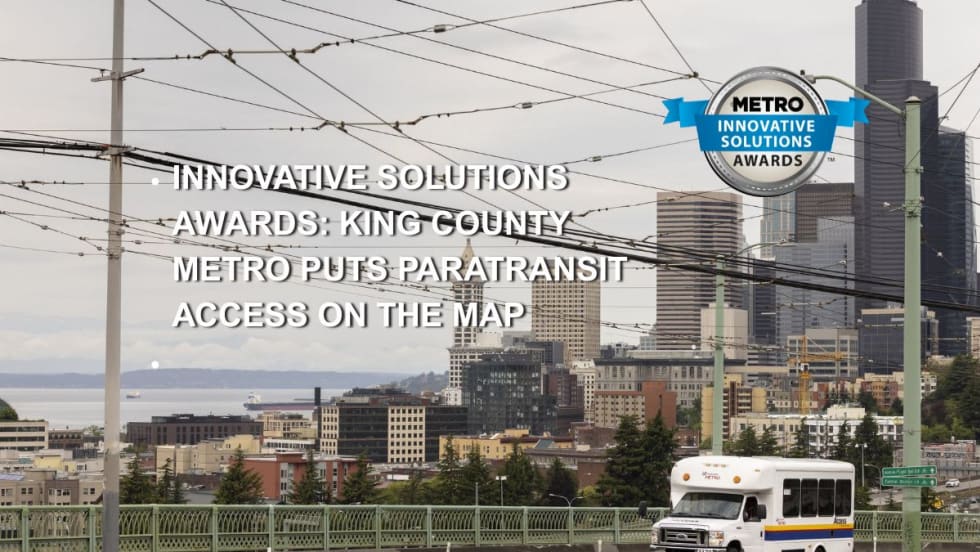
King County Metro Makes ADA Paratransit Easier to Navigate
METRO's Innovative Solutions Award winner replaces complex service-area descriptions with an accessible, interactive map that puts paratransit information directly in customers’ hands.
Read More →
Jacksonville’s NAVI Project Charts a New Course for Autonomous Public Transportation
Through its NAVI program, JTA is showing how autonomous vehicles, intelligent infrastructure, and coordinated operations can work together to deliver everyday public transportation.
Read More →
Driving Smarter Paratransit
John Hanlon shares how AlphaRoute is leveraging AI-powered technology to help paratransit providers optimize operations, support frontline staff, and enhance the rider experience.
Read More →
METRO Magazine Announces 2026 Innovative Solutions Awards Winners
Projects Recognized for Advancing Mobility Through Technology, Accessibility, Workforce Innovation, and Operational Excellence
Read More →
Biz Briefs: STV teams with Amtrak, Motorcoach Operators Boost Fleet and Land Contracts, and More
From manufacturers and suppliers to transit agencies and motorcoach operators, these updates offer a snapshot of the projects, partnerships and business moves driving the industry forward.
Read More →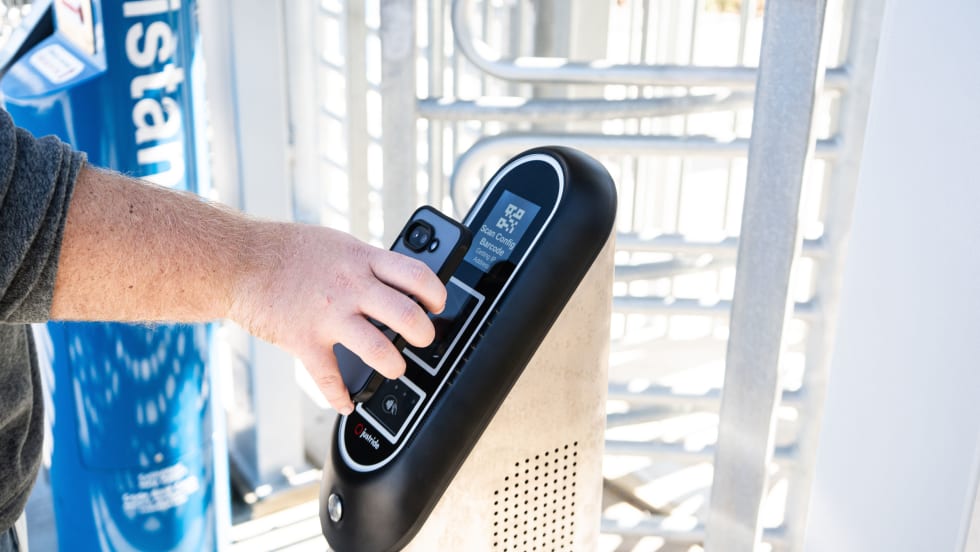
Biz Briefs: Masabi Teams with St. Louis Metro and More
In METRO's latest installment, we take a look at recent news from Transdev, Hitachi, and more partnerships making headlines across the transportation sector.
Read More →
New York MTA Leverages Zoning Program to Advance Station Accessibility
Accessibility enhancements at Nevins St Station will be financed through a development agreement tied to the MTA's Zoning for Accessibility initiative.
Read More →
Reinventing Fleet Maintenance with Real-time Visibility and AI
Transit leaders need to know what needs fixing, where to look, who is responsible, when work is completed, and what it costs without having to chase information across disconnected systems.
Read More →
SamTrans Sets Priorities for Potential Connect Bay Area Revenue
The board-approved framework allocates future funding to maintaining service, rider improvements, equity initiatives, and infrastructure repairs.
Read More →