



Steps to Help Transit Systems Get On the Road to Financial Viability
One option to help keep costs down is replacing older vehicles through an accelerated vehicle acquisition plan that uses municipal leases. With tight credit markets and limited access to capital markets, this is an efficient, less costly option.

California-based Monterey-Salinas Transit was able to move forward on its fleet expansion plan and replace aging buses by entering into a municipal lease.
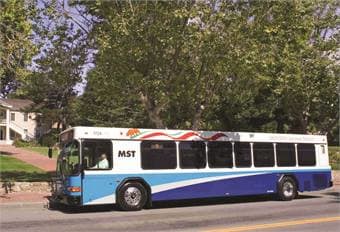
California-based Monterey-Salinas Transit was able to move forward on its fleet expansion plan and replace aging buses by entering into a municipal lease.
Governmental budget issues are a common story in the news. The cause of the problems are complex, and often, structural, including pension obligations, infrastructure allocations, tax policies, changing demographic patterns and much more. We did not get into these problems overnight and solutions will require days, months and even years of tough decisions.
In the world of public transportation, there are several key steps that agencies can make today to make a positive impact on fiscal budgets. These steps will not close fiscal budget gaps alone. Yet, these practical and concrete steps will contribute to incremental positive progress toward creating the fiscal stability that is vital to our economic future.
Bus Replacement
At first glance, replacing aging buses seems like an expensive proposition. When the decision is examined in greater detail, the potential for financial savings emerges. Often, transportation managers have a difficult choice concerning the operation of bus fleets. The options include refurbishing a large number of aging buses or maintaining and operating the older vehicles. We all know the expense and headaches involved in maintaining an automobile in the later stages of its useful life. Often, there is a third option that is optimal through public-private partnerships — accelerated vehicle acquisition.
To illustrate this partnership, let's take a look at California-based Monterey-Salinas Transit located on the Monterey Peninsula approximately 120 miles south of San Francisco. The 110-square-mile area with 29 fixed routes, over 1,200 bus stops and three transit centers serves a population of 300,000 residents. Monterey-Salinas Transit funds its operating and transit budget through a combination of Federal Transit Administration (FTA) grants, state transit assistance from California general funds, local sales tax investment, and advertising and farebox revenue. When faced with key decisions regarding the future of its bus fleet, the agency turned to an outside transit financing and consulting agency for input.
With 86 buses and 73 active vehicles in its fleet, the agency implemented a fleet replacement and expansion program. The first step was to replace 11 buses that were 25 years old. These older buses had maintenance costs that were five times the maintenance costs per mile as newer buses. Next, another 38 buses, ranging in age from 12 to 19 years and averaging more than 1,000,000 miles per vehicle, needed replacement.
Viable Financing
If Monterey-Salinas had solely used available federal funding, the agency could not have replaced all its aging buses. Through private partnerships, an innovative solution was put in place. By using municipal leases, a sales contract is developed where the municipality makes principal/interest payments over time. Upon final payment, the municipality obtains ownership. The financial cost savings can be significant. Municipalities do not have to rely upon traditional, publicly offered bond issues. Municipal leases are more efficient and less costly. With tight credit markets and limited access to capital markets, the municipal lease often is the most viable and effective option available.
With a municipal lease in place, Monterey-Salinas moved forward on its expansion plan. This expansion was crucial to meeting needs and an expanding commuter market. The agency ordered eight suburban transit coaches for commuter routes, 16 40-foot and eight 35-foot standard buses for use where hills and other topography prevents the operation of low-floor buses. Monterey-Salinas also ordered 10 low-floor 40-foot buses to alleviate delays and overcrowding on the busiest lines in East Salinas, Seaside and Monterey. Finally, six bus trolleys in Downtown Monterey completed the expansion.
This 46-bus acquisition was funded with private capital and the consulting company provided assistance with the FTA approval process. The agency entered an obligation to pay leases through a combination of farebox, local, state and federal grant monies over a 10-year term.
Results
Even with interest costs from the transaction, the agency will see a major financial savings from accelerating its fleet acquisition. This fuel savings is approximately 400,000 gallons of diesel fuel over five years. The total savings from annual equipment cost increases, maintenance and fuel costs are just under $6 million. In these days of billion or even trillion dollar transactions, a savings of this amount may not seem substantial. Yet, for the budget of Monterey Salinas Transit, this savings is a major amount, especially when directly related to delivering vital public services. When this type of savings is multiplied in city after city and state after state, eventually the savings adds up to real money — no matter how you define it.
[PAGEBREAK]
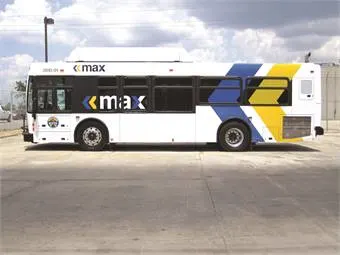
Birmingham-Jefferson County Transit Authority obtained 43 CNG buses and seven trolleys through a municipal lease.
Why Wait?
Many small transit agencies wait until they have a federal grant and matching local funds prior to purchasing buses or other equipment. This approach simply prolongs the needed work, and thus, the eventual transactions become more expensive as time increases. At the Macon-Bibb County Transit Authority in Macon, Ga., they have distinct experience with the financial viability of municipal leases, particularly when running old buses with high maintenance costs. When Macon-Bibb leased its first buses, maintenance costs were quite high. At the time, the agency lacked the capital to replace enough buses to make a substantial impact on its operating budget. By implementing a municipal lease, the agency reduced the average age of its fleet by 50 percent. The ownership of new buses occurred at the end of a 10-year lease contract. Costs were spread out, which provided the agency with greater flexibility. Putting the buses on the street quickly reduced the agency's maintenance and fuel costs by 80 percent in the first year of operation. In addition, the new buses played a strong role in substantially increasing ridership, resulting in higher farebox revenue.
A similar situation occurred with the Birmingham, Ala.-based Birmingham-Jefferson County Transit Authority. They didn't have enough funds from their local match to leverage sufficient federal funding. There were ample funds to purchase 12 or 13 buses. However, through a municipal lease, they obtained 43 compressed natural gas-powered buses and seven trolley buses. As a result of this transaction, Birmingham replaced many buses, expanded its fleet, lowered the fleet age, reduced maintenance costs and improved the region's air quality. The agency achieved $581,845 in financial savings.
The FTA sees municipal leasing as the primary tool for financing municipal transactions in the future. This creative method is an alternative way for small- to mid-sized agencies to benefit from alternative financing. Instead of paying full price for the buses up front, the buses are purchased over time.
Environmental Impact
Environmental concerns have increased in importance over the past five years due to carbon emissions, fuel efficiency and cost concerns. Buses, which approach the latter years of their useful life of 12 years and beyond, can be significantly out-of-date concerning environmental impact and governmental compliance. There is considerable discussion looking at new types of bus engines, including compressed natural gas or hybrid diesel-electric engines. With environmental impact standards continually changing, municipal agencies need to be able to replace buses that are not in compliance.
UCLA and University of California, Riverside scientists reported that an old bus, with the windows closed, had five times more soot inside than natural gas and newer diesel vehicles, and up to 2.5 times more than the road outside. They concluded that most of the pollution was being created by the bus itself.
The scientists rode seven school buses on actual routes, including a 1975 diesel model, a newer model equipped with a particulate trap and a natural gas model. They reported that commuting by school bus for 13 years would increase a child's lifetime cancer risk by approximately 4 percent, or an additional 30 cancers per million, compared with car drivers' already higher risks on Los Angeles roads.
The main point from this study is the importance of replacing older buses. Reasonable people will disagree about the best bus engines for the future. School buses were built to last. About 37 percent are more than a decade old. They are often not equipped with modern pollution control features, and have been estimated to emit as much as 60 times more soot than buses that meet 2007 standards, according to the EPA. Many states, cities and school districts have begun to tackle the issue. Manufacturers have worked to perfect filters, traps and alternative fuels to meet new federal emission standards. Many models now can be retrofitted and partly cleaned up for $10,000 to $20,000 each.
[PAGEBREAK]
Back to Financing
The above example again shows the importance of moving quickly to replace aging buses. With severe budgetary constraints, a municipal lease provides the funding mechanism to get the buses on the street at the lowest possible cost. By waiting to purchase the buses outright, the agency may be waiting an awfully long time. The nuances of managing these types of transactions are best handled by companies with considerable expertise. With thousands of completed transactions, their perspective in solving problems and avoiding costly mistakes is paramount. This situation is the essence of the benefits of public-private partnership. Agencies provide the services their constituents need and demand while the experienced private firm provides the expertise to complete the transaction in the most efficient and cost-effective way possible.
Improving Performance
Howard Rohn, president of the Balanced Scorecard Institute has some intriguing ideas on how to make government more cost-effective. A strategic scorecard can be built around organizing strategic objectives critical for creating value for citizens and other stakeholders. Focus on the value creation chain that defines what must be done to be successful. Start with a strategic view of how the organization creates value for citizens and stakeholders. The scorecard system links strategy to what must be done operationally to be successful.
This type of strategic planning is the start of a new journey for an organization. Continuous improvement is important and represents a significant culture change for most organizations — public and private. A scorecard journey, as described by Rohm, is a quest for high performance, a focus on results, an increase in group and individual accountability, and an embracing of organizational change. A scorecard system impacts everyone in an organization, not just executives and managers. Building and deploying a strategy-based scorecard system is more about changing hearts and minds than it is about measurement and data collection and software.
Fiscal order
We are all a part of the current fiscal situation. As citizens, we make demands for public services without realizing how these services will be paid. Making government cost-effective and viable in the future will require hard work from government officials, employees at all levels, and of course, citizens. These problems did not start yesterday or even last year. Yet, by making good decisions tomorrow, next year and for several years into the future, we may be able to get our fiscal house in order. Partnerships are the key — public, private and all of us.
More Bus

New York MTA Plans Largest Bus Fleet Upgrade in More Than a Decade
The agency is seeking manufacturers for 650 new CNG buses to replace aging vehicles, improve reliability, and advance its broader fleet modernization strategy.
Read More →
Building a Flexible Path to Transit Electrification
John Hroncich discusses BAE Systems’ modular and scalable approach, lessons learned from decades of real-world operations, and how agencies can identify electrification strategies that fit their fleets.
Read More →
Bus Tech Talk: Keeping Transit Technicians Ahead of the Technology Curve
LA Metro’s Obed Mejia discusses technician training, evolving maintenance technology, fleet replacement, and strategies for getting the most out of today’s transit fleets.
Read More →
Biz Briefs: RIPTA Unveils New Frontrunners, Clevland RTA Adds New Siemens, and More
In METRO's latest installment, we take a look at recent news from Siemens, Prevost, Dodge, and more partnerships making headlines across the transportation sector.
Read More →
People Movement: Holly Arnold Joins Transdev and More
In this edition, we also cover recent appointments and announcements at Pace, CamTran, MCI, and more, showcasing the individuals helping to shape the future of transportation.
Read More →
The High Cost of Transit Buses: Industry Leaders Look to Procurement Reform
Transit leaders and policymakers examine how standardized bus designs, streamlined procurement, and predictable funding could help agencies stretch budgets and deliver better service.
Read More →
The Business Voice Behind Public Transportation
As chair of APTA’s Business Members Board of Governors, Ray Melleady explains how more than 850 business members are partnering with transit agencies to advance funding, innovation, and industry-wide collaboration.
Read More →
From Surviving to Thriving: Building Stronger Transportation Organizations
Bus Business Consultants founder Brian Dickson shares lessons on leadership, organizational health, and creating options for long-term success in a changing transportation industry.
Read More →
Finding the ‘Happy Medium’: Optimizing Maintenance Without Sacrificing Reliability
The key to maintenance optimization isn’t doing less work—it’s doing the right work at the right time on the right assets.
Read More →
LA Metro, City of West Hollywood, and Partners Advance Smarter Bus Lane Enforcement
The award-winning partnership combines AI-powered detection with human oversight to improve bus reliability, accessibility, and enforcement efficiency.
Read More →