October 1, 2026
More Than a Summer Job: Building the Next Generation of Transit Talent
The Delaware River Port Authority and PATCO have transformed their internship program into a hands-on professional development experience that introduces students to the breadth of transportation careers — and creates a pipeline for future employees.
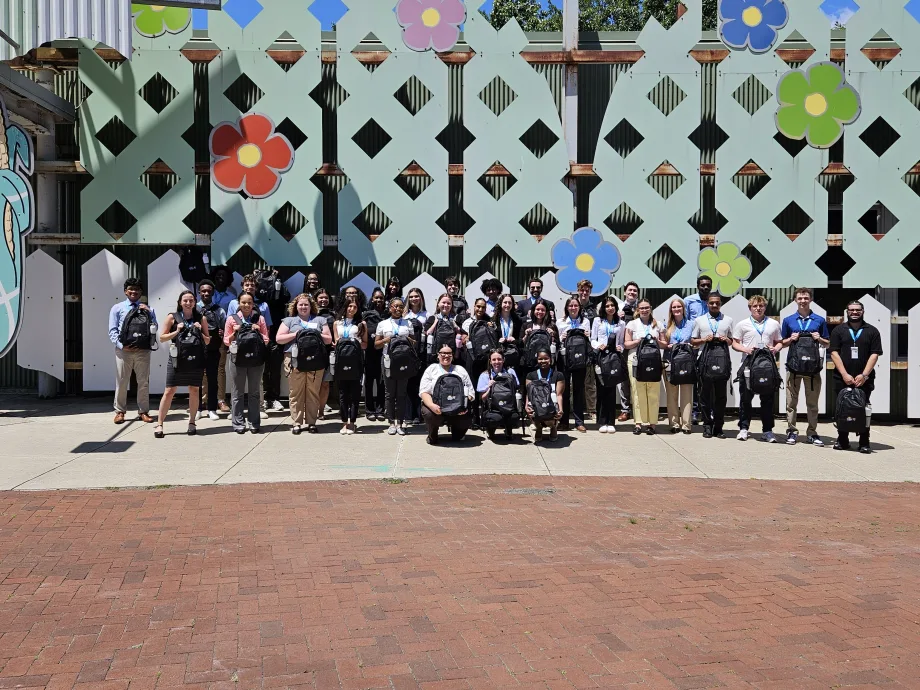
Through its internship program, DRPA/PATCO provides participants with exposure to the people, projects, and day-to-day operations involved in running a transportation system.
Credit:
DRPA/PATCO
11 min to read
- The Delaware River Port Authority and PATCO have revamped their internship program into a professional development platform.
- The program is designed to expose students to a wide range of careers in transportation.
- This initiative aims to develop a future workforce by establishing a talent pipeline for the transit industry.
*Summarized by AI
For decades, the Delaware River Port Authority's (DRPA) summer student program served a relatively simple purpose: to allow college students to earn money during the summer. Today, the DRPA and Port Authority Transit Corporation (PATCO) are taking a very different approach.
The agencies have reshaped their internship programs around professional development, meaningful work, and exposure to the many career opportunities within transportation organizations. The goal is not simply to employ students for a few months, but to help them develop the skills, confidence, and understanding they need to succeed in the workplace.
For Toni P. Brown, chief administrative officer at DRPA, that distinction is at the heart of the program.
“Don't build a summer jobs program for students; instead, build a program that is focused on providing a quality learning experience,” she explained.
The program's evolution reflects a broader challenge facing transportation agencies: attracting young people to an industry that offers far more career opportunities than many students realize.
DRPA and PATCO's experience demonstrates how an internship can become more than a recruiting tool. It can become a workforce development program that benefits students, whether they ultimately join the agency, another transportation organization, or an entirely different industry.
From Summer Jobs to Professional Development
The DRPA program dates back to approximately the late 1960s. Originally, Brown explains, its purpose was straightforward: to give students heading to college a chance to make money during the summer. That model remained in place for years.
Following the COVID-19 pandemic, however, DRPA saw a decline in the number of students applying for summer work. Rather than simply trying to increase recruitment, the agency used the moment to rethink what the program could accomplish.
“We wanted the program to be more than a summer job. We wanted it to allow students to grow personally and professionally while earning an income,” Brown said.
The result was a greater emphasis on hands-on learning and professional development. The agency began looking beyond the technical, or “hard,” skills associated with individual positions and placing greater emphasis on the interpersonal and workplace skills students would need upon entering the workforce.
Brown described those soft skills as the “secret sauce” for students trying to find their place in the professional world.
“We really wanted it to be a hands-on learning experience where the students were receiving professional development training,” she said. “We were not focused entirely on developing those hard skills, but what I like to say, the soft skills.”
For Brown, the combination is critical.
“When you have both of those skills, the hard skills and the soft skills,” she said, students are better prepared to become productive members of today's workforce.
The revamped program also recognizes that students learn best when they are doing actual work. DRPA/PATCO operates both an internship program and a student work program, providing opportunities across the organization.
Internship positions are found in departments including finance, human resources, risk management, government relations, grants administration, and homeland security, among others.
Meanwhile, the student work program provides opportunities in more operational roles, including toll collectors, groundkeepers, and custodians.
Despite the differences between the programs, Brown emphasizes a common principle.
“Whether you're in the internship program or the student work program, you're doing meaningful work,” she said. “We don't have any students here who are not doing work that matters.”
The agency’s philosophy helps distinguish the program from internships where students may spend much of their time observing, waiting for assignments, or doing tasks unrelated to their education and career interests.
The DRPA/PATCO approach instead puts students in situations where they can contribute while developing skills. It also lets students see what transportation work looks like beyond the roles they may encounter as members of the public.
Showing Students the Full Range of Careers
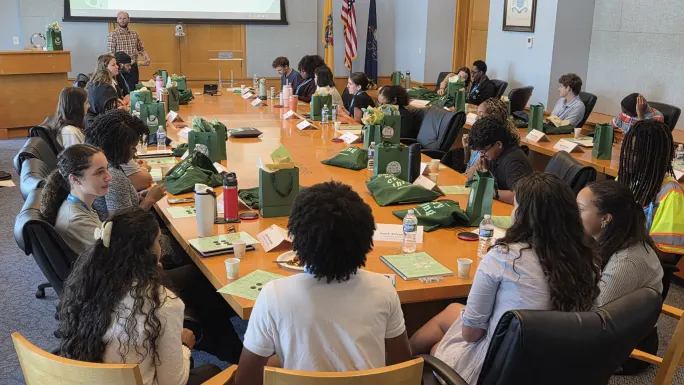
Interns gain practical workplace experience while learning about the range of careers required to support DRPA/PATCO operations and services.
Credit:
DRPA/PATCO
One of the biggest challenges for transportation agencies is communicating the breadth of available career opportunities. Students may be most familiar with customer-facing positions, such as toll collectors and train operators, without realizing the wide range of roles available throughout a transportation agency.
DRPA/PATCO's experience has shown Brown that a student's perception can change once they are exposed to the organization.
“In the beginning, many students did not, could not see that there were opportunities here beyond the positions that are public-facing,” Brown said.
Once students learn more about the organization, however, they begin to see the bigger picture.
“We do have a career path. We have many career paths,” she added. “They now realize that there is so much more to DRPA and PATCO than they once imagined.”
Exposure is one of the program's most valuable features. Transportation agencies need professionals in engineering and operations, as well as in finance, information technology, human resources, legal services, communications, safety, planning, security, and numerous other fields, said Brown. An internship gives students a chance to see those opportunities firsthand.
The program's impact can also be measured by how many former students eventually become full-time employees.
Brown said DRPA has identified approximately 28 current employees who began as summer interns or co-op students. The examples reach into the agency's leadership.
DRPA's chief engineer began as a summer intern. PATCO's GM started as a co-op student. An employee in human resources also began as an intern.
Some students returned immediately after their internships. Others went elsewhere, gained additional experience, and later returned after learning about opportunities at DRPA or PATCO.
“We've been very pleased with that success,” Brown said. However, she also cautions against measuring the program solely by how many interns become employees. As she explained, the larger objective is development.
Measuring Growth Beyond Hiring
The agency surveys students twice during the summer. The mid-program survey asks students how the experience is going, whether they are learning, whether they are participating in meetings, and whether they feel integrated into their departments.
The timing is intentional. The feedback allows DRPA to make adjustments while the internship is still underway.
“If there is some kind of course correcting that needs to be done,” Brown said, the agency has an opportunity to do it so that we can still make sure that the students are getting everything from this program that we would like them to be getting and that we are getting from them all that we need to get from them.”
Students also receive another survey at the end of the summer.
Brown said the previous year's program received a 100% recommendation rate from students who were asked whether they would recommend the program to others. However, she added that some of the most meaningful feedback arrives in less formal ways.
Students have sent unsolicited emails and shared LinkedIn posts describing how their communication skills improved, how they developed a better understanding of professional behavior, and how the internship exceeded their expectations, she explained.
One student told Brown the program had helped develop both technical and soft skills, including communication. Another thanked her for advice about creating a professional brand. Others described working full-time and collaborating in person as something they had not experienced in college.
Brown explained that these responses reinforce why DRPA changed the program.
The “Bridge to Success”
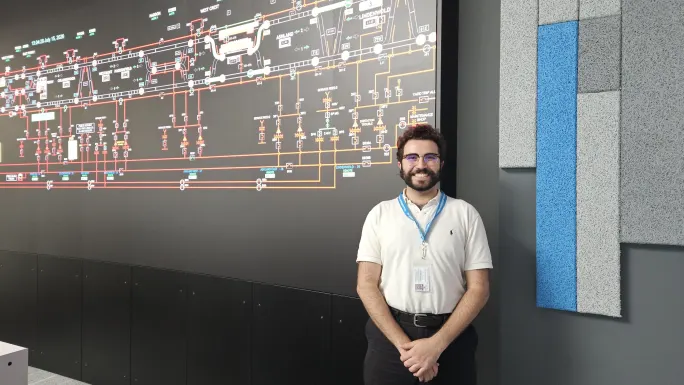
DRPA/PATCO’s internship program gives students hands-on experience while introducing them to career opportunities across the transportation industry.
Credit:
DRPA/PATCO
Professional development has become a major component of the internship experience. DRPA developed a six-session series called the “Bridge to Success Professional Development Program,” covering topics designed to help students navigate the transition into the workplace.
Sessions have addressed effective communication strategies, professional branding, workplace readiness, financial decision-making, digital wellness, stress management, and self-care. Brown emphasized that professionalism goes beyond technical competence.
Students need to understand how they communicate, how they present themselves, and whether colleagues can depend on them.
“How you communicate, the way you show up every day in the workplace, that's all part of your professional brand,” Brown said.
That brand, she explained, is something students develop continuously.
“Every day, the way you show up,” she said. “Do you show up on time? Can you be counted on to deliver what you say you're going to deliver? Can you conduct yourself professionally at a meeting? Do you know how to write a proper email?”
Those seemingly basic skills can make a significant difference for young professionals entering the workforce, she said.
Brown added that, for her, the most rewarding part of the program is watching that development unfold.
“I always tell them during orientation that of all the things I do here at DRPA, this program is my favorite,” she said.
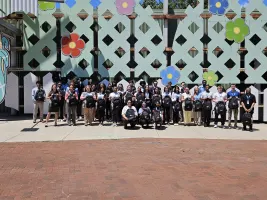
At the conclusion of the program, DRPA gives students certificates of completion along with photographs taken during orientation. Brown said students sometimes compare the photographs and are surprised by how much they have changed in just a few months.
“Many of them said, ‘I don't recognize the person that's in this photo,’” Brown said. “So much has happened. I've grown so much.’”
That transformation, she said, is a better measure of success than simply counting how many interns are eventually hired.
“Yes, it's nice to be able to say we've hired some of the interns,” Brown said. “They are full-time employees with us. But I look at this more broadly, and it's the development; it's the overall development of these students.”
Making the Program a Brand
DRPA has also become more deliberate about how it presents the program to potential applicants.
Brown said the agency has invested in branding the internship experience so that students recognize it as a distinct program.
Interns receive branded materials, including backpacks and orientation materials. The intent is to build awareness of both the internship and the agency. As students carry those materials on college campuses, the program gains visibility among their peers.
Brown explained the DRPA has been “very deliberate” about explaining what the agency does, where it is located, and, most importantly, the kinds of work students can expect to perform.
“We want to raise awareness about our agencies, where we're located, number one, what we do, and then be very deliberate about the kind of work that you will be exposed to if you will come and give us a chance,” she said.
The message is particularly important for public agencies competing with private-sector employers for young talent. Students need to envision themselves working at the agency.
“What you see on the surface is only one part of what we do,” Brown said. “Many positions are working behind the scenes and in a wide range of fields.”
Getting that message in front of students has also required DRPA to rethink its recruitment strategy.
Brown said the agency had to take a “multi-faceted approach” to finding candidates. The agency has used social media, employee referrals, and Handshake — a career platform used by colleges and universities.
Employee referrals have been particularly useful because staff members can reach students through their own professional and personal networks.
The goal is not simply to increase the number of applicants. It is to help students understand what a career with a public transportation organization could offer.
“Our job, and it's the job of all of the public agencies, is to get out and help the students imagine themselves at the agency,” Brown said, “but also give them a reason to want to serve in a public agency like the DRPA.”
For Brown, that reason comes back to the organization's mission.
“We are big on stewardship,” she said, pointing to the agency's responsibility for its bridges and PATCO rail line.
Many DRPA employees have remained with the organization for decades because they believe in that mission.
“We stay because we believe in the mission of the agency,” Brown said. “We believe in the work we do and in the work of the agency.”
Communicating that sense of purpose to students is an important part of the recruitment effort.
A Model That Can Be Followed
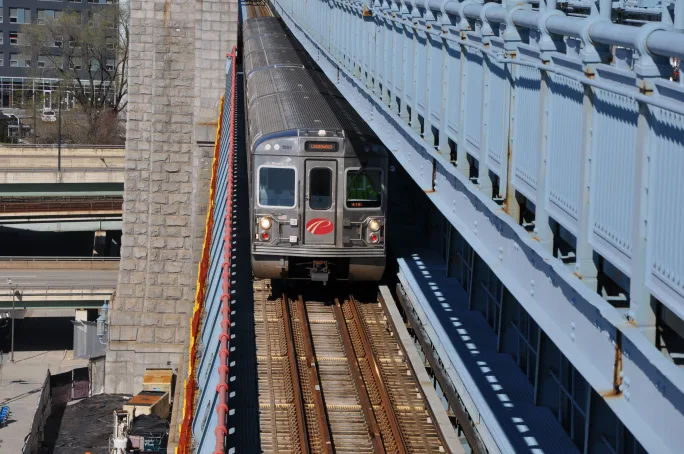
PATCO provides passenger rail service connecting communities in southern New Jersey with Philadelphia, supporting daily travel throughout the region.
Credit:
DRPA/PATCO
The program is not designed solely around what DRPA can get from its interns. Brown viewed the relationship as an investment in students, regardless of whether they eventually return to the agency.
“I get to stay in touch with so many of the interns over the years,” she said. “Just knowing the great work that they're doing and where they landed, that to me is very gratifying.”
The agency also benefits when former interns become ambassadors for the program. Students share their experiences with friends, classmates, and family members, helping future candidates understand what to expect.
Some current interns have come to DRPA because someone they know recommended the program, creating a cycle in which one student's positive experience helps introduce another to the agency.
For transportation agencies looking to establish or strengthen an internship program, Brown's advice draws on DRPA/PATCO's experience.
“Don't build a summer jobs program for students,” she said. “Instead, build a program that is focused on providing a quality learning experience.”
That means being intentional about the students an agency wants to reach and the story it wants to tell.
“Be intentional about the population you want to reach, the story you want to tell about your organization, and showcase the breadth of available career opportunities,” Brown said.
Agencies should promote the hands-on work interns will perform, the hard and soft skills they will develop, and the professionals who will mentor them. They should also expose students to the broader organization and its governance structure, rather than limiting their experience to one department. And, perhaps most importantly, agencies should ask for honest feedback.
“Find out what worked and what did not, then use the information to make the program stronger for the next cohort,” Brown said.
DRPA has done exactly that, using student feedback to refine recruitment, improve orientation, and develop professional development training. The program will continue to evolve.
Brown said she wants to keep raising the level of professional development and ensuring students receive the skills they need to pursue their careers. But the ultimate measure of the program may not be how many students eventually become DRPA or PATCO employees; it may be what happens to the students after they leave.
“If they don't come back to us, they'll go somewhere else, and they'll be even better developed,” Brown said.
Quick Answers
The purpose of the program is to provide hands-on professional development and introduce students to various careers in transportation, creating a pipeline for future employees.
*Summarized by AI
Loading data...