



Safety tops list of values for Pacific Western
Pacific Western Group of Companies - Calgary
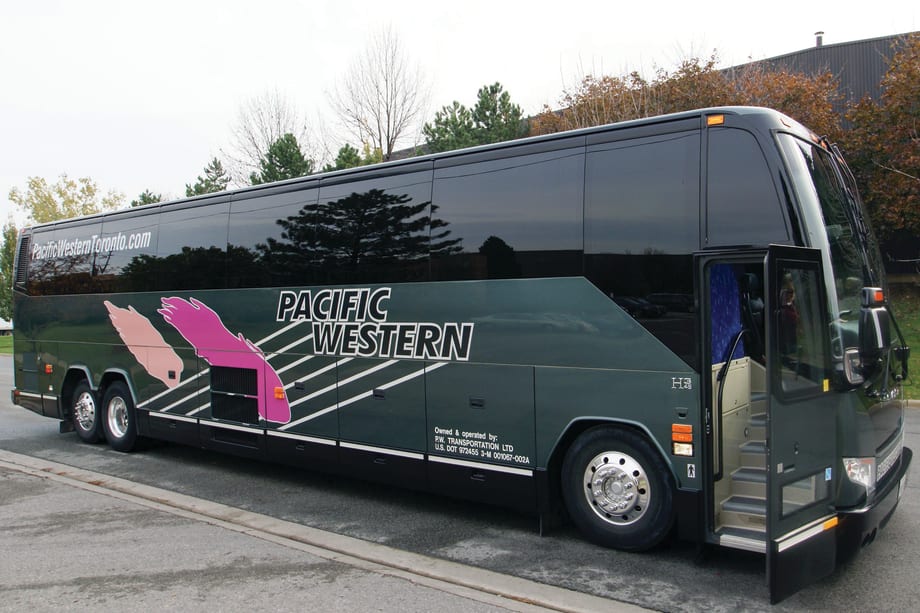
With more than 50 years in business, the Pacific Western Group of Companies evolved from a school bus operator to becoming an extensive network of offerings with four business lines and 20-plus brands, which include motorcoach, industrial and transit lines.
Over the years, the operation has also grown its fleet to close to 3,000 coaches, school and transit buses; more than 2,900 drivers and 3,800 employees. To that end, Pacific Western has established core values across its entire slate of businesses, with safety being at the top of the list.
"Literally, our ownership wants us to be seen as leaders in bus and coach safety in the world," says Stephen Evans, VP, safety, for the Pacific Western.
Evans was brought on in 2008 to help provide a vision of what world class safety programs would look like, provide training and mentorship, put the programs and initiatives into place, create more visible safety programs, and provide overall direction and support for the four VPs for each business arm.
Without a typical "pyramid" of authority, the decentralized Pacific Western created a director of safety position for each group, which are all supported by Evans.
"They are insiders," explains Evans. "They have a seat at the table within the individual lines, but also, have a dotted line relationship to me so we kind of get the best of both worlds."
To help each division operate within their own brands but also embrace the corporate vision, the company set up the Safety Advisory Group, which consists of Evans and the four safety directors, who meet each month to work out all the challenges they each face. In addition, Pacific Western holds a series of meetings at various intervals that extend outward to each operation's VP and key corporate officers, culminating in a yearly safety conference.
"We are really proud because a lot of companies talk about safety, but it's usually just one person who's responsible to do all of it," says Evans. "We've managed to move beyond that, and our operations people are taking responsibility for moving our programs forward."
To measure the success of its safety programs, Pacific Western has nine key performance indicators (KPI) that it monitors throughout the year. The company also does a safety perception survey once a year, where they ask mechanics and drivers a series of 13 questions.
"We ask a variety of questions designed to get a better understanding of how the front line staff feel about safety and if the message we talk about in our management meetings is actually getting through to them," says Evans.
Pacific Western's large fleet consists of mostly Prevosts - about 98%, according to the company.
Recently, the company took delivery of new Prevost H3-45 coaches, featuring three-point seat belts and the AWARE system, which provides Pacific Western with valuable information and takes actions that allow them to maintain safe driving practices. The Adaptive Cruise function adjusts the speed of the coach to maintain a safe following distance while in cruise control. The Impact Alert is always on and alerts drivers if the distance between the coach and vehicle ahead closes too quickly, allowing the driver to take action. The Following Distance Alert reminds the driver to keep a safe following distance, reinforcing safe driving techniques.
"There is a group of lights that circle around the speedometer, and as the coach gets closer and closer and the following distance becomes unsafe, the lights go from flashing yellow to red. If the driver has the vehicle in cruise control, the system will automatically back the cruise control out to try to get coach away from the vehicle and also begin to apply a limited amount of braking," explains Evans. "The idea is, if the driver for any reason is inattentive, these controls will proactively begin to influence the process to avoid an incident."
The new technologies on its coaches, along with a driving simulator are just Pacific Western's latest efforts to maintain its biggest core value.
More Motorcoach
Report: Canadian Motorcoach Industry Generates $4.4B in Economic Impact
The 2025 Motorcoach Economic Impact Report finds motorcoach travel supported nearly 25,000 jobs and generated $980 million in federal, provincial, and local taxes.
Read More →
Prevost Opens Expanded Chicago-Area Service Center
The $8.1 million Elk Grove Village investment nearly triples facility space while adding service capacity, parts storage, and customer amenities.
Read More →
People Movement: Dan Dipert Coaches Adds Third-Generation Leader, Keolis Names New Valley Metro VP/GM, and More
In this edition, we also cover recent appointments and announcements at the Wabtec, SilverRide, HNTB, and more, showcasing the individuals helping to shape the future of transportation.
Read More →
METRO Opens Submissions for 2026 Motorcoach Awards
Nominations are now being accepted for METRO Magazine’s Operator of the Year and Innovative Operator of the Year awards.
Read More →
Biz Briefs: Alstom Lands Canadian Contract, LYT to Supply California TSP, and More
In METRO's latest installment, we take a look at recent news from Complete Coach Works, Beep, FlixBus, and more partnerships making headlines across the transportation sector.
Read More →
Biz Briefs: RIPTA Unveils New Frontrunners, Clevland RTA Adds New Siemens, and More
In METRO's latest installment, we take a look at recent news from Siemens, Prevost, Dodge, and more partnerships making headlines across the transportation sector.
Read More →
People Movement: Holly Arnold Joins Transdev and More
In this edition, we also cover recent appointments and announcements at Pace, CamTran, MCI, and more, showcasing the individuals helping to shape the future of transportation.
Read More →
ABA Report: Motorcoach Travel Generates $161.6B Economic Impact
The 2025 analysis finds motorcoach travel supported nearly 900,000 jobs and generated $28 billion in federal, state, and local taxes.
Read More →
CharterUP’s Armir Harris on Technology, AI, and the Future of Group Mobility
In a recent episode of METROspectives, CharterUP Founder/CEO Armir Harris discussed the company’s evolution from an online charter bus marketplace into a technology platform supporting public- and private-sector mobility and much more.
Read More →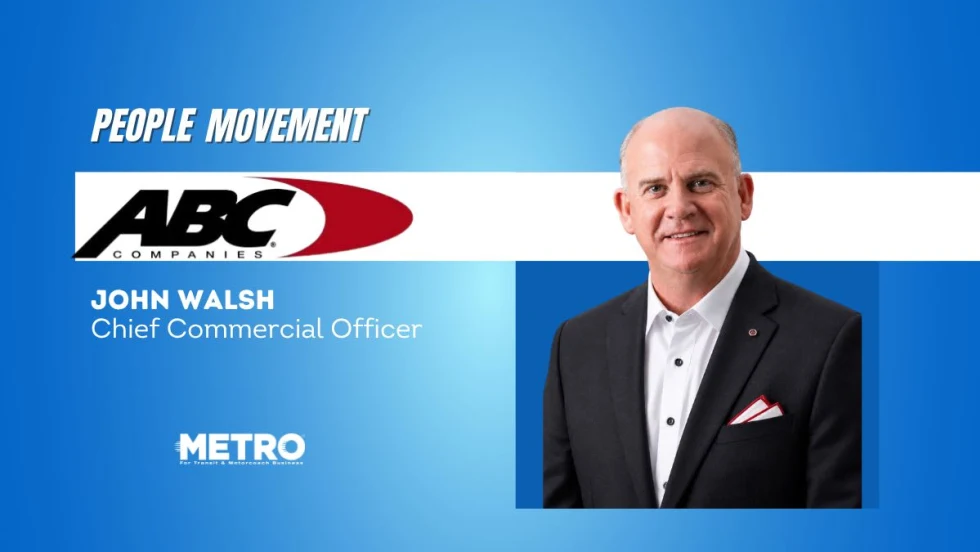
People Movement: ABC Names John Walsh as Chief Commercial Officer
In this edition, METRO also covers recent appointments and announcements at the DART, STV, and more, showcasing the individuals helping to shape the future of transportation.
Read More →