



Web Extra: James Madison U. to limit on-campus vehicles to boost sustainability
Will change on-campus navigation with the addition of four gates, reconfigured parking lots around portions of the campus, some bike lane and crosswalk modifications, and the addition of a bus staging area.

Courtesy JMU
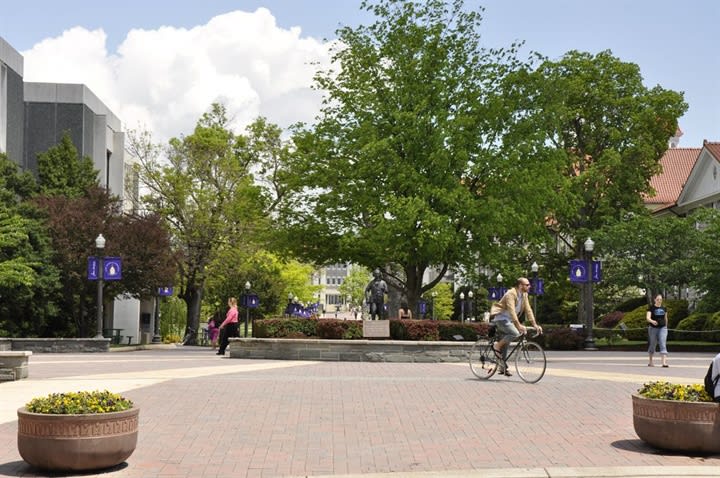
[IMAGE]JMU1-2.jpg[/IMAGE]Beginning this August, Harrisonburg, Va.-based James Madison University (JMU) will change how students, faculty, staff and community members navigate campus, with the addition of four gates, reconfigured parking lots around portions of the Bluestone area of campus, some bike lane and crosswalk modifications, and the addition of a bus staging area.
Over the past few years, JMU has made great progress in its overall commitment to environmental sustainability on campus.
"The reason why we did this as a university was to support overall efforts for environmental sustainability. The goal over time being reducing the number of single occupancy vehicles on campus, reducing congestion on campus and reducing a lot of the cut-thru traffic on campus," explained Don Egle, JMU's director of public affairs. "Also, I think what we're going to see is the efficiency of the public transportation system increase, because we are reducing a lot of the vehicles on campus, allowing the buses to move more freely and stay on schedule."
Another primary reason, Egle added was JMU's goal of creating a more pedestrian friendly campus, by making it easier for those who either walk or ride their bicycles.
The gated portion of campus will be closed from 7 a.m. to 7 p.m. Monday through Friday. The gated portion of the campus will be open weeknights after 7 p.m., on weekends, during certain events and during the summer. The new gates on campus, which help control traffic flow, are expected to have little impact on JMU's student body.
"The changes this summer will have a slight impact on some of our faculty and staff," said Egle. "What I mean is they may not be parking right outside their building, but at an adjacent parking lot, for example. But, our students won't see any significant changes in parking, because their lots are located primarily on the perimeter of campus."
[IMAGE]JMU-2.jpg[/IMAGE]Another goal of JMU's program was to cut its overall environmental footprint and increase students' use of the City of Harrisonburg's public transit system.
"We have seen huge bus ridership numbers for a number of years. So much so that the City of Harrisonburg will be purchasing seven new buses this summer," Egle said.
The long-standing relationship between JMU staff and the city's public transportation department sees collaboration between the two entities to improve services on campus, including adding and changing routes or adjusting schedules.
Construction on the gating system will begin immediately following commencement, with the new campus layout completed by the beginning of the fall semester in August. JMU will be using a webpage to communicate progress on the project throughout the summer.
More Bus

More Than a Summer Job: Building the Next Generation of Transit Talent
The Delaware River Port Authority and PATCO have transformed their internship program into a hands-on professional development experience that introduces students to the breadth of transportation careers — and creates a pipeline for future employees.
Read More →
LA Metro Board Awards 220 Battery-Electric Bus Contract to ENC
The contract, which is the largest base award of battery-electric buses by a U.S. transit agency, will be built in Southern California, sustaining good jobs as LA prepares to welcome the world in 2028
Read More →
Public Transit Conference Returning to GFX in 2027, Call for Papers Now Open
The Call for Papers is now open, allowing transit agency professionals and industry experts to help shape the PTC educational program by submitting session ideas for consideration.
Read More →
Indian River Transit’s Community-Focused Approach Earns National Recognition
Named APTA’s 2026 Outstanding Public Transportation System in its size category, Florida’s Indian River County transit system continues to grow ridership through fare-free service and a focus on evolving community needs.
Read More →
ENC Lands MATA Contract and More in Biz Briefs
In this edition of Biz Briefs, we spotlight the latest developments shaping the future of mobility.
Read More →
From Surviving to Thriving: Building Stronger Transportation Organizations
Bus Business Consultants founder Brian Dickson shares lessons on leadership, organizational health, and creating options for long-term success in a changing transportation industry.
Read More →
Everett Transit, Community Transit Outline Consolidation Agreement
The proposed agreement calls for a 50% increase in bus service in Everett, a new microtransit zone, continued paratransit service, and the transfer of Everett Transit operations to Community Transit.
Read More →
SEPTA Details Accelerate Vision for Transit System
The plan outlines investments in trolley modernization, new Metro and Regional Rail vehicles, accessible stations, and more frequent bus and rail service.
Read More →
Report: Transit Bus Manufacturing Supports 34,100 Jobs, $5.1B in GDP
The “Buses Mean Business” report examines the transit bus manufacturing industry’s economic footprint, supply chain, and rising demand for vehicle replacements.
Read More →
Biz Briefs: New Flyer Delivers in Columbus, Houston, Beep and Freebee Merge, and More
In this edition of Biz Briefs, we spotlight the latest developments shaping the future of mobility.
Read More →