



Report: Cities forced to look beyond fed funding for infrastructure projects
Denver, Minneapolis-St. Paul, Seattle and Salt Lake City cited as being particularly successful in moving projects forward, due largely to the willingness of local governments to pool resources and their ability to gain consensus on planning and spending strategies.

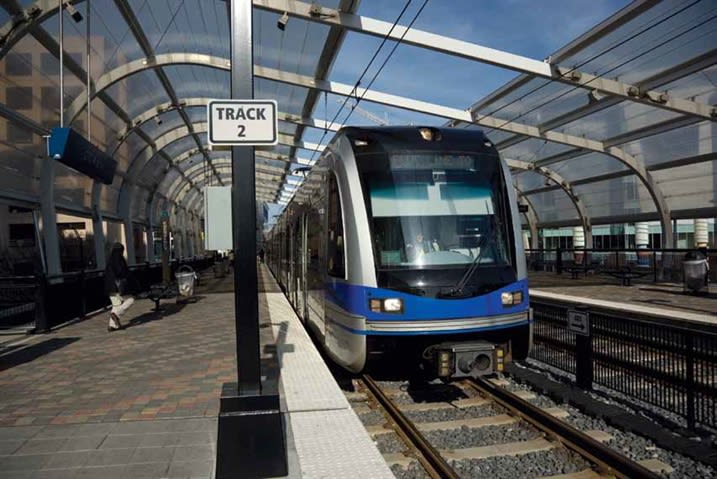
Charlotte’s light-rail system began operation in 2007 with daily ridership of 21,000 passengers—a figure that exceeded the system’s ridership projection for 2025.
[IMAGE]Charlotte-LYNX-light-rail-2.jpg[/IMAGE]America’s infrastructure investments — levels of which have long trailed behind those of Asia and Europe — will be further stifled this year by pressures to cut federal spending and reduce the deficit, compelling cities to be evermore creative and resourceful in securing partnerships to start or continue infrastructure projects, according to a new study.
The report, "Infrastructure 2011: A Strategic Priority," released Monday by the Urban Land Institute (ULI) and Ernst & Young, emphasizes the challenge faced by many urban areas trying to provide adequate transportation and other infrastructure services for their residents, workers and businesses.
Outside of the U.S., “in most of the developed world and in many emerging markets, countries have committed to fulfilling infrastructure agendas as essential for sustaining or enhancing living standards in an increasingly competitive global marketplace,” says the report, which looks at infrastructure investments on six continents. (Expenditures for global infrastructure requirements over the next 25 years are currently estimated at $50 trillion.)
Among the countries in which infrastructure is a top priority:
• The U.K. — despite an austerity budget — has committed $326 billion over the next five years for projects related to rail, energy production and broadband access.
• France, Germany and Spain continue to build high-speed rail and freight networks between cities and as extended cross-border links.
• Australia is focusing on port expansion, rail rebuilding and traffic congestion relief projects.
• China is funding a host of wide-ranging infrastructure programs, including completion of a 10,000-mile high-speed rail network by 2020. Other projects include new airports, ports and transit systems, all of which contribute to China’s standing as the world’s second-largest economy.
• India is actively seeking private financing for desperately needed infrastructure to sustain growth and meet its economic potential.
• Brazil is pushing ahead with road, transit and water projects to accommodate its fast-growing economy and to prepare for upcoming World Cup and Summer Olympics games.
With $2 trillion needed just to repair and rebuild deteriorating roads, bridges, water lines, sewage treatment plants and dams, the nation’s infrastructure woes will only get worse, as the politically fractured government erodes support for both existing upgrades and new initiatives, noted ULI Executive VP Maureen McAvey. (Public spending on transportation and water infrastructure as a share of the U.S. gross domestic product peaked at 3.1 percent in 1963, then declined steadily to 2.4 percent in 2007, according to Congressional Budget Office data.)
States and local governments, which are already suffering from decreasing tax revenues, are also facing both the phase-out of federal stimulus funding and the likelihood of further declines in federal funding, the report says. (The federal government’s share of total public expenditures for transportation and infrastructure is about 30 percent.)
The ramifications are significant:
Infrastructure built with federal grants decades ago will not be repaired or replaced, due to the shortage of state and local maintenance and operational funding.
Local governments will scramble for what’s left of available federal capital project dollars.
More states will reject federal capital funding, fearing future unfunded operating burdens.
Transit system expansions in car-dependent metro areas will struggle to move forward.
The report provides a snapshot of the infrastructure challenges, particularly those related to transportation, faced by 20 major U.S. metropolitan regions — Atlanta; Boston; Charlotte, N.C.; Chicago; Dallas-Fort Worth; Denver; Detroit; Houston; Indianapolis; Los Angeles; Miami; Minneapolis-St. Paul; New York City; Oklahoma City; Philadelphia; Phoenix; Salt Lake City; San Francisco; Seattle; and Washington, D.C.
While all are experiencing fiscal constraints, the report cites Denver, Minneapolis-St. Paul, Seattle and Salt Lake City as being particularly successful in moving projects forward, due largely to the willingness of local governments to pool resources and their ability to gain consensus on planning and spending strategies.
Among the trends shown in the metro scan: 1) More established cities such as Boston, Philadelphia, Chicago and San Francisco are forced to retrench on new projects and make triage decisions on repairs that include service cuts and fare increases. 2) Dried up sales tax revenue cuts into the resources targeted for light rail corridor extension projects in several cities, including Charlotte and Denver. 3) Cities such as Atlanta, Phoenix and Dallas that don’t provide gas tax revenues or general fund support for mass transit are scrambling for funding sources.
The most promising solution to the nation’s infrastructure shortfalls is to greatly expand public-private partnerships (PPP), the report suggests, pointing to the experiences of Virginia, Florida and Texas with managed toll roads as PPP success stories. “The interest in gaining access to private capital and expertise through PPPs should accelerate as public funding sources diminish.”
Other recommendations in Infrastructure 2011:
Focus attention first on critical repairs and upgrades.
Develop a national infrastructure strategy, funding merit-based projects that support the country’s overall economic priorities.
Concentrate spending on the nation’s metropolitan areas and global gateways.
Provide greater long-term certainty for federal funding to support planning for capital projects.
Institute federal and state infrastructure banks to support project financing.
Phase in user fees to help fund infrastructure initiatives on a continuing basis.
“For 2011, the United States is not alone in coming to grips with infrastructure ambitions and soberly assessing what can be done under challenging circumstances. That means downscaling ambitions and finding creative solutions,” the report concludes.
To download a copy of the Infrastructure 2011 report, click here.
More Paratransit

Scenes from APTA TRANSform & EXPO 2026
Transit leaders, manufacturers, and industry professionals gathered in Chicago to explore new technologies, share ideas, and discuss the future of public transportation.
Read More →
Indian River Transit’s Community-Focused Approach Earns National Recognition
Named APTA’s 2026 Outstanding Public Transportation System in its size category, Florida’s Indian River County transit system continues to grow ridership through fare-free service and a focus on evolving community needs.
Read More →
Everett Transit, Community Transit Outline Consolidation Agreement
The proposed agreement calls for a 50% increase in bus service in Everett, a new microtransit zone, continued paratransit service, and the transfer of Everett Transit operations to Community Transit.
Read More →
Driving Smarter Paratransit
John Hanlon shares how AlphaRoute is leveraging AI-powered technology to help paratransit providers optimize operations, support frontline staff, and enhance the rider experience.
Read More →
People Movement: Dan Dipert Coaches Adds Third-Generation Leader, Keolis Names New Valley Metro VP/GM, and More
In this edition, we also cover recent appointments and announcements at the Wabtec, SilverRide, HNTB, and more, showcasing the individuals helping to shape the future of transportation.
Read More →
Biz Briefs: RIPTA Unveils New Frontrunners, Clevland RTA Adds New Siemens, and More
In METRO's latest installment, we take a look at recent news from Siemens, Prevost, Dodge, and more partnerships making headlines across the transportation sector.
Read More →
King County Metro Makes ADA Paratransit Easier to Navigate
METRO's Innovative Solutions Award winner replaces complex service-area descriptions with an accessible, interactive map that puts paratransit information directly in customers’ hands.
Read More →
Jacksonville’s NAVI Project Charts a New Course for Autonomous Public Transportation
Through its NAVI program, JTA is showing how autonomous vehicles, intelligent infrastructure, and coordinated operations can work together to deliver everyday public transportation.
Read More →
Driving Smarter Paratransit
John Hanlon shares how AlphaRoute is leveraging AI-powered technology to help paratransit providers optimize operations, support frontline staff, and enhance the rider experience.
Read More →
METRO Magazine Announces 2026 Innovative Solutions Awards Winners
Projects Recognized for Advancing Mobility Through Technology, Accessibility, Workforce Innovation, and Operational Excellence
Read More →