



U.S. Depts. of Transportation, Commerce, partner to boost domestic manufacturing
The Department of Commerce’s Manufacturing Extension Partnership (MEP) will help to ensure manufacturers meet the U.S. DOT’s “Buy America” and “Buy American” standards, connecting U.S. manufacturers and suppliers for work on highways, railways and transit projects, and in the process help to create jobs.

The U.S. Department of Transportation (U.S. DOT) and the U.S. Department of Commerce will partner to encourage the creation of domestic manufacturing jobs and opportunities for U.S. suppliers through transportation investments.
The Department of Commerce’s Manufacturing Extension Partnership (MEP) will help to ensure manufacturers meet the U.S. DOT’s “Buy America” and “Buy American” standards, connecting U.S. manufacturers and suppliers for work on highways, railways and transit projects, and in the process, help to create jobs.
With a network in all 50 states and Puerto Rico, MEP serves more than 34,000 American suppliers, helping them to retool their manufacturing capabilities to meet demand, compete in the global marketplace and sell American-made products all over the world.
MEP will leverage over 1,300 expert manufacturing assistance field staff in over 350 locations to provide knowledge of local manufacturing capabilities from across the nation. MEP will identify suppliers’ production and technical capabilities to match them up with viable business opportunities that may have otherwise gone to foreign suppliers, ensuring maximum economic benefit for taxpayer-funded transportation investments across all modes.
The Federal Railroad Administration (FRA) will team up with MEP to connect American suppliers with opportunities created by the Obama Administration’s historic investments in high-speed intercity passenger rail, including track and station construction and the development of next-generation trains.
MEP will help U.S. DOT to guarantee American companies and workers receive benefits from public investments like the upcoming $782 million order for domestically-built passenger rail trains that will travel in California, Oregon, Washington, Illinois, Missouri, Michigan, Indiana and Iowa.
MEP will also help U.S. DOT assure that American companies and workers benefit when the state of California issued a request for information (RFI) for new bi-level passenger coaches. Responses to the RFI will inform the states of the manufacturer’s capacity to complete the order and identify potential domestic suppliers. A request for proposals will be issued this winter and winning bids will be selected next summer.
Already, MEP is working with the FTA to improve its ability to assess the merits of requests for waivers from Buy America requirements, eliminate the need for some waivers and strengthen FTA’s support for these requirements. In June, representatives from MEP joined FTA Administrator Peter Rogoff and Deputy Secretary John Porcari for a meeting between transit agencies and rail manufacturers to promote the domestic production of steel rails for streetcar projects.
The Federal Highway Administration (FHWA) will partner with MEP to help identify U.S. manufacturing capabilities to produce new technologies and emerging products for the nation’s highway systems. FHWA tasked MEP to identify U.S. manufacturers with potential production facilities for specialized steel fibers used in ultra high-performance concrete, which is a joint filler material between prefabricated bridge elements. Currently, this steel fiber is only made overseas.
At the U.S. Department of Commerce, the Hollings Manufacturing Extension Partnership (MEP) is part of the National Institute of Standards and Technology, an agency of the U.S. Department of Commerce. MEP is a catalyst for strengthening American manufacturing — accelerating its ongoing transformation into a more efficient and powerful engine of innovation driving economic growth and job creation.
More Bus
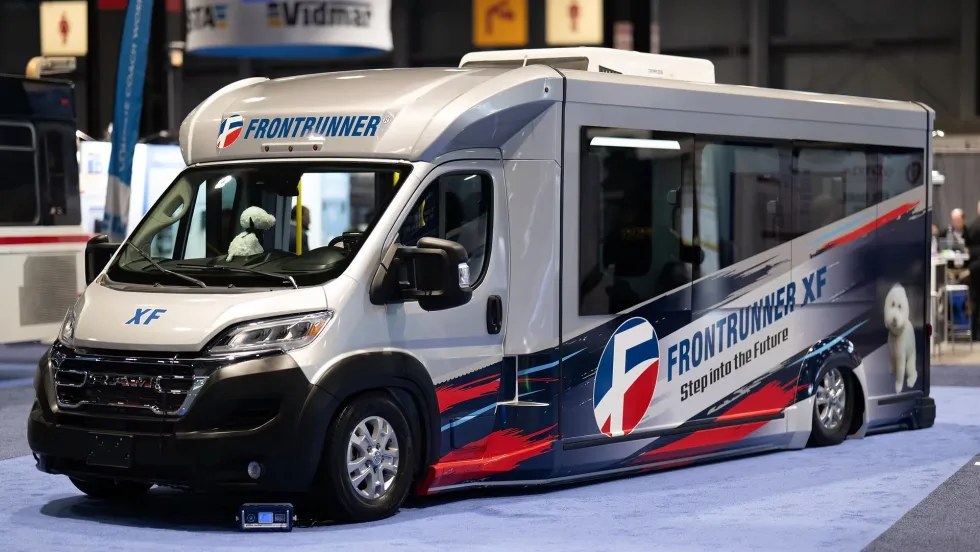
Frontrunner Bus Group Introduces XF Low-Floor Bus with Enhanced Accessibility
The new mid-sized bus features a full flat-floor design, eight-inch curbside step-in height, and zero-entry rear ramp to improve passenger access and operational flexibility.
Read More →
Scenes from APTA TRANSform & EXPO 2026
Transit leaders, manufacturers, and industry professionals gathered in Chicago to explore new technologies, share ideas, and discuss the future of public transportation.
Read More →
More Than a Summer Job: Building the Next Generation of Transit Talent
The Delaware River Port Authority and PATCO have transformed their internship program into a hands-on professional development experience that introduces students to the breadth of transportation careers — and creates a pipeline for future employees.
Read More →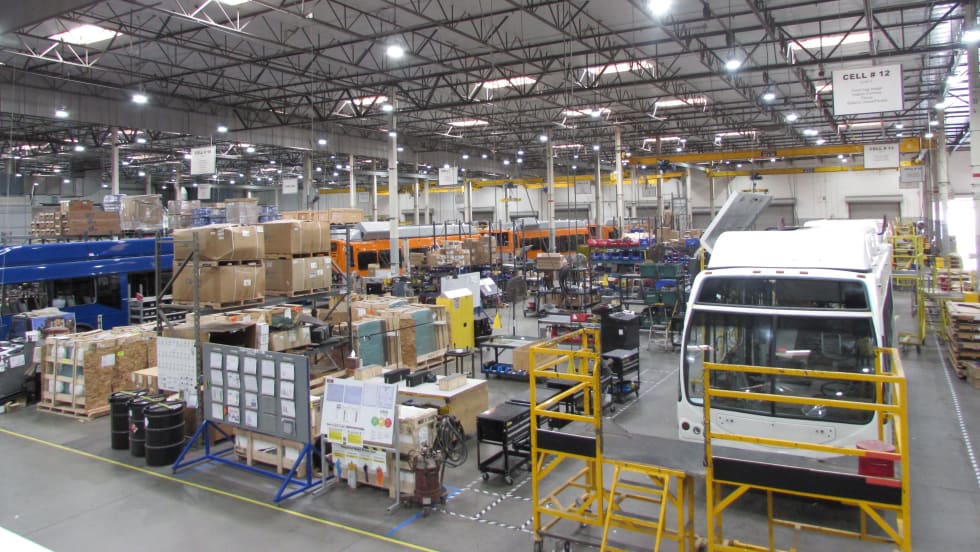
LA Metro Board Awards 220 Battery-Electric Bus Contract to ENC
The contract, which is the largest base award of battery-electric buses by a U.S. transit agency, will be built in Southern California, sustaining good jobs as LA prepares to welcome the world in 2028
Read More →
Public Transit Conference Returning to GFX in 2027, Call for Papers Now Open
The Call for Papers is now open, allowing transit agency professionals and industry experts to help shape the PTC educational program by submitting session ideas for consideration.
Read More →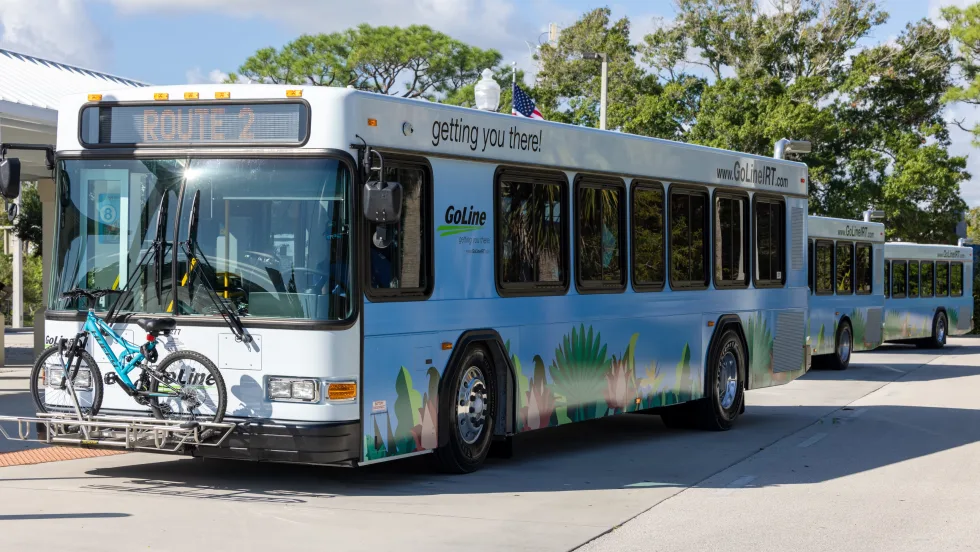
Indian River Transit’s Community-Focused Approach Earns National Recognition
Named APTA’s 2026 Outstanding Public Transportation System in its size category, Florida’s Indian River County transit system continues to grow ridership through fare-free service and a focus on evolving community needs.
Read More →
ENC Lands MATA Contract and More in Biz Briefs
In this edition of Biz Briefs, we spotlight the latest developments shaping the future of mobility.
Read More →
From Surviving to Thriving: Building Stronger Transportation Organizations
Bus Business Consultants founder Brian Dickson shares lessons on leadership, organizational health, and creating options for long-term success in a changing transportation industry.
Read More →
Everett Transit, Community Transit Outline Consolidation Agreement
The proposed agreement calls for a 50% increase in bus service in Everett, a new microtransit zone, continued paratransit service, and the transfer of Everett Transit operations to Community Transit.
Read More →
SEPTA Details Accelerate Vision for Transit System
The plan outlines investments in trolley modernization, new Metro and Regional Rail vehicles, accessible stations, and more frequent bus and rail service.
Read More →