



Houston Metro achieves SBE commitment
To date, the SBE program numbers reflect contracts with 270 certified SBE businesses ranging from construction contractors working on utilities and roadway paving, to enterprises providing tools, traffic control signs and office supplies.

Houston Metro achieved its commitment of $285 million, to small (mostly local) business enterprises (SBEs), which is $30 million more than the authority’s established goal. The SBE Program is a major element of the MetroRail expansion project that is currently building three new light-rail lines.
“Houston’s MetroRail expansion project ambitiously set out to award more than 35 percent of contracts to SBEs,” said George Greanias, president/CEO, Metro. “We established an unprecedented goal for a construction project of this magnitude, and we got there in record time, as the project is nearing its halfway completion milestone. We are undeniably Houston-proud of this feat.”
To date, the SBE program numbers reflect contracts with 270 certified SBE businesses ranging from construction contractors working on utilities and roadway paving, to enterprises providing tools, traffic control signs and office supplies. Houston-based subcontractors make up 95% of the group, and upwards of 50% classify as “disadvantaged businesses.” Almost one-third of the businesses are women-owned.
Metro’s Small/Disadvantaged Business Enterprise (SB/DBE) Program applies to certain eligible contracts (federally and locally funded) and is a goal-oriented program, requiring contractors who receive contracts from Metro to use good-faith efforts to utilize certified SB/DBE firms.
More Rail

Metra Draft Plan Outlines Costs, Service Improvements for Regional Rail
The Systemwide Network Plan identifies infrastructure needs and potential investments to expand all-day, bidirectional rail service across the Chicago region.
Read More →
Amtrak Completes First Street Tunnel Upgrades, Restores Service
The nine-day construction project included replacing aging track infrastructure and modernizing switch systems near Washington Union Station.
Read More →
FRA Announces $2.3B for Passenger, Freight Rail Projects Nationwide
The CRISI Grant Program funding will support rail infrastructure improvements, safety upgrades, and projects aimed at improving freight and passenger rail service across 45 states and Washington, D.C.
Read More →
Caltrain’s Electrification Drives a New Era of Ridership Growth
The railroad’s shift to electric service has brought more frequent trains, stronger customer satisfaction, and increased ridership, earning it APTA’s Outstanding Public Transportation System award.
Read More →
FTA Advances $164M Broward County Commuter Rail Project
The proposed 10.5-mile commuter rail extension would connect Fort Lauderdale and Aventura, expanding passenger rail options in South Florida.
Read More →
New York MTA Launches Historic $1.9B Signal, Track Modernization Project
Funded in part by congestion pricing revenue, the project will replace nearly century-old signals along the A and C lines in Brooklyn and Queens.
Read More →
LA Metro Breaks Ground on East San Fernando Valley Light Rail Project
The 6.7-mile line will add 11 stations along Van Nuys Boulevard, expand access to jobs and regional transit connections, and support Metro’s broader efforts to improve mobility as rail ridership grows.
Read More →
CSA Group Releases Climate Resilience Standard for Transit, Passenger Rail
Developed with support from the Standards Council of Canada, CSA D700 guides assessing climate-related risks and planning adaptation measures for transit and passenger rail systems.
Read More →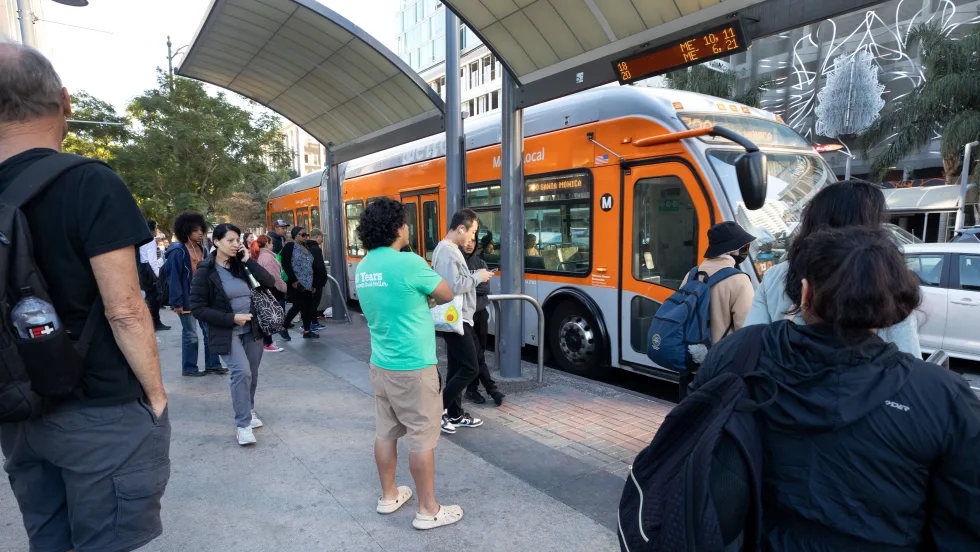
LA Metro September Ridership Climbs 3.9%, Led by Rail Growth
The agency recorded more than 27.2 million boardings, with rail ridership increasing 12.4% year over year and the D Line posting the largest gains.
Read More →
First Full MetroLink Rail Expansion Completed in 20 Years with $192M Airport Project
The project links two St. Louis-area airports by light rail while adding roadway and bike trail connections to improve regional access and mobility.
Read More →