



FRA chief touts U.S. vision at APTA rail conference
When speaking about President Obama’s investments in high-speed and intercity passenger rail, Administrator Joseph C. Szabo discussed how 32 states are now moving ahead with 153 rail-development projects, with 44 projects in 16 states, representing close to $3 billion in federal funding, currently under way or set to break ground and other projects coming in on time and on budget.

At the American Public Transportation Association’s (APTA) Annual Rail Conference's General Session in Dallas, Federal Railroad Administrator Joseph C. Szabo touted President Obama’s vision for rail in the U.S. as a way to help the nation prepare for its future growth.
“In 1955, President Eisenhower told America in a State of the Union address a modern, efficient highway system is essential to meet the needs of our growing population, our expanding economy and our national security,” said Szabo. “In some respects, that statement is just as true today. Except today, President Eisenhower’s vision would not just be limited to our highways. It would include highways, airports, public transit systems, waterways and of course our railroads. To provide for the future, all of these modes will need to work in concert at full strength.”
While discussing a growing rail system’s impact on the U.S. in terms of easing traffic congestion and limiting its reliance on foreign oil, Szabo added that with service levels targeted for the marketplace, passenger rail can be the most cost-effective, least oil-reliant and most environmentally friendly mode of transportation.
“Two railroad tracks can carry as many people in an hour as sixteen lanes of highway. That’s why there’s so much growing support for rail development,” he said.
When speaking about President Obama’s investments in high-speed and intercity passenger rail, Szabo discussed how 32 states are now moving ahead with 153 rail-development projects, with 44 projects in 16 states, representing close to $3 billion in federal funding, currently under way or set to break ground and other projects coming in on time and on budget.
“The President’s support for passenger rail remains as strong as ever,” said Szabo. “His Fiscal Year 2013 budget requests $2.5 billion combined with $6 billion in immediate transportation investments — a total of $8.5 billion for the continued development of high-speed and intercity passenger rail projects. America’s rail renaissance is well under way.”
Finally, Szabo discussed ridership gains of up to 72% from 1995 to 2008 on commuter, light and heavy rail, as well as record gains on Amtrak, which is on pace to set another record in 2012 for the ninth time out of the last 10 years. He also discussed on the impact the younger generation may have on rail’s growth, mentioning a report by the U.S. Public Interest Research Group and the Frontier Group, that said the average American drives 6% fewer miles today than in 2004, with 16- to 34-year-olds reducing their vehicle-miles traveled by 23% while increasing their average passenger miles traveled by trains and buses by 40%.
He also touted the industry’s focus on safety, including positive train control and the Railroad Safety Advisory Committee’s Passenger Safety Working Group, which is developing a System Safety Program to be applied to commuter rail, intercity passenger rail and high-speed rail operations.
“The System Safety Program is based on a voluntary commuter railroad program administered by APTA over the past 15 years,” Szabo said. “And, the System Safety Program recommended by the Passenger Safety Working Group satisfies the Rail Safety Improvement Act requirement for railroads to establish a risk reduction program. FRA is currently using the Committee’s recommendation to develop final language for a System Safety Program notice of proposed rulemaking that will be issued this fall.”
To view a full transcript, click here.
More Rail
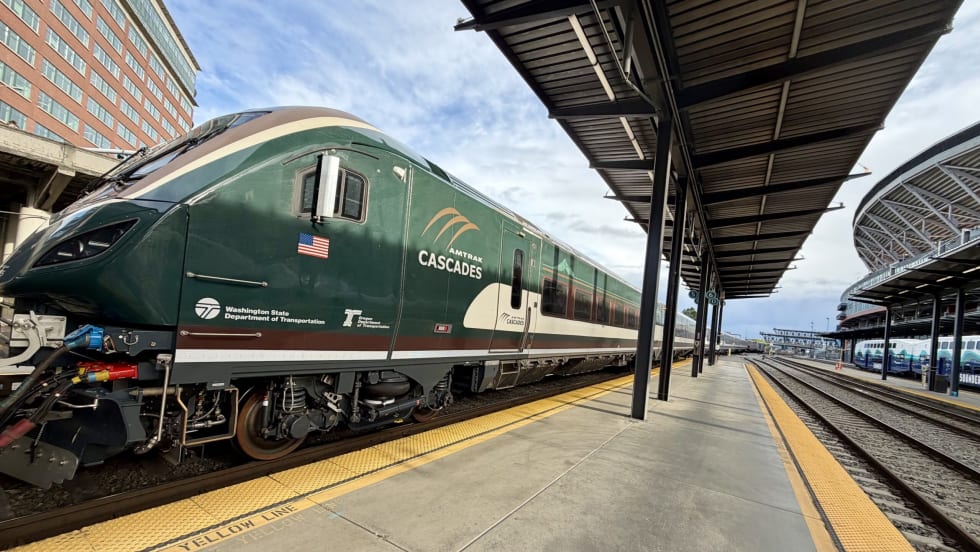
FRA Announces $5.3B in Rail Investments, Including $2B for Amtrak
Funding will support grade-crossing improvements, infrastructure upgrades, and new Amtrak equipment in 23 states.
Read More →
Finding the ‘Happy Medium’: Optimizing Maintenance Without Sacrificing Reliability
The key to maintenance optimization isn’t doing less work—it’s doing the right work at the right time on the right assets.
Read More →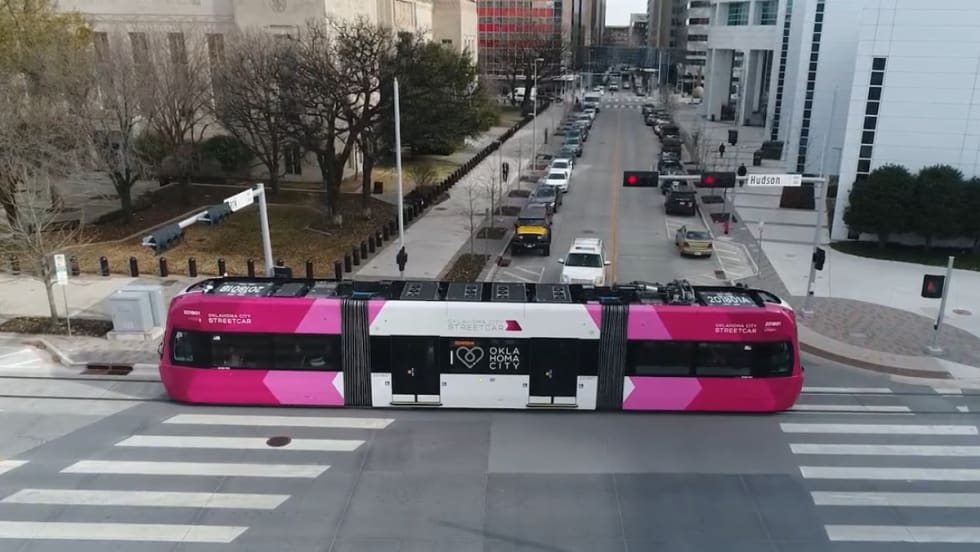
OKC Streetcar Makes Zero-Fare Service Permanent
Ridership increased an average of 71% compared with the same period a year earlier during the fare-free pilot.
Read More →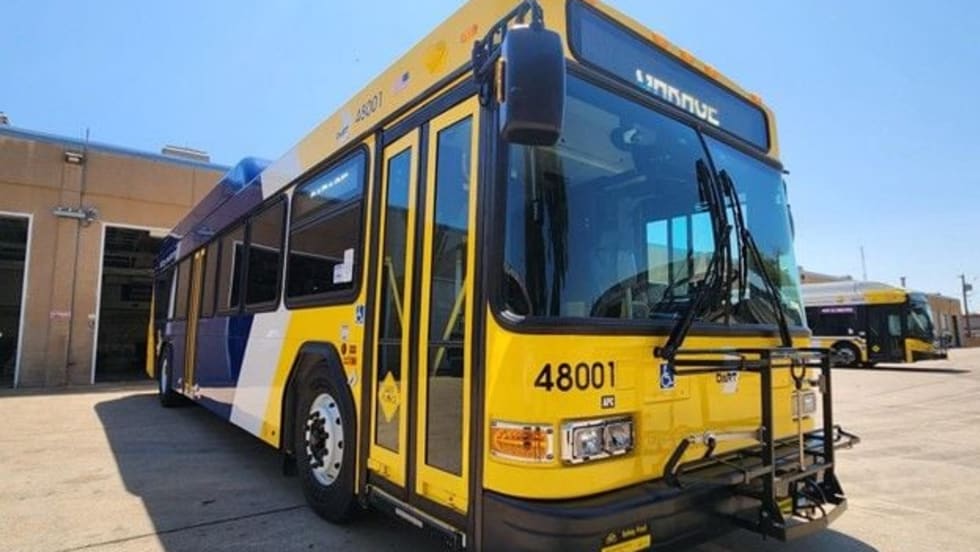
DART Customer Satisfaction Reaches Six-Year High
Overall satisfaction rose to 74.9%, while the agency’s Net Promoter Score reached a record 33.7.
Read More →
How DART's GoPass Is Redefining Regional Mobility
Serving 14 transit agencies, GoPass simplifies multimodal travel by allowing riders to plan, pay for, and manage an entire trip through one app.
Read More →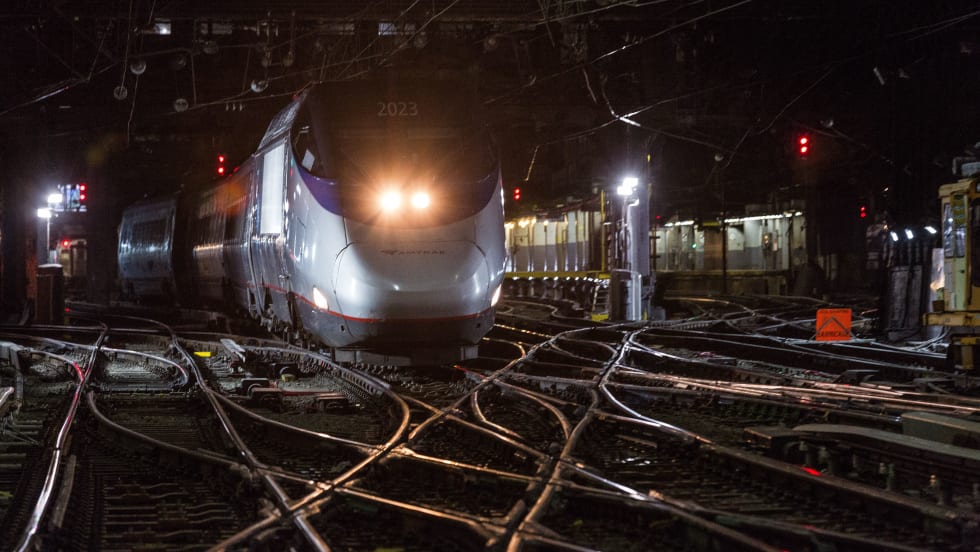
Amtrak Board Advances Plan to Restructure Organization, Seeks Public Input
The proposal, developed by Amtrak management and approved by the board for further consideration, is intended to modernize the organization's structure while improving accountability, operational efficiency, and customer service.
Read More →
Biz Briefs: STV teams with Amtrak, Motorcoach Operators Boost Fleet and Land Contracts, and More
From manufacturers and suppliers to transit agencies and motorcoach operators, these updates offer a snapshot of the projects, partnerships and business moves driving the industry forward.
Read More →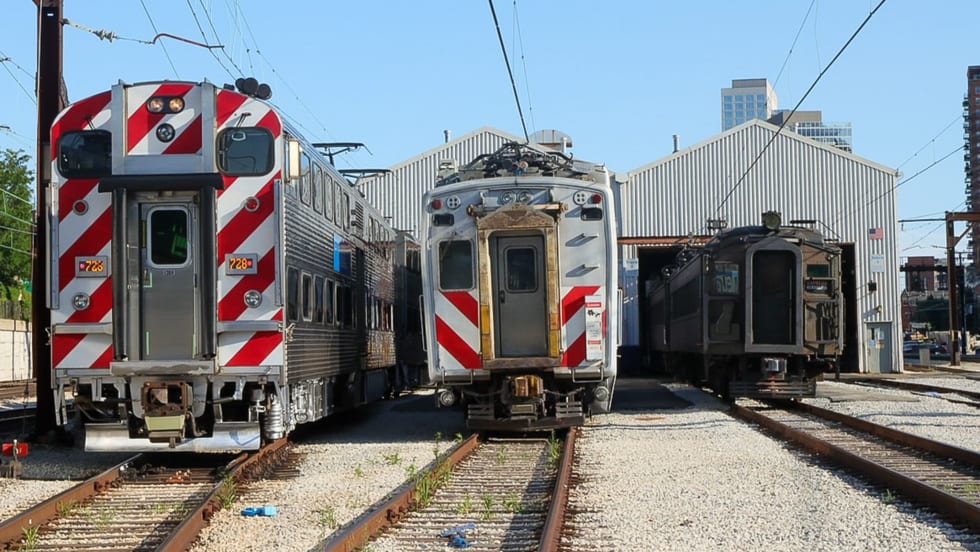
Metra Celebrates 100 Years of Electric Rail, Looks to the Future
The event was also a celebration of recent reforms to public transportation in the Chicago area, changes that could be as transformative in the future as the major civic achievement a century ago, said officials.
Read More →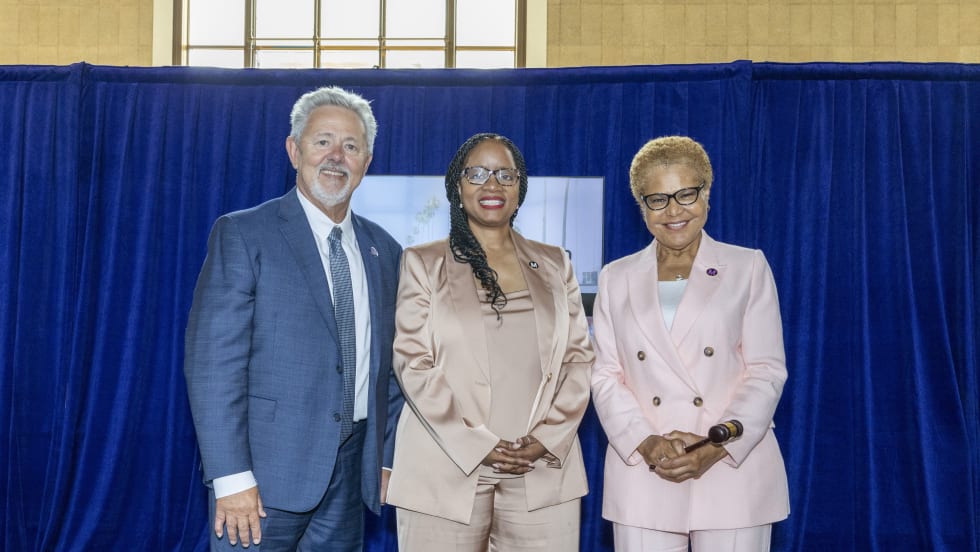
LA Metro Marks Banner Year, Sets Ambitious Goals for New Fiscal Year
Incoming LA Metro Board Chair and Los Angeles Mayor Karen Bass joined outgoing Board Chair Fernando Dutra and LA Metro CEO Stephanie Wiggins to review accomplishments from fiscal year 2026, which included the opening of new rail extensions, advancement of major transit projects, expanded safety programs, and new rider amenities.
Read More →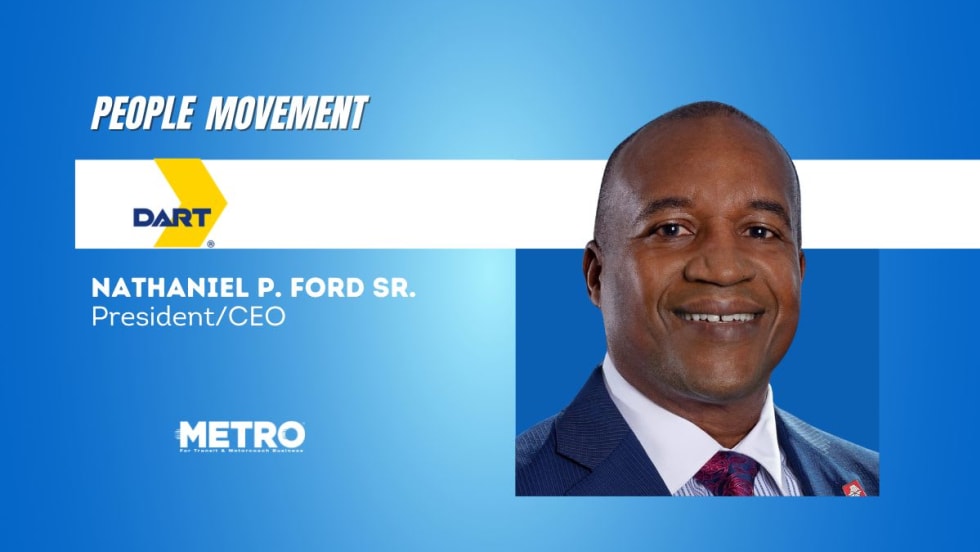
DART Taps Nathaniel P. Ford Sr. as Next President/CEO
Since 2012, Ford has served as the CEO of the Jacksonville Transportation Authority
Read More →