



APTA: Investing in U.S. high-speed rail to net $26.4B
Association’s report says that the net benefits will extend over the next 40 years, as the population grows by more than 100 million people, according to the U.S. Census.

A new American Public Transportation Association (APTA) report, “Opportunity Cost of Inaction: High-Speed Rail and High Performance Passenger Rail Service,” released at a Congressional briefing by APTA on Tuesday, shows that building a high-speed rail program in the U.S. results in $26.4 billion in net benefits over the next 40 years.
According to the report, the U.S. Census estimates the population will grow by more than 100 million people in the next 40 years. As the population grows, increased pressure will be placed on the nation’s already crumbling infrastructure. With a complementary high-speed rail service, this will help mitigate the cost of maintenance, replacement and the capacity expansion needs of airport runways, highways and roadways. In many cases expansion will be difficult because of the lack of land mass.
“As we look at the implementation of high-speed rail in America, we must recognize the value it brings to help sustain and complement our other modes of transportation,” said APTA President and CEO Michael Melaniphy. “It is critical that policy makers take a leadership role in moving high-speed rail forward to capture the billions of dollars of economic, mobility, energy and environmental benefits.”
The report shows investment in high-speed and high performance passenger rail not only aids in solving our capacity issues, but helps mitigate overall transportation costs and helps our roadways and airports work more efficiently.
The strain on our transportation system by travelers will result in increased congestion and delays which will lead to billions of dollars lost in a globally competitive market.
“By building high-speed rail, we not only offer mobility benefits to those who ride the rails, but to those who continue to fly or drive by helping to alleviate the strain on our overburdened network,” said Melaniphy.
The net benefit to investing in the California region is $8.2 billion over 40 years; the Midwest is $11.7 billion; the Northwest Corridor is $5.5 billion; and the Pacific Northwest is $1.1 billion.
Additional factors in determining the net benefits include economic output generated, tax revenue generated, emissions savings and others. Numerous additional social and mobility benefits are not quantified in the report.
“This study quantifies just the tip of the iceberg and is a very conservative estimate of the net benefits resulting from implementing high performance trains in America,” said Melaniphy. “We must recognize the positive growth potential and benefits high-speed rail can provide to our citizens.”
In addition to APTA releasing the report to Congress, railway representatives from eight countries were on Capitol Hill Tuesday to brief members of Congress on the high-speed rail industry worldwide. These leaders were in Washington, D.C. as part of the UIC 8th World Congress on High-Speed Rail, which begins the following day in Philadelphia.
More Rail
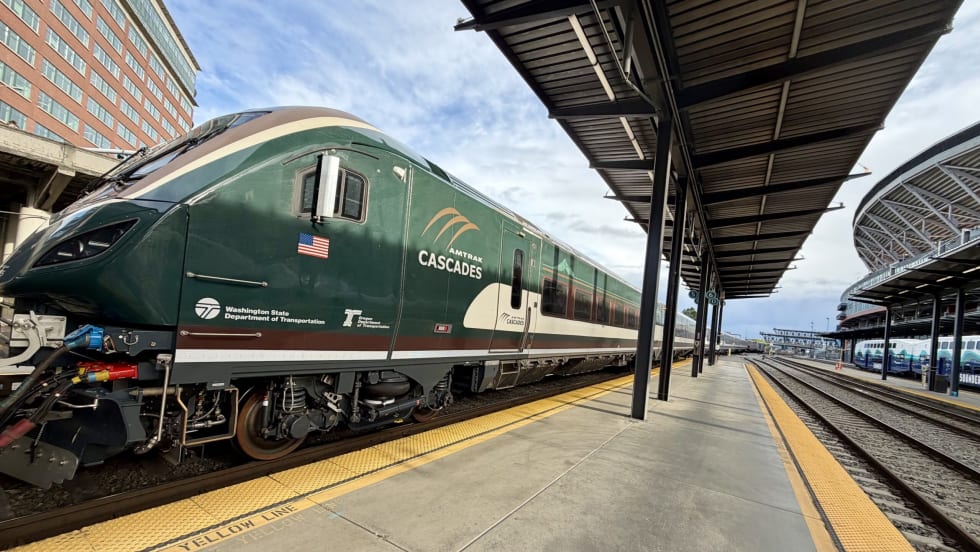
FRA Announces $5.3B in Rail Investments, Including $2B for Amtrak
Funding will support grade-crossing improvements, infrastructure upgrades, and new Amtrak equipment in 23 states.
Read More →
Finding the ‘Happy Medium’: Optimizing Maintenance Without Sacrificing Reliability
The key to maintenance optimization isn’t doing less work—it’s doing the right work at the right time on the right assets.
Read More →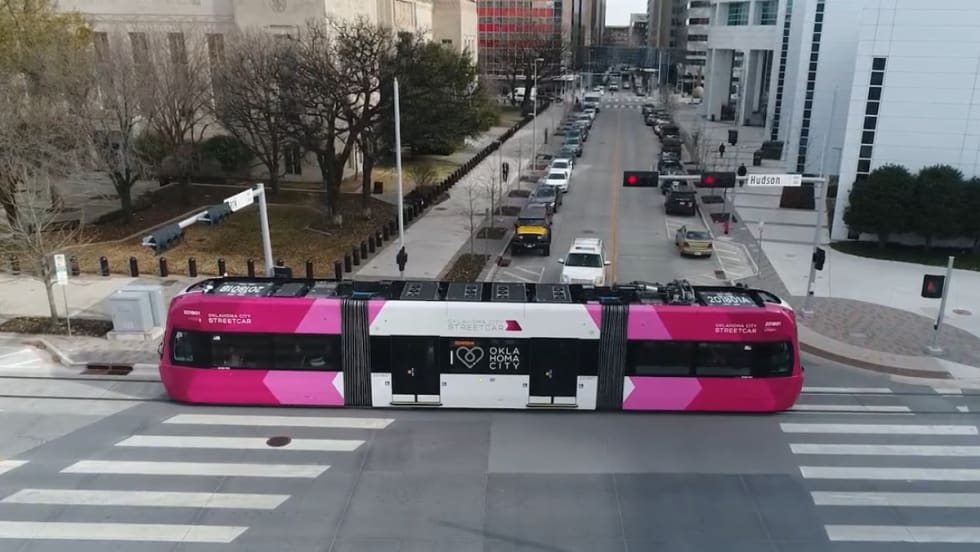
OKC Streetcar Makes Zero-Fare Service Permanent
Ridership increased an average of 71% compared with the same period a year earlier during the fare-free pilot.
Read More →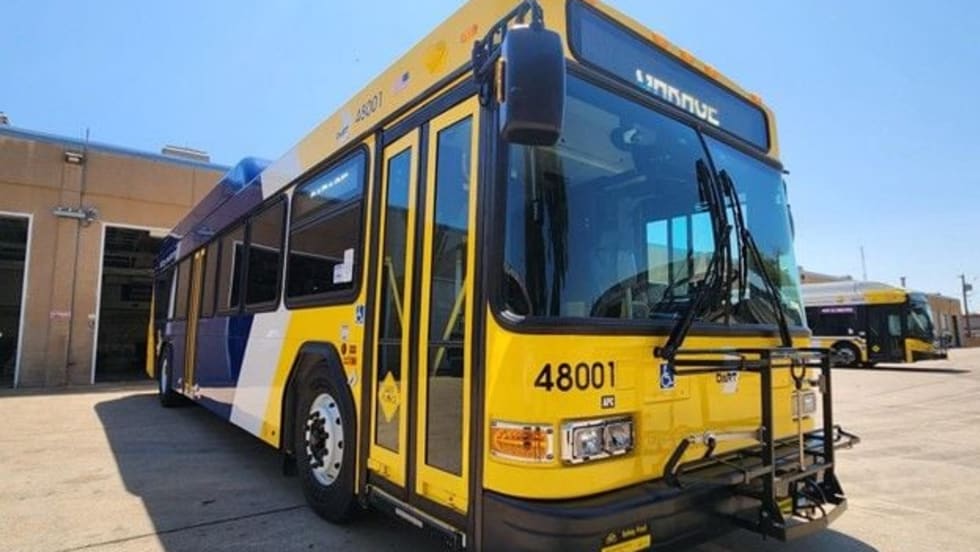
DART Customer Satisfaction Reaches Six-Year High
Overall satisfaction rose to 74.9%, while the agency’s Net Promoter Score reached a record 33.7.
Read More →
How DART's GoPass Is Redefining Regional Mobility
Serving 14 transit agencies, GoPass simplifies multimodal travel by allowing riders to plan, pay for, and manage an entire trip through one app.
Read More →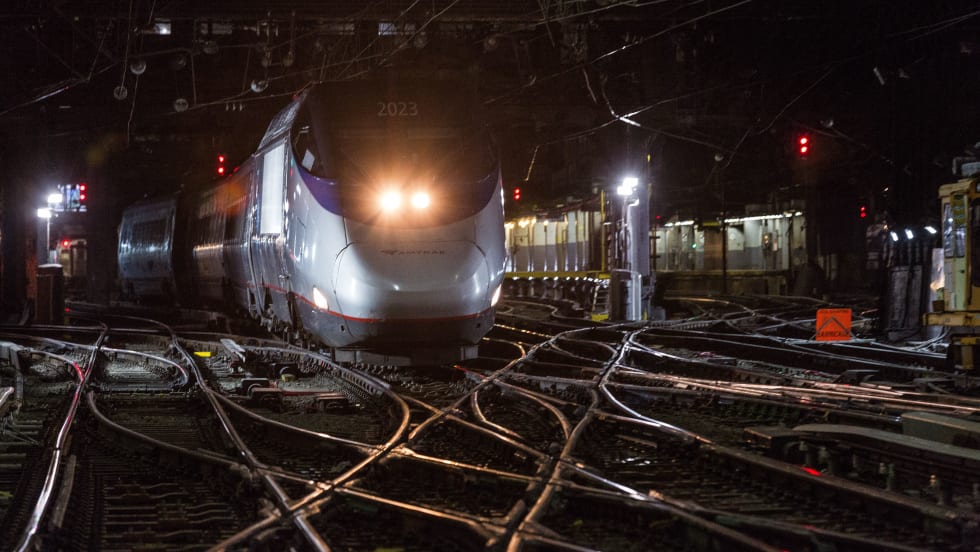
Amtrak Board Advances Plan to Restructure Organization, Seeks Public Input
The proposal, developed by Amtrak management and approved by the board for further consideration, is intended to modernize the organization's structure while improving accountability, operational efficiency, and customer service.
Read More →
Biz Briefs: STV teams with Amtrak, Motorcoach Operators Boost Fleet and Land Contracts, and More
From manufacturers and suppliers to transit agencies and motorcoach operators, these updates offer a snapshot of the projects, partnerships and business moves driving the industry forward.
Read More →
Metra Celebrates 100 Years of Electric Rail, Looks to the Future
The event was also a celebration of recent reforms to public transportation in the Chicago area, changes that could be as transformative in the future as the major civic achievement a century ago, said officials.
Read More →
LA Metro Marks Banner Year, Sets Ambitious Goals for New Fiscal Year
Incoming LA Metro Board Chair and Los Angeles Mayor Karen Bass joined outgoing Board Chair Fernando Dutra and LA Metro CEO Stephanie Wiggins to review accomplishments from fiscal year 2026, which included the opening of new rail extensions, advancement of major transit projects, expanded safety programs, and new rider amenities.
Read More →
DART Taps Nathaniel P. Ford Sr. as Next President/CEO
Since 2012, Ford has served as the CEO of the Jacksonville Transportation Authority
Read More →