



Final NYCT sub cars getting final makeover
The remaining 222 cars out of the original 600-car fleet are rotating through the Coney Island Overhaul Facility at a pace of four cars per week undergoing a limited-scope maintenance makeover intended to improve their performance and reliability until they are replaced by the fleet of 300 new R179 cars, due to begin arriving in 2014.

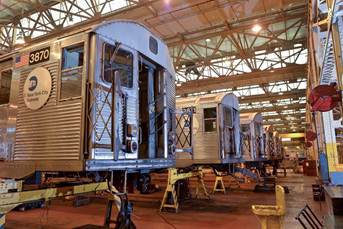
With their once-gleaming stainless-steel bodies dulled by age and their windows scarred by the negative attention of vandals, the Metropolitan Transportation Authority (MTA) New York City Transit’s R32 subway cars are living out their final years of service until the arrival of their replacements. To make those last trips go more smoothly, the cars are “having a little work done,” according to NYCT.
The “Brightliners,” as the Budd-built cars were dubbed upon their introduction into service back in 1964, were the first large fleet of stainless steel cars purchased by New York City Transit and the first corrosion resistant cars placed in service since the ten experimental cars purchased in 1949 by the New York City Board of Transportation.
Thanks to the combination of stainless steel construction, efficient design and the efforts of NYCT’s subway car maintenance forces, the cars have held up admirably for nearly half a century, serving riders on nearly every lettered line route. Currently operating on the A and C lines, the cars have a distinctive ribbed sided appearance, rather than the smooth sides of more modern subway cars.
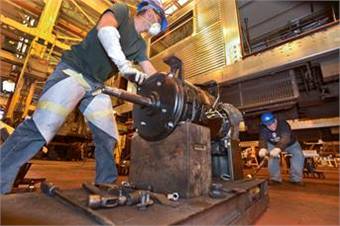
Today, the remaining 222 cars out of the original 600-car fleet are rotating through the Coney Island Overhaul Facility at a pace of four cars per week undergoing a limited-scope maintenance makeover intended to improve their performance and reliability until they are replaced by the fleet of 300 new R179 cars, due to begin arriving in 2014.
With a projected cost of nearly $25 million, the scope of work includes upgrades to several major car components and systems including, air brakes, auxiliary electric, car body, couplers, car body hoses, door systems, propulsion systems, some HVAC work and trucks. Work will also include structural enhancements and the replacement of vandalized windows.
Work is scheduled for substantial completion by the end of this year with air conditioning and structural improvements wrapped up by the beginning of next year’s hot weather season.
More Rail
Amtrak, CN Reach Agreements to Strengthen Passenger Rail Service, Safety
The agreement resolves a more than decade-long proceeding before the Surface Transportation Board concerning the terms and conditions for Amtrak services, such as the City of New Orleans, Illini/Saluki, and Wolverine.
Read More →
New York MTA Advances Final Contract for Second Avenue Subway Expansion
Contract Four is the largest in the Second Avenue Subway Phase 2 project and includes construction of station infrastructure, tracks, and signals for the subway expansion, MTA officials said. Work on Contract Four will begin in 2027.
Read More →
San Diego MTS Breaks Monthly Trolley Ridership Record
Agency officials said July’s ridership indicates MTS’s continued recovery from the pandemic.
Read More →
Report Examines NJ TRANSIT Reliability, Funding Challenges
The Garden State Initiative analysis examines the roles of Amtrak infrastructure, fleet management, and agency operations while recommending a more performance-based approach to improving reliability.
Read More →
Stadler, CapMetro Sign Long-Term Rail Fleet Support Agreement
Beginning in 2027, Stadler will provide on-site technical expertise, spare parts support, training, and obsolescence management to help extend the reliability and longevity of CapMetro’s GTW fleet.
Read More →
Biz Briefs: Alstom Lands Canadian Contract, LYT to Supply California TSP, and More
In METRO's latest installment, we take a look at recent news from Complete Coach Works, Beep, FlixBus, and more partnerships making headlines across the transportation sector.
Read More →
CATS Gold Line Marks 5 Years of Service, 2.8M Passenger Trips
With a six-mile expansion planned, the Charlotte streetcar is positioned to connect more neighborhoods and major transit hubs across the region.
Read More →
Why Simulating Pedestrian Movement Has Become Essential for Modern Rail Stations
Pedestrian microsimulation is helping rail planners identify bottlenecks, test station designs, and prepare complex transit hubs for growing passenger volumes.
Read More →
Amtrak Begins Major Construction at New York’s Sunnyside Yard
The new maintenance facility will support Amtrak’s Airo trainsets while improving maintenance efficiency and turnaround times in New York.
Read More →
Chicago Leaders Unveil Plans for O’Hare Airport Express Train
The privately developed project would offer a 15-minute trip between downtown and O’Hare’s Terminal 2, with trains operating every 15 minutes on a dedicated track. The service would use battery-electric trains and three existing freight rail rights-of-way.
Read More →