



With Buses on Board, WMATA's Smart-Card System is Ready to Go Regional
In six months, smart card use on buses reached 11.5%, just 3.5% shy of WMATA's first-year goal. Integrating smart cards on its bus fleet also boosted card sales, which is nearing the millionth card mark.
Equipping its buses with smart-card readers was the final step for the Washington Metropolitan Area Transit Authority (WMATA) to achieve a fully smart-card-capable system. The rail and parking operations already were linked by smart cards.
This milestone marks the beginning of a planned regional smart-card system that will link 16 other transit agencies in Maryland and Virginia.
Buses get smart
In August 2004, WMATA completed equipping its fleet of nearly 1,500 buses with new fareboxes that accept its SmarTrip smart cards. Because its Metrobus service extends into parts of Maryland and Virginia, this makes it the first U.S. smart-card system linking transit services in two states to the same card.
This is also the first deployment of an integrated smart-card reader with a standard cash-collecting farebox, says Booz Allen Hamilton’s Steve King, a consultant on the project. GFI Genfare developed and manufactured the fareboxes that equip the buses. “Our Odyssey farebox makes it convenient for passengers to pay with either cash or smart cards,” says Kim Green, GFI’s vice president of sales and marketing. The first of the SmarTrip fareboxes was installed in fall 2001 for a nine-month test. These new systems allow customers to touch their SmarTrip card to the designated space, and the farebox deducts the correct fare.
Customers can add value to their cards by touching the Add-Value button on the top of the farebox and depositing the desired amount of money. If cash is used, paper bills are inserted in a validator and coins are deposited in the opening directly beneath. Bus customers can still pay for fares with cash (except pennies), passes, tokens or tickets. The new fareboxes recognize if a customer is transferring from the rail system and will credit the proper discount.
Reader technology
The smart-card reading component, Tri-Reader, developed by Cubic Transportation Systems, enables all ISO 14443-compliant cards and WMATA’s SmarTrip card (Cubic’s GO Card) to be used interchangeably.
Under the ISO standard, a type A card is a memory card and a type B card is a processor-based card. “Prior to the ISO standard, Cubic developed its GO Card, and a number of other companies developed similar card technologies,” says Roger Kuite, Cubic’s director of technical marketing. “So in order to protect [WMATA’s] expenditures in smart-card technology, we developed the Tri-Reader, which allows us to read our proprietary card as well as the two ISO standard versions.”
Under a current contract, Cubic will expand its Tri-Reader technology into WMATA’s rail system, as the rail and parking systems are equipped with the original GO Card technology. “We will begin the upgrade in 2006,” says Roger Crow, Cubic’s director of programs. The agency launched the use of smart cards on its rail and parking services in 1999. Each card, at a cost of $5, is given a serial number, which allows customers who have registered cards to replace lost or stolen cards with the original stored value.
Additional benefits of a smart-card system lie in the amount of information that can be stored relative to the magnetic card. “You can only store some 130 bytes of information on a magnetic card, but smart cards have at least 1,000, if not 4,000 bytes worth of information,” Kuite says.
Because of the enhanced storage capability, the cards can contain a more complex cryptographic engine to prevent fraud. “So where you can duplicate the information off of a magnetic card, it is very difficult to even get access to data on a smart card,” Kuite says.
Selling like candy
When WMATA launched the new fare collection system on its rail and parking services in 1999, it took the typical multimedia marketing approach, but found that the ultimate promotion was seeing the card in use. “We quickly set up demonstrations at rail stations and people bought [the cards] like candy,” says Murray Bond, WMATA’s director of SmarTrip operations. Sales of the smart card reached more than 68,000 in the system’s first fiscal year. In 2004, sales reached more than 100,000, which can be partially attributed to WMATA shifting to a smart-card payment-only system for parking services in June. System-wide card sales since the 1999 launch to Dec. 31, 2004, totaled nearly 837,000.
Smart-card penetration on the Metro-bus fleet since the August 2004 installation has reached 11.5%. “Our goal for the first year is 15%, so we are well on our way,” Bond says. Use on individual routes varies from 1% or 2% to 80%, with smart-card use the highest on Metro’s express service.
WMATA still sells paper magnetic tickets, passes and tokens. “Until we can introduce an economically feasible, what we call a limited-use card, for some of our customers who don’t want to pay the $5 for the smart card, we can’t limit them,” Bond says.
Despite offering alternative forms of fare media, WMATA eventually sees itself moving toward installation of a completely smart-card system, which will help the agency realize significant operating and capital cost savings. “We, and virtually every other transit system, spend a lot of money lugging money around,” he says.
An immediate benefit of moving to a smart card-only system was seen with the agency’s parking service. When WMATA went to a cashless parking program, accepting smart cards only, it purchased simple electronic machines for an estimated cost of $7,500 apiece, while the original machines required a lot of maintenance and cost nearly $100,000 apiece.
In addition to using the smart card for fare payment, WMATA is involved in a pilot program integrating SmarTrip with a credit card. “We’ve teamed up with Citibank, and they’ve produced a Citibank MasterCard embedded with our SmarTrip [technology],” Bond says. In November 2004, Citibank mailed out approximately 8,000 integrated cards to its customers living in the region, and is expected to mail out additional cards to non-Citibank customers this spring.
WMATA is still working with Citibank and will begin tracking the card usage. “The pilot program is [designed] to test the market in terms of what customers think of them,” Bond says. “From our standpoint, the chip is a piece of real estate that we want to leverage as best we can in terms of generating new revenue flows.”
WMATA is also working with the District of Columbia, which will introduce to its employees a special hybrid card featuring two smart chips. “One [chip] will serve as the employee’s ID and building access, and the other will be the Metro chip,” Bond says. The agency has had similar pilot programs with federal agencies and is in talks with additional banks and retailers about testing different cards.
“You will have a lot of additional smart cards in the field, once the [SmarTrip program] goes regional,” says Ian Newberg, Cubic’s director of sales and marketing. “You’ll have the inertia behind it to entice these kinds of additional applications because there will be a business case to do so.”
Going regional with partners
Equipping the Metrobus fleet with smart-card readers was part of a larger plan for a regional smart-card system. While WMATA pursued new fareboxes in 2001, the agency was involved in discussions with other transit systems nearby, which led to a partnership for a regional SmarTrip program. “Our regional partners designated Metro to manage contractors to get the regional program up and running,” Bond says. “We are now progressing toward final design, and we hope to have the first phase of the regional system up by late summer.”
This year, the following transit systems will begin testing and incorporating the SmarTrip fare payment technology Ñ in Maryland: Annapolis Transit, Baltimore MTA and MARC, Corridor Transit Corp., Frederick Transit, Harford County Transportation Services, Howard County Transit, Ride On and TheBus; in northern Virginia: ART, CUE, DASH, Fairfax Connector, Loudon County Transit, PRTC OmniRide and VRE.
Cubic will provide an integrated solution to bring all of the regional central computers into one data network concentrator that funnels data up to the clearinghouse, Cubic’s Crow says.
Concord, Calif.-based ERG Transit Systems will handle central clearinghouse and settlement for the regional system, as well as heading the regional customer service center. ERG took over customer service functions for WMATA’s SmarTrip program in June 2004. The regional customer service center, subcontracted to Northrop Grumman Corp., is responsible for mailing out new cards, taking care of existing customers and resolving any issues.
The clearinghouse will use captured information from Cubic’s hardware for financial processing and transactions. “The clearinghouse will decide how much money is owed to each participating agency and instructions will be sent to their bank accounts to transfer monies from one agency to another,” says Michael Laezza, ERG’s vice president of sales.
According to Laezza, customer service functions take place in Washingon, D.C., while the clearinghouse processing engine, which can process 40 million transactions a day, is in Concord, Calif.
More Management

EPA Proposal to Ease Diesel Emissions Compliance Could Improve Reliability for Motorcoach Operators
The EPA is proposing to remove DEF-related engine derates for new heavy-duty diesel vehicles, a change bus operators say would improve safety and reliability while sparking debate over the future of emissions enforcement.
Read More →
Act Now to Join Rays the Mark Foundation's Annual Golf Tournament, Fundraiser
This year's tournament honors Emily DeVito, a member of the public transportation family whose story has moved colleagues across the industry — and with only a few foursomes remaining, organizers are encouraging companies and individuals to register soon.
Read More →
RIPTA Celebrates 60 Years of Public Transit Service
The Rhode Island agency is marking the milestone by highlighting service improvements, mobility initiatives, and its vision for the future of transit.
Read More →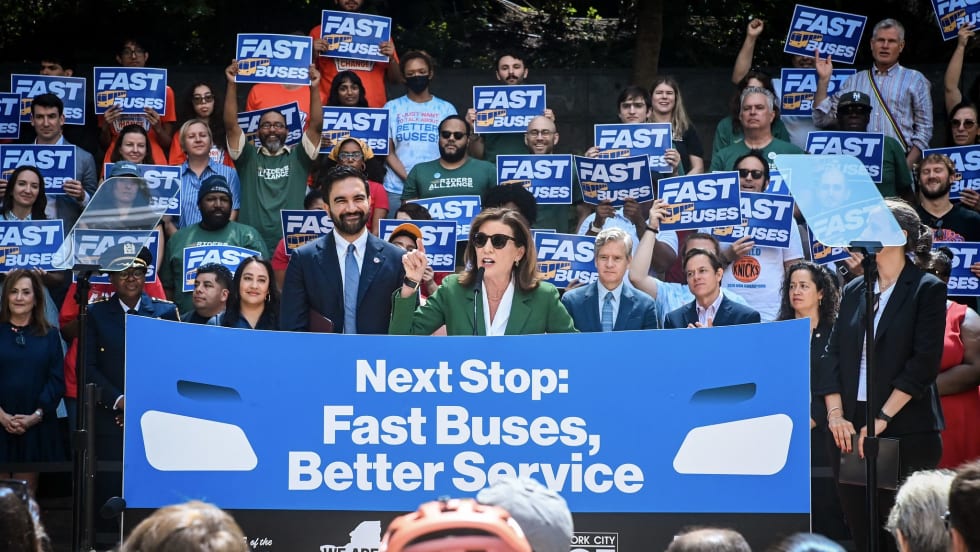
New York Unveils Sweeping Plan to Modernize City Bus Service
Next Stop: Fast Buses, Better Service identifies 50 priority bus corridors for improvements across the five boroughs and launches the City’s next generation of rapid bus service along five key routes.
Read More →
San Antonio's VIA Launches Second Year of Data Fellowship Program
The partnership gives Better Futures Scholars hands-on experience with real-world challenges while providing VIA with additional analytical capacity to support key agency priorities.
Read More →
CTDOT Taps STV for Electric Bus Facility Design
The firm will work with CTDOT and RVT to define the facility layout, operational requirements, and long-term flexibility for RVT’s growing electric fleet.
Read More →
USDOT Awards $170M for Transit Projects in Latest BUILD Grants
Federal funding will support maintenance facility upgrades and other projects aimed at improving transit safety and reliability across the U.S.
Read More →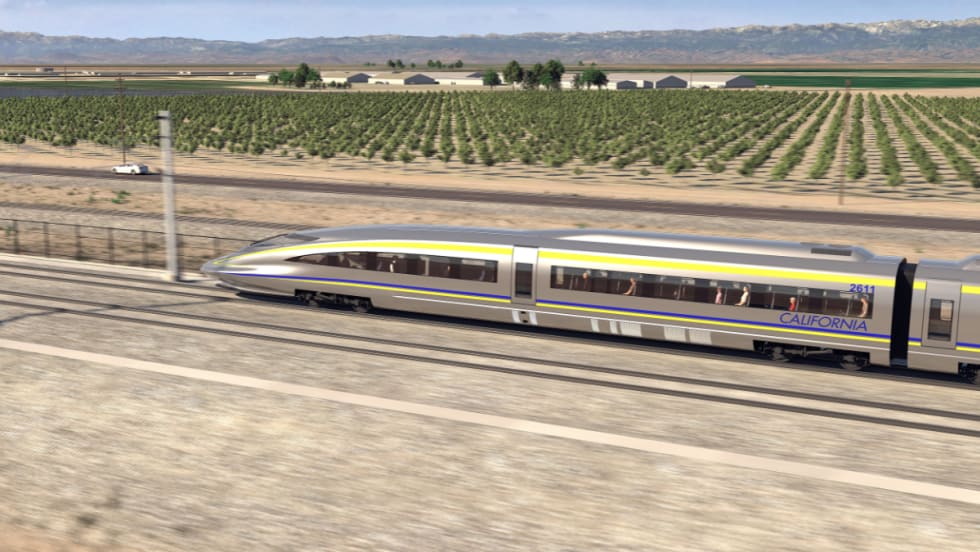
Keolis and SNCF Voyageurs Bring Rail Expertise to California High-Speed Rail
The CDA establishes a collaborative predevelopment partnership intended to evaluate future delivery opportunities through public-private partnership models.
Read More →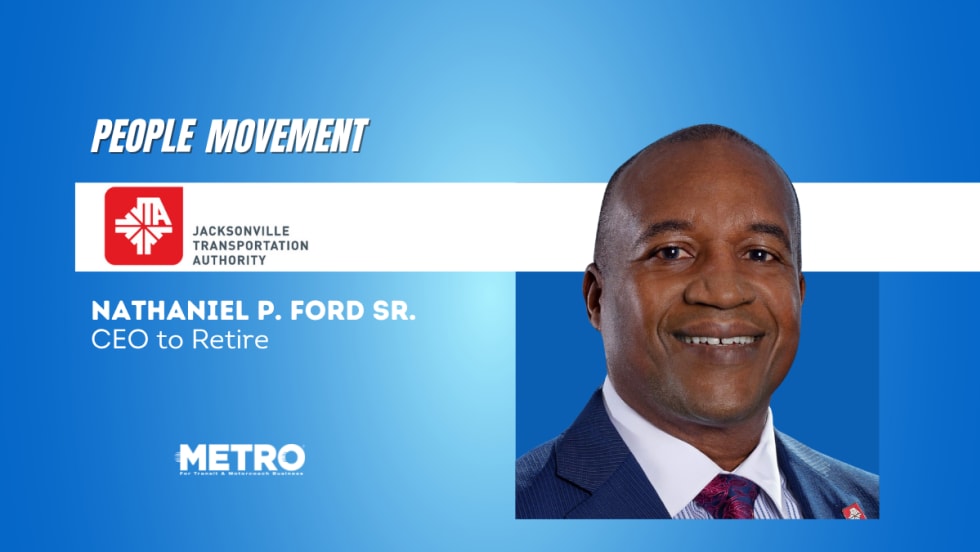
Ford to Leave JTA After More Than 10 Years as CEO
He plans to continue his work advancing innovative mobility solutions to improve the quality of life in communities across the nation. He did not announce specific plans.
Read More →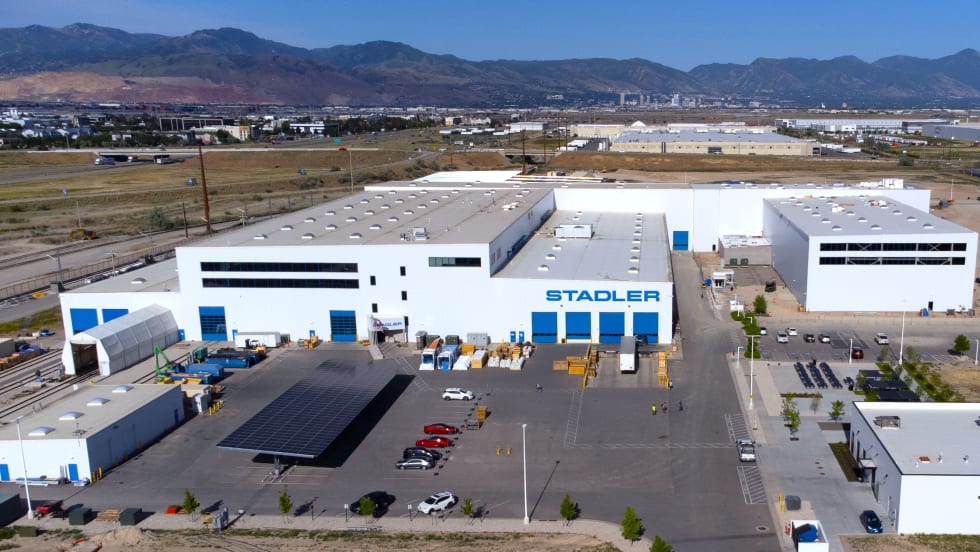
Stadler Marks 10 Years in the U.S. with Salt Lake City Expansion
The expansion is expected to create up to 300 new local jobs, some of which are youth apprenticeships, said Stadler officials.
Read More →