



Arlington, Texas launches first mass transit service
The two-year MAX pilot program is being funded through three local partners as well as an FTA Job Access and Reverse Commute grant.
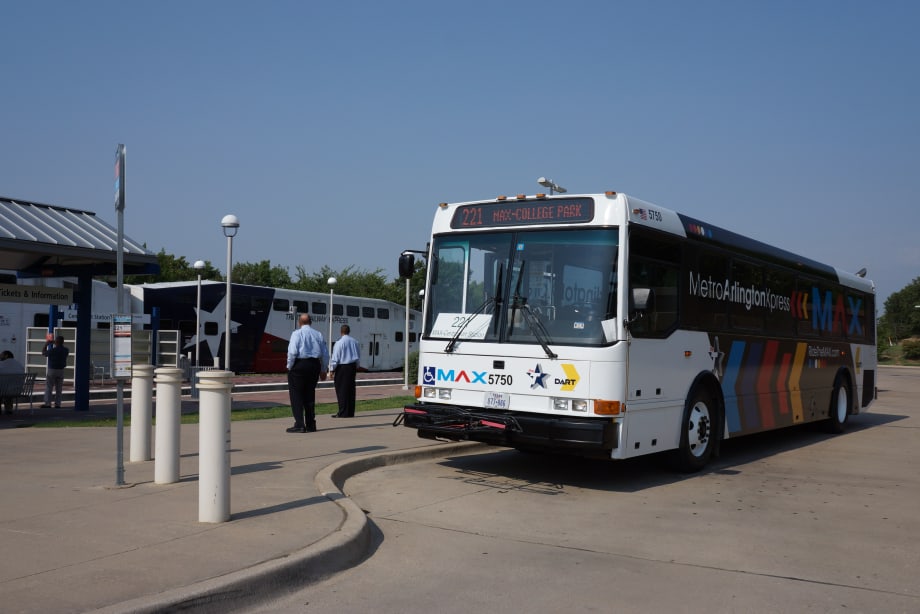

With the launch of the Metro ArlingtonXpress (MAX) commuter bus system in August, Arlington, Texas introduced mass transit to the area for the first time.
“Each year our city council creates priorities for the next fiscal year and one area they identified was enhancing regional mobility,” said Alicia Winkelblech, planning manager for MAX. “Once they started looking at opportunities, the best way they felt they could do that was through connecting with the Trinity Railway Express (TRE) commuter rail system.”
The two-year MAX pilot program connects riders to the TRE’s CentrePort Station, enabling them to access North Texas’ broader transit system.
The service is jointly operated by Dallas Area Rapid Transit (DART) and the Fort Worth Transportation Authority (The T), which also jointly operates the commuter rail system that travels through part of Arlington to link Dallas and Fort Worth.
“Because of where we are located, we are really in a unique location to capture ridership heading in both directions,” said Winkelblech.
Currently, MAX has two stops — one at the CentrePort Station and one in downtown Arlington at the edge of the University of Texas at Arlington (UT). Plans include adding a third stop halfway along the route near the Entertainment District, which includes Cowboy Stadium and Six Flags, by November.
The two-year pilot, which costs $700,000 per year, is being funded by the City of Arlington ($350,000), UT ($230,000) and the local chamber of commerce ($120,000), as well as through a Federal Transit Administration grant through the Job Access and Reverse Commute Program (JARC).
“We will be using the JARC grant over the course of two years, but essentially, the City, its partners and stakeholders are paying one year and the grant will pay for one year,” explained Winkelblech.
Before its launch, officials hoped MAX ridership would reach between 250 and 500 trips per day by the end of the first year. In its first week, ridership surpassed those numbers three out of five days, and during the second week, ridership surpassed those first year goals four out of five days, said Winkelblech.
“We hit our base goal in the first week, so now we are really focused on maintaining and growing that ridership,” she explained. “For us, it is not only getting the word out and making sure people know the opportunity is now there, but also helping potential riders understand how it can work for them.”
Those healthy early ridership numbers bode well for Arlington to continue providing the service following the two-year pilot, however, referendums to help fund a public transportation system have been struck down by local voters three separate times.
“There has always been an interest in connecting residents to the rest of the region through public transportation, but it has been hard for Arlington residents to see how it could apply to them,” said Winkelblech. “I don’t know if the opportunities and potential benefits, not just for riders but also to the city as a whole, have ever been fully explained.”
She added that following the two-year pilot project, the contractual relationship with DART and The T will end and the City of Arlington will have to examine the data they have compiled, including ridership numbers and patterns as well as demographics, before deciding what to do next.
“If ridership continues to grow and the demand is there, it is going to be up to the council to decide if they want something more permanent or long term, as well as what it will look like — it could continue to be a contract service or the City could decide they want to become a member of one of the three transit authorities in the area,” Winkelblech said. “It will definitely be a question the council will have to think long and hard about.”
More Bus
Finding the ‘Happy Medium’: Optimizing Maintenance Without Sacrificing Reliability
The key to maintenance optimization isn’t doing less work—it’s doing the right work at the right time on the right assets.
Read More →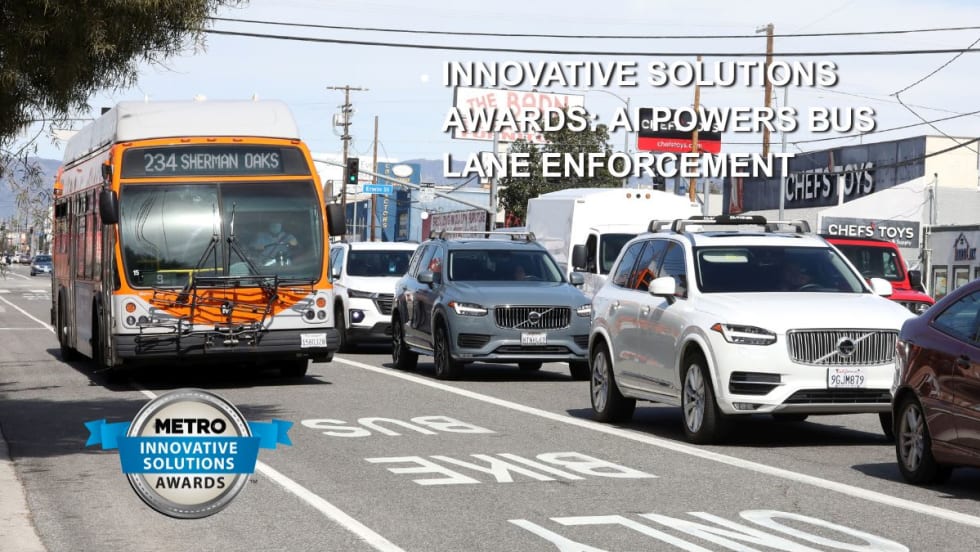
LA Metro, City of West Hollywood, and Partners Advance Smarter Bus Lane Enforcement
The award-winning partnership combines AI-powered detection with human oversight to improve bus reliability, accessibility, and enforcement efficiency.
Read More →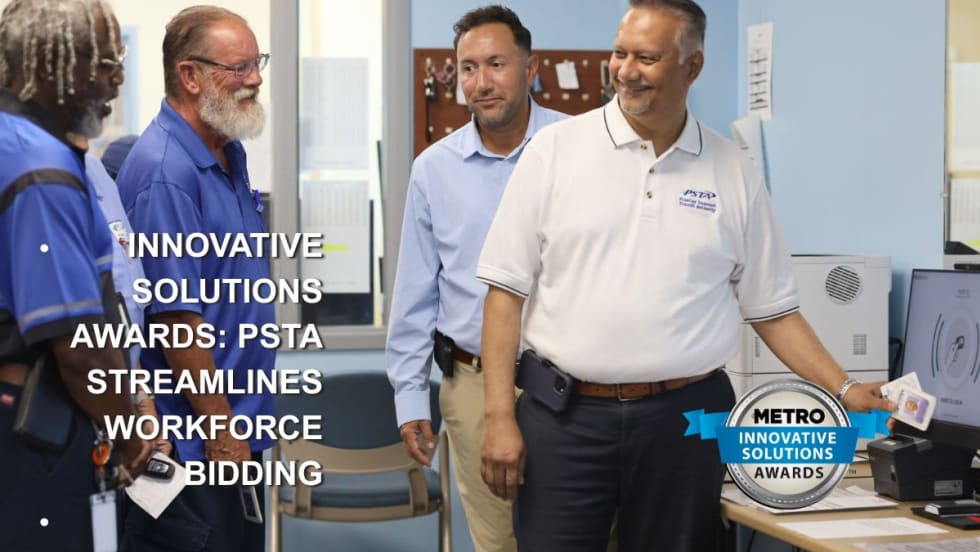
PSTA Modernizes Workforce Management with Digital Bidding System
The award-winning Workforce Transit Modernization project replaced paper bidding with a transparent digital platform, cutting administrative effort while improving access for operators.
Read More →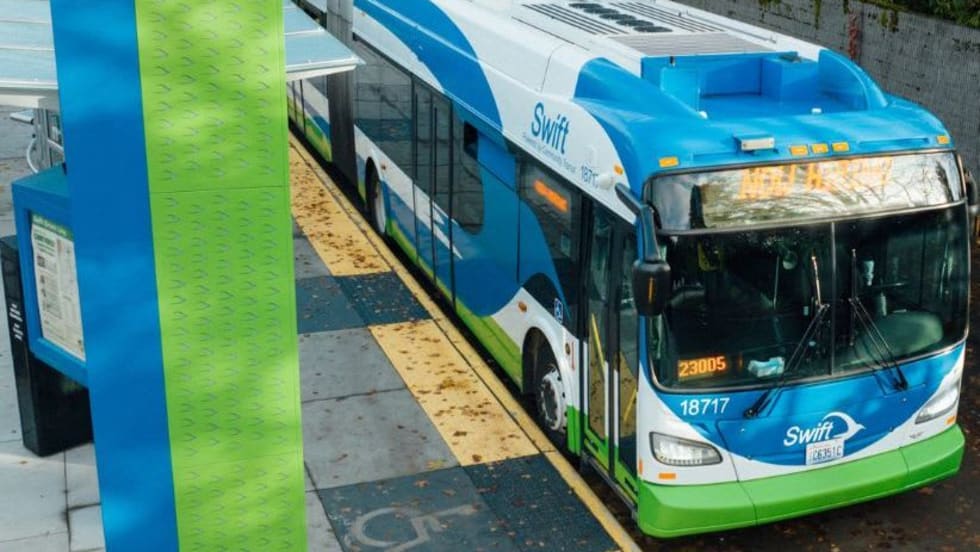
Washington's Community Transit Sets Six-Year Roadmap for Growth, Expansion
Approved TDP targets more bus service, new mobility options, Swift BRT expansion, and a potential Everett Transit annexation.
Read More →
DART Customer Satisfaction Reaches Six-Year High
Overall satisfaction rose to 74.9%, while the agency’s Net Promoter Score reached a record 33.7.
Read More →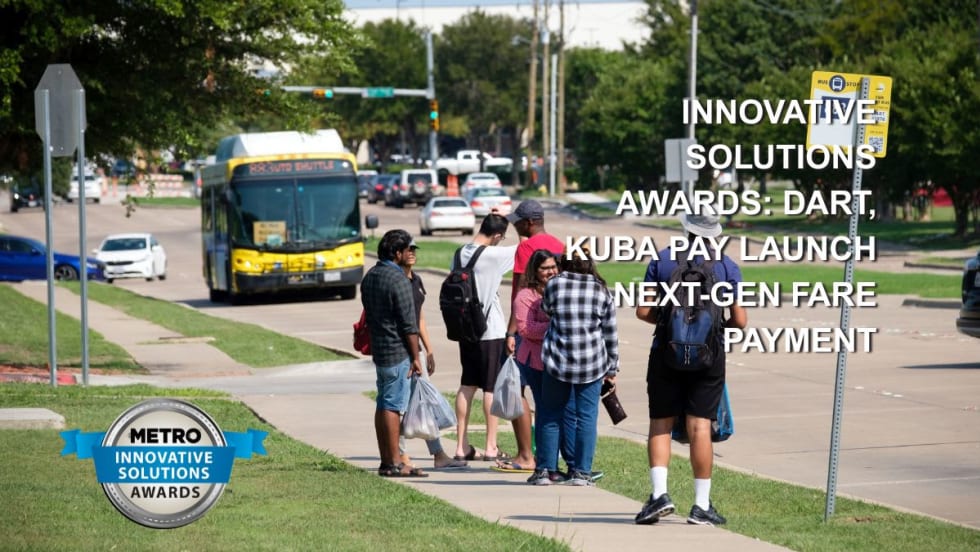
How DART's GoPass Is Redefining Regional Mobility
Serving 14 transit agencies, GoPass simplifies multimodal travel by allowing riders to plan, pay for, and manage an entire trip through one app.
Read More →
Biz Briefs: OCTA Taps Clean Energy for Hydrogen Station, Stadler to Supply Via Rail Vehicles, and More
From manufacturers and suppliers to transit agencies and motorcoach operators, these updates offer a snapshot of the projects, partnerships and business moves driving the industry forward.
Read More →
METRO Magazine Announces 2026 Innovative Solutions Awards Winners
Projects Recognized for Advancing Mobility Through Technology, Accessibility, Workforce Innovation, and Operational Excellence
Read More →
Biz Briefs: STV teams with Amtrak, Motorcoach Operators Boost Fleet and Land Contracts, and More
From manufacturers and suppliers to transit agencies and motorcoach operators, these updates offer a snapshot of the projects, partnerships and business moves driving the industry forward.
Read More →
LA Metro Marks Banner Year, Sets Ambitious Goals for New Fiscal Year
Incoming LA Metro Board Chair and Los Angeles Mayor Karen Bass joined outgoing Board Chair Fernando Dutra and LA Metro CEO Stephanie Wiggins to review accomplishments from fiscal year 2026, which included the opening of new rail extensions, advancement of major transit projects, expanded safety programs, and new rider amenities.
Read More →