



‘Polar Vortex’ freezes up public transit service
Amtrak suffered some service disruptions and delays, with three trains halted about 80 miles from Chicago, when drifting snow and ice made the tracks impassable.
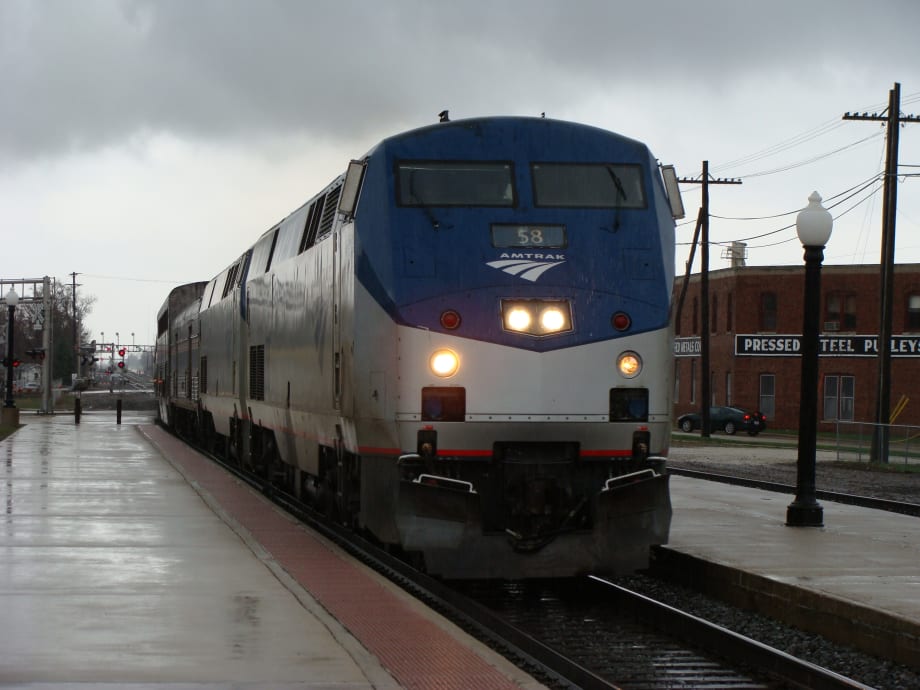
Photo by Jimmie Thomas via Wikimedia Commons

Photo by Jimmie Thomas via Wikimedia Commons
Snow, ice, and an arctic blast of freezing, dense air known as a “polar vortex” severely impacted temperatures and made mass transportation difficult throughout the country in January, particularly in the Midwest.
The snow and sub-zero temperatures began impacting Metra, Amtrak and Chicago Transit Authority (CTA) services over the first weekend of January, with services taking a real hit once the workweek began.
“The storm really had an impact beginning with the Monday commute,” explained Michael Gillis, spokesperson for the Metra commuter rail system. “The main problem here was with switches having moisture, snow and ice accumulate in them, which would then have to be physically cleaned out, leading to cascading delays through the rush hour.”
Although Metra has switch heaters, Gillis added they don’t work as effectively in extreme cold. Metra also had staff at key interlockers around the clock to keep them from being encased in snow, but in some cases, the on-site staff would have to clean out the area before and after each train.
Gillis said that while there were some delays and cancellations, Metra was still able to operate more than 90% of its schedule at the height of the storm.
Meanwhile, Amtrak suffered some service disruptions and delays, with three trains — the Southwest Chief from Los Angeles, the Illinois Zephyr from Quincy and the California Zephyr from the San Francisco Bay Area — halted about 80 miles from Chicago, when drifting snow and ice made the tracks impassable. No injuries were reported, though passengers did have to spend the night aboard the trains, said Marc Magliari, Amtrak spokesman.
“The safest thing to do for those people was to keep them on the trains,” he said. “Taking people off the trains in the middle of the night through a trench full of snow was not anywhere close to the right decision.”
Magliari added Amtrak did have emergency services people stationed outside the train in case a medical or some other type of emergency situation arose.
The more than 500 passengers affected by the delay arrived in Chicago, mostly on charter buses, 20 hours after they were stuck, according to Amtrak.
CTA provided more than 36,000 bus trips during the first two days of the workweek, and all 129 bus routes operated normally with just slight delays. On the rail system, approximately 4,200 train trips were provided and the overwhelming majority of the trips were on time or just slightly delayed, according to a CTA spokesperson.
The extreme temperatures did, however, create issues with track switches and some door problems on trains, which resulted in some longer delays — but each incident was addressed very quickly. On Tuesday, Jan.7, a minor derailment of a Yellow Line train occurred at a terminal, but it was resolved in about two hours, reported officials.
Greyhound’s intercity motorcoach services were also impacted by the storm, with the operation suspending ticket sales and delaying schedules for a few days throughout the Midwest as part of its protocol during inclement weather situations.
“The safety and security of our customers is our top priority, so we only put buses on the road when it is completely safe to do so,” said Alexandra Pedrini, spokesperson for Greyhound. “Once it is deemed safe to travel, we can put those schedules back on the road and get those customers to their destinations as quickly as possible.”
Like Amtrak, Greyhound was able to keep delayed passengers relatively comfortable under the circumstances by offering food vouchers, or in some cases, supplying food and drink right at the stations three times a day.
“We also had sleeper buses, which are running, idling buses that are heated, so customers could actually go sit on a bus with a comfortable, reclining seat,” Pedrini said. “Many times those buses are our newer buses, which are equipped with free Wi-Fi and power outlets, allowing our passengers to stay connected.”
Each of the operations involved said tools like bus and train trackers on their websites, updates at stations and aboard vehicles, and social media were invaluable in assisting customers during their commutes — providing real-time information on arrival times and service delays.
More Bus

New York MTA Plans Largest Bus Fleet Upgrade in More Than a Decade
The agency is seeking manufacturers for 650 new CNG buses to replace aging vehicles, improve reliability, and advance its broader fleet modernization strategy.
Read More →
Building a Flexible Path to Transit Electrification
John Hroncich discusses BAE Systems’ modular and scalable approach, lessons learned from decades of real-world operations, and how agencies can identify electrification strategies that fit their fleets.
Read More →
Bus Tech Talk: Keeping Transit Technicians Ahead of the Technology Curve
LA Metro’s Obed Mejia discusses technician training, evolving maintenance technology, fleet replacement, and strategies for getting the most out of today’s transit fleets.
Read More →
Biz Briefs: RIPTA Unveils New Frontrunners, Clevland RTA Adds New Siemens, and More
In METRO's latest installment, we take a look at recent news from Siemens, Prevost, Dodge, and more partnerships making headlines across the transportation sector.
Read More →
People Movement: Holly Arnold Joins Transdev and More
In this edition, we also cover recent appointments and announcements at Pace, CamTran, MCI, and more, showcasing the individuals helping to shape the future of transportation.
Read More →
The High Cost of Transit Buses: Industry Leaders Look to Procurement Reform
Transit leaders and policymakers examine how standardized bus designs, streamlined procurement, and predictable funding could help agencies stretch budgets and deliver better service.
Read More →
The Business Voice Behind Public Transportation
As chair of APTA’s Business Members Board of Governors, Ray Melleady explains how more than 850 business members are partnering with transit agencies to advance funding, innovation, and industry-wide collaboration.
Read More →
From Surviving to Thriving: Building Stronger Transportation Organizations
Bus Business Consultants founder Brian Dickson shares lessons on leadership, organizational health, and creating options for long-term success in a changing transportation industry.
Read More →
Finding the ‘Happy Medium’: Optimizing Maintenance Without Sacrificing Reliability
The key to maintenance optimization isn’t doing less work—it’s doing the right work at the right time on the right assets.
Read More →
LA Metro, City of West Hollywood, and Partners Advance Smarter Bus Lane Enforcement
The award-winning partnership combines AI-powered detection with human oversight to improve bus reliability, accessibility, and enforcement efficiency.
Read More →