



From tee to green: SEPTA service an ace for U.S. Open spectators
How does a town handle a daily influx of 25,000 spectators all headed to the USGA’s 2013 U.S. Open? With streets surrounding the venue closed to traffic and no on-site parking, Ardmore, Penn. - a suburb of Philadelphia and home of Merion Golf Club -had a major ally to help move the masses — the Southeastern Pennsylvania Transportation Authority.

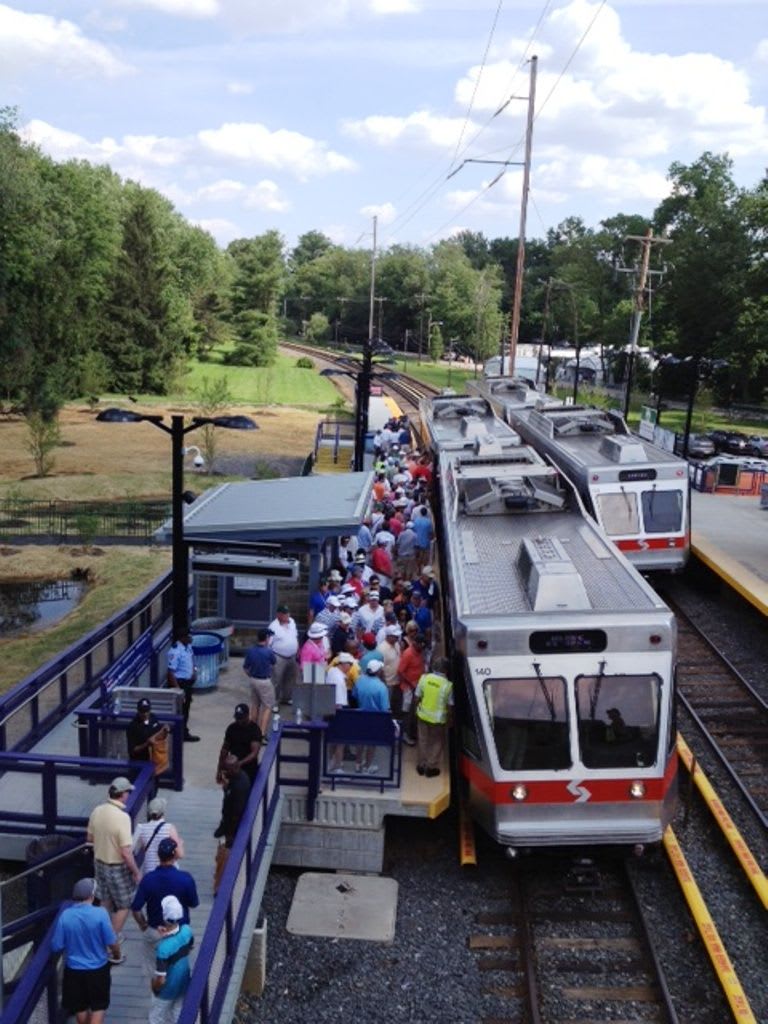
The Ardmore Avenue stop on the Norristown High Speed Line. On a normal day, that stop has a ridership of about 100. During the Open, it was 10,000, which is the normal daily ridership for the entire Norristown High Speed Line.
The Ardmore Avenue stop on the Norristown High Speed Line. On a normal day, that stop has a ridership of about 100. During the Open, it was 10,000, which is the normal daily ridership for the entire Norristown High Speed Line.
How does a town handle a daily influx of 25,000 spectators — double its population — all headed to the USGA’s 2013 U.S. Open? With streets surrounding the venue closed to traffic and no on-site parking, Ardmore, Penn. — a suburb of Philadelphia and home of Merion Golf Club, had a major ally to help move the masses — the Southeastern Pennsylvania Transportation Authority (SEPTA).
Fortunately, Ardmore and the course are easily accessible by public transportation. Merion Golf Club is nestled alongside SEPTA’s Norristown High Speed Line (NHSL) — the Ardmore Avenue Station is adjacent to the course’s 12th hole (entrance gate 3 for the U.S. Open). On a normal day, the stop has approximately 100 customers. During the championship rounds of the Open, that total grew to 10,000 passengers a day, or roughly the regular daily ridership total of the entire 22-stop NHSL.
Spectators and volunteers were also able to take SEPTA’s Paoli/Thorndale Regional Rail Line to the Open, disembarking at Rosemont Station and boarding free shuttle buses for a 10-minute ride to the links. Rosemont, which has a daily ridership of 340 commuters, was the transit hub for 5,000 people during each of the tournament’s final rounds.
“There were 25,000 tickets per day and we carried more than half of those ticketholders to Merion,” said SEPTA Assistant GM of Operations Ron Hopkins. “The USGA also had a remote parking/shuttle bus system in place for spectators, but it was clear as the tournament progressed that the proximity of SEPTA stops and the ease of making connections to the golf course via public transportation were vital in getting the public and volunteers to and from the venue.”
Given Merion Golf Club’s location in a residential neighborhood, the USGA knew it would need to rely on SEPTA and worked with the agency for over a year in advance of the tournament.
“We had consistent contact with USGA representatives throughout the planning stages and during the tournament,” said SEPTA Chief Officer of Surface Transportation Mike Liberi. “In addition to offering expanded schedules to accommodate the thousands of golf enthusiasts and our regular customers, we also collaborated with the USGA on the construction of a temporary pedestrian bridge over the NHSL tracks that would bring Regional Rail passengers from the shuttle bus drop-off to the course.” SEPTA employee ambassadors were positioned at the agency’s key transit centers and stations to direct passengers unfamiliar with the system to their trains.
Service preparation also needed to include weather contingency plans — although no one was anticipating the torrential rain and severe thunderstorms that hit at the beginning of the championship round’s first day.
“When the USGA closed the gates to spectators because of the lightning, we were able to keep the public on our trains and take them to our stations where they waited for the all clear,” said Hopkins.
The 2013 Open is an example of how public transit can be used as an asset for venues attempting to attract large events — sporting, entertainment, political or otherwise — to their facilities. Such events not only have a financial impact, but often also introduce public transit to new audiences.
“The U.S. Open brought over $100 million to the local economy and allowed us to showcase our multi-modal system,” said SEPTA GM Joseph Casey. “Hopefully the success at Merion will draw similar events to the Greater Philadelphia Region and the SEPTA service area.”
In case you missed it...
Read our METRO blog, "Is the future of transit free?"
More Blog Posts
Building a Winning FTA Grant Proposal: Why Propane Autogas is the Pragmatic Choice for Fleet Resilience
With $610 million available through the FY 2026 Buses and Bus Facilities Competitive Program and the Low or No Emission Grant Program, agencies must build a compelling case before the September 21 deadline that balances environmental compliance with operational feasibility.
Read More →
Velo-city Conference 2026: Latest Trends in Cycling as Part of Urban Mobility
The global cycling conference highlighted how cities are integrating bicycles into multimodal transportation networks, expanding cycle tourism and reshaping urban mobility.
Read More →
Kindness Isn’t Soft...It’s Strategic.
Mike Bismeyer — often known as “The Kindness Guy” — has spent more than 17 years in public transit and mobility, serving in industry leadership roles, speaking across North America, and advocating for stronger workplace cultures. But his message doesn’t come from theory. It comes from lived experience.
Read More →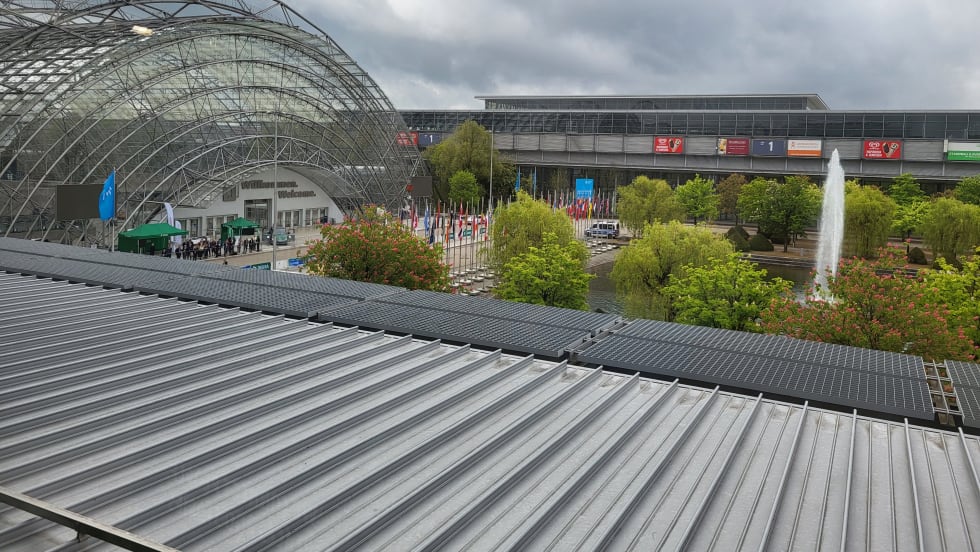
Inside ITF 2026: Transport Reacts to A Challenging World
Transport leaders from around the world gathered in Leipzig, Germany, for the 2026 International Transport Forum to discuss resilience, climate impacts, supply chains and the future of sustainable mobility.
Read More →
Every Ride Tells a Story — But You’re Not Just Selling the Ride
You’re selling the moment, the meaning, and the emotion behind it.
Read More →
How Digital Signage is Reshaping the Traveler Experience at Transportation Hubs
What was once a landscape of static signs has evolved into a responsive, immersive environment powered by real-time visual communication.
Read More →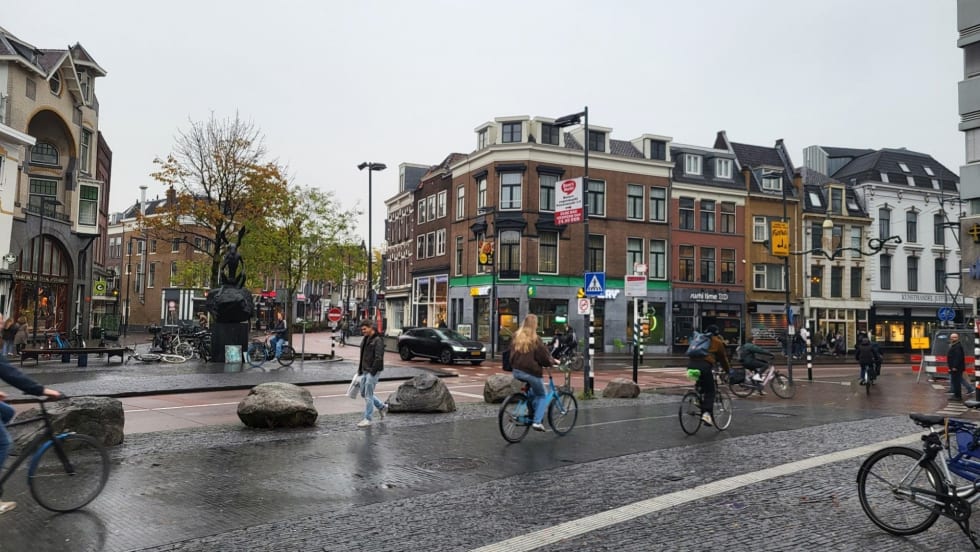
Latest Trends in Urban Mobility from Polis Conference 2025
Polis comprises cities and regions, as well as corporate partners, from across Europe, promoting the development and implementation of sustainable mobility. This year’s event had over a thousand attendees across various policy forums and an exhibition.
Read More →
Why Transit Leaders Require Better Tools for Operational Clarity In Today’s Tech-Fragmented Environment
Across North America and beyond, transit agency officials are contending with a perfect storm of operational headaches and strategic challenges that hamper daily service and long-term progress.
Read More →
The Powerless Brokers: Why California Can’t Build Transit
It is no secret that transit in the U.S. is slow and expensive to build.
Read More →
Why Transport Sustainability Should Focus on People Instead of Cars
Simply incentivizing electrification is not enough to make a meaningful impact; we must shift our focus toward prioritizing public transportation and infrastructure.
Read More →