




RELATED: Calif. program to train transit workers receives funding
SEPTA's Supervisor Training Program Helps Employees Move Up the Ladder
The AIM AD programs was designed by SEPTA to expand the pool of supervisors who are ready to move into assistant director positions in the agency's operations and engineering, maintenance, and construction divisions.
December 14, 2016
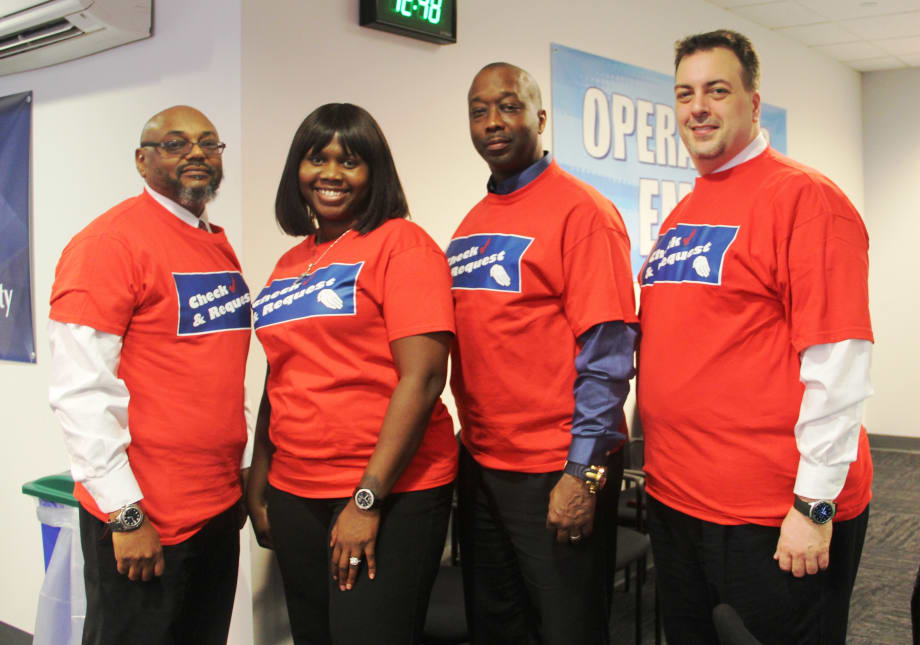
SEPTA's AIM AD employee development program students. Photo: SEPTA
3 min to read
SEPTA's AIM AD employee development program students. Photo: SEPTA
In June 2016, readers were introduced to the Southeastern Pennsylvania Transportation Authority’s (SEPTA) Advancing Internal Management for Assistant Directors (AIM AD) program. The 27 students just celebrated their graduation, with 11 participants achieving the ultimate reward — a promotion. Additionally, several class members have interviewed for and are awaiting responses on new positions or are in a pool of candidates for jobs.
“The graduation was a momentous occasion, marking the end of our employees’ year-long commitment to professional and personal growth,” said Jennifer Barrett, SEPTA's senior training facilitator.
The AIM AD programs was designed by the authority to expand the pool of supervisors who are ready to move into assistant director positions in SEPTA’s operations and engineering, maintenance, and construction divisions.
“The assistant director position is one of the most challenging and most critical positions at SEPTA. We can’t be successful without our ADs,” said Ron Hopkins, SEPTA assistant GM, operations. “That’s why we developed the AIM AD program — to provide current supervisors the opportunity to expand their institutional knowledge through interaction with SEPTA leadership and introduction to a variety of jobs across the authority.”
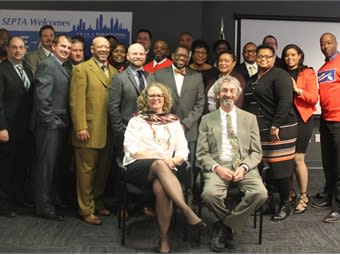
SEPTA's AIM AD employee development program students celebrated their graduation along with program facilitators Jennifer Barrett and Josh Gottlieb (shown seated in front of studetns). Photo: SEPTA
During the year-long program, students attended class every Thursday. They participated in 41 days of structured learning focused on core competencies and business processes for operations managers, went on site visits, engaged in dialogue with guest speakers from across the authority, and attended a SEPTA board meeting. For the program’s capstone, class members formed eight teams and collaborated on interdisciplinary group projects, each one sponsored by at least one member of SEPTA senior management.
“We asked the class members to look past the obvious when developing their business case and researching their issues,” said Josh Gottlieb, SEPTA director, administration and finance of surface transportation.
Projects ranged from developing a safety program to have employees comply with wearing personal protective equipment (PPE) to increasing customer satisfaction by streamlining the customer service response process and developing an employee compliance program for ADA regulations.

Celebratory cake. Photo: SEPTA
“Students met regularly with their project sponsors for feedback,” said Gottlieb. “They conducted site visits throughout the authority, reached out to other transit organizations, and did cost analysis for their solutions. The results were all impressive.”
During the final project presentations, Hopkins challenged the AIM AD class to continue working on their projects and come back in six months to see the progress they had made in bringing their plans to fruition.
“We knew we had an exceptional class when we started in November 2015. That was proven with the number who have received promotions already and those who are on their way to moving up within the organization,” said Barrett. “I am sure that when we meet on June 1, 2017, many of the projects will be in the pipeline to be adopted by the authority.”
Heather Redfern is the Public Information Manager for the Southeastern Pennsylvania Transportation Authority.
Subscribe to Our Newsletter
More Blog Posts
Building a Winning FTA Grant Proposal: Why Propane Autogas is the Pragmatic Choice for Fleet Resilience
With $610 million available through the FY 2026 Buses and Bus Facilities Competitive Program and the Low or No Emission Grant Program, agencies must build a compelling case before the September 21 deadline that balances environmental compliance with operational feasibility.
Read More →
Velo-city Conference 2026: Latest Trends in Cycling as Part of Urban Mobility
The global cycling conference highlighted how cities are integrating bicycles into multimodal transportation networks, expanding cycle tourism and reshaping urban mobility.
Read More →
Kindness Isn’t Soft...It’s Strategic.
Mike Bismeyer — often known as “The Kindness Guy” — has spent more than 17 years in public transit and mobility, serving in industry leadership roles, speaking across North America, and advocating for stronger workplace cultures. But his message doesn’t come from theory. It comes from lived experience.
Read More →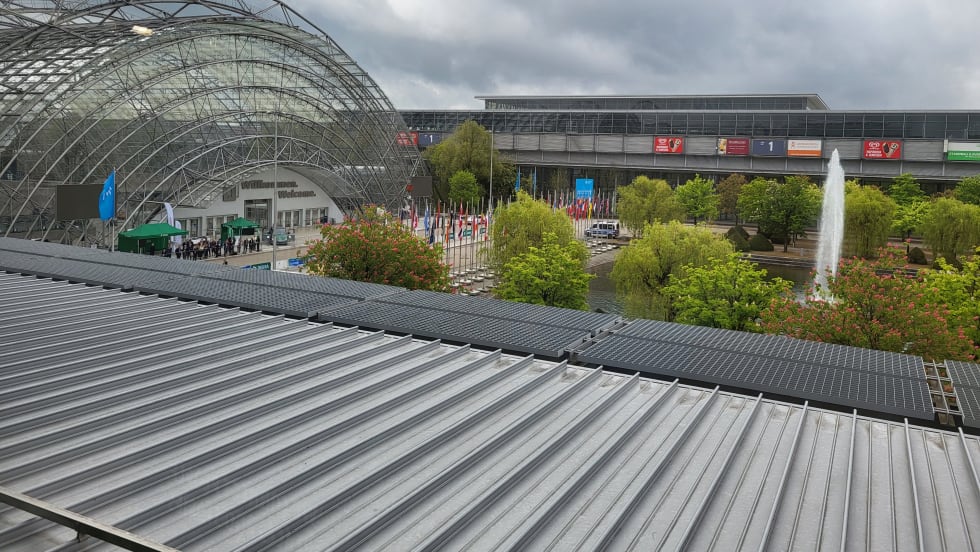
Inside ITF 2026: Transport Reacts to A Challenging World
Transport leaders from around the world gathered in Leipzig, Germany, for the 2026 International Transport Forum to discuss resilience, climate impacts, supply chains and the future of sustainable mobility.
Read More →
Every Ride Tells a Story — But You’re Not Just Selling the Ride
You’re selling the moment, the meaning, and the emotion behind it.
Read More →
How Digital Signage is Reshaping the Traveler Experience at Transportation Hubs
What was once a landscape of static signs has evolved into a responsive, immersive environment powered by real-time visual communication.
Read More →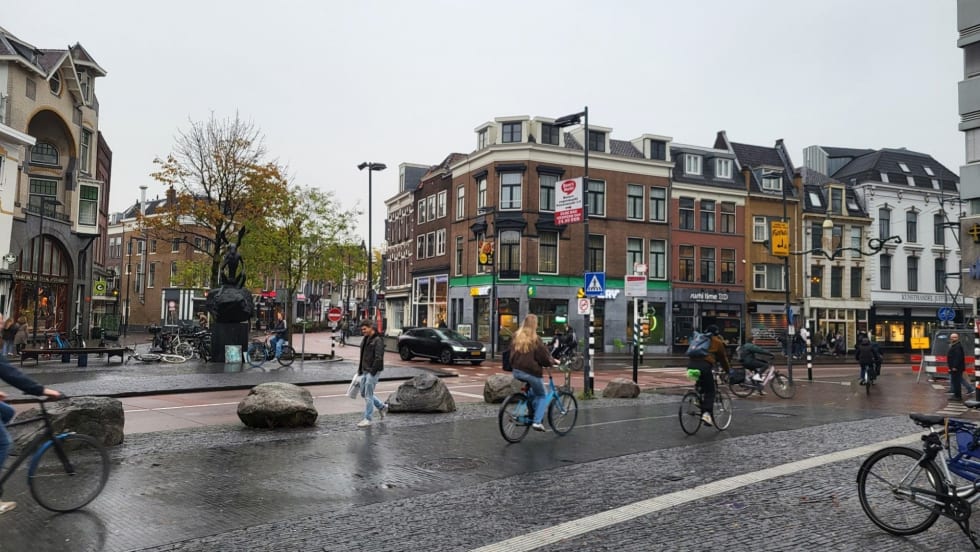
Latest Trends in Urban Mobility from Polis Conference 2025
Polis comprises cities and regions, as well as corporate partners, from across Europe, promoting the development and implementation of sustainable mobility. This year’s event had over a thousand attendees across various policy forums and an exhibition.
Read More →
Why Transit Leaders Require Better Tools for Operational Clarity In Today’s Tech-Fragmented Environment
Across North America and beyond, transit agency officials are contending with a perfect storm of operational headaches and strategic challenges that hamper daily service and long-term progress.
Read More →
The Powerless Brokers: Why California Can’t Build Transit
It is no secret that transit in the U.S. is slow and expensive to build.
Read More →
Why Transport Sustainability Should Focus on People Instead of Cars
Simply incentivizing electrification is not enough to make a meaningful impact; we must shift our focus toward prioritizing public transportation and infrastructure.
Read More →