



5 Questions: MCI's Patrick Scully
Began his career in the bus business when he joined Ontario Bus Industries, later acquired by Daimler Buses, as a sales representative in its service parts department. Was recently named as MCI's new executive VP, sales and marketing.
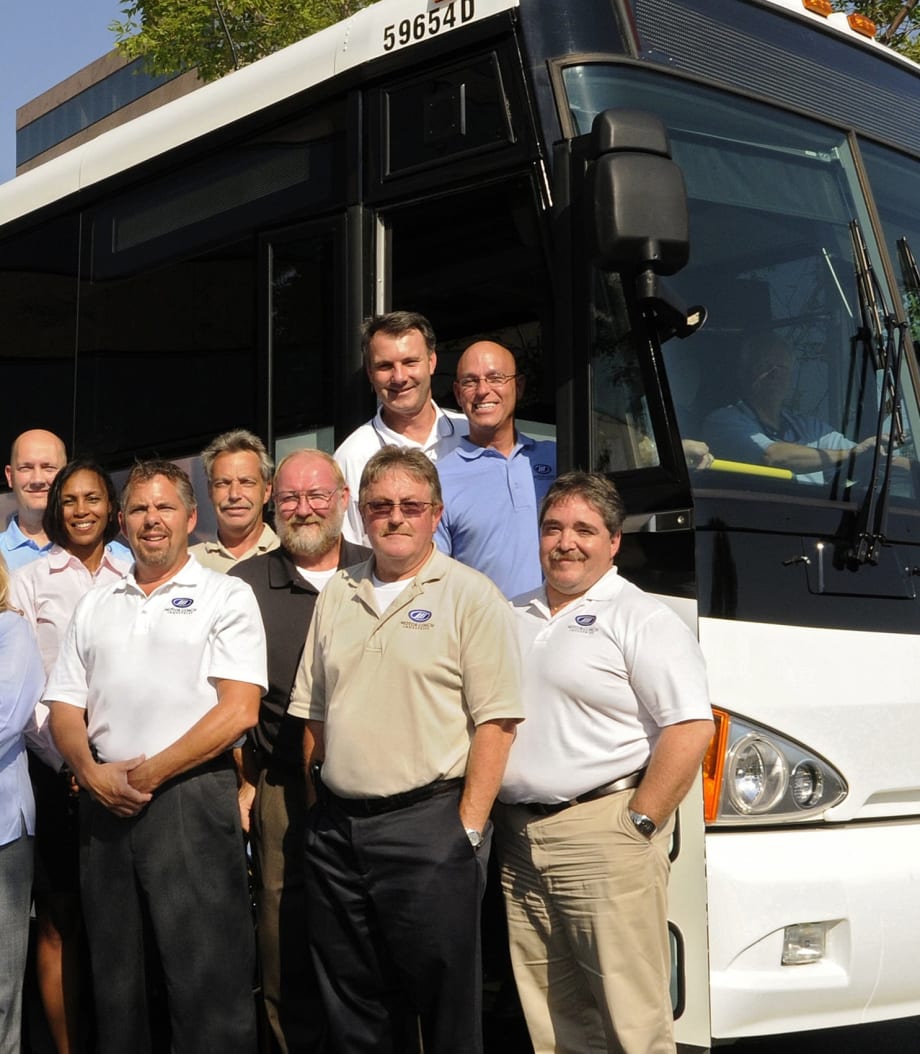
Patrick Scully began his career in the bus business when he joined Ontario Bus Industries, later acquired by Daimler Buses, as a sales representative in its service parts department. He transitioned to the bus sales team at Orion in 1991, becoming general sales manager in 1993, and then, joined Detroit Diesel Corp. in 1994, where he quickly became VP, worldwide bus and coach sales. When Detroit Diesel sold to Daimler in 2001, he joined its Setra division, where he eventually served as chief commercial officer. Motor Coach Industries (MCI) recently named Scully as its new executive VP, sales and marketing.
What are your responsibilities, and how has the transition gone thus far?
It has been awesome. From a responsibility standpoint, I have all the sales and marketing activities for our coach product. We’ve unified our sales teams under one cohesive group, with one key new coach sales contact representing MCI and Setra brands to both private and public sector customers. I’m honored to be leading such an experienced and dedicated MCI sales team.
With the transition of the Setra business to MCI, it has been a very good fit across the board. I have always had a fair level of admiration for MCI as I managed them as an account back in the 1990s when I worked with Detroit Diesel. The areas of entrepreneurialism; an extremely high level of professionalism; and the essence of trust, leadership and vision are exemplified within the organization and espoused by Rick Heller, our president, as well as our owners, KPS Capital Partners LP. It is really a great company and I am proud to be part of it.
Whether it is our public sector business or the private sector business, we are making great strides in the market with our product introductions, regaining market share in the private side and, quite frankly, continuing to deliver best in-class products in both the private and public markets.
What are some reasons for public transportation’s recent steady growth and how can the industry keep it up?
If I can sum it up in a word, it is professionalism. Not that it didn’t exist before, but it has really been optimized over the last 10 to 15 years as operators have become more professional in the image they put on the street. Whether it’s making sure vehicles and systems run on time, providing information systems to customers for on-time arrival of bus stops or trains, fare systems that make it simple to get on and off, or solving security concerns at virtually every rail platform and on every bus, there is just a significantly higher level of professionalism that exists both on the operations and supply sides. The products we provide, whether it is buses, railcars, or any other piece of equipment or components, continue to get better and better and that manifests itself in a very desirable product people can count on.
At the same time, you have these macroeconomic issues that are happening, whether it’s fuel prices or the economy itself, which tends to move people in one direction or another to use public transportation. When they do use public transportation and see that it’s a great product that arrives and gets you to where you want to go on time, and often allows you to be productive while you are on your way, that all lends itself to people seeing public transportation in a very positive light.
You then also have to balance all of that against the generation of 20 year olds that are coming into the workforce, many of which don’t want to drive a car for various reasons. So, these various paths converge in the form of increased ridership.
The future looks positive. The industry now has to make sure it continues with that same level of professionalism. Things such as fuel prices are a tipping point, and we will see how that goes in the future, but it certainly bodes well with the improvements and professionalism that exists in the industry. [PAGEBREAK]
What can the public and private sectors do to ensure Congress is aware of the benefits of public transit?
We are in a tough way. You have a lot of activity happening in Washington with the budget and sequestration, et cetera, which we all see daily and, whether it is us or every other piece of the government that gets funded, it is really tough. The biggest thing we all can do, every member of our public transportation community, is get yourself up to Capitol Hill and see your congressional representative.
One of the things we have tried to do is tell all of our business members to not be shy, because those are your people that you elected and they have constituents to answer to, and those constituents are the people that we employ. The biggest benefit we have, whether it is a light rail line that springs up, or the commercial or housing developments around it, are so many success stories showing public transportation has a high return on investment and our congressional representatives need to know these facts.
What criteria and data are important for transit properties to continue to run efficiently today? Have these changed from 10 or so years ago?
At least as it relates to running rolling stock, I think there has been much more focus on total cost of ownership. When I started, the typical procurement methodology tended to be the lowest bid wins; you met the spec, you had the low price and away we go. Now, it is much more detailed — let’s call it scientific — where you don’t only look at just the capital cost of an acquisition but at all of the costs involved, including maintenance and parts, in the 12 years or so that you are running the vehicle. At times, it is not necessarily the least expensive vehicle that gets you the lowest cost over the 12 years.
What trends are you seeing in the vehicle market right now? Will use of natural gas and diesel-electric hybrid powertrains grow?
Starting in about 2005, hybrids started to generate significant interest that peaked around 2011. What has transpired is, first, there are a lot of benefits to a hybrid bus, but you can’t necessarily run it in all applications; hybrids typically have their benefits in a slower speed operation, but they also come at a cost. The industry has done a very good job of deploying hybrid buses. The reliability has been improved and optimized and that sends a real positive message. That said, hybrids are now stabilized at a level that is maybe at 25% of the market.
Now, we have natural gas. In the early 90s there was a fair bit of activity for alternative fuels including natural gas. Over the past 20 years, that powertrain option has really stabilized, and from a reliability or an engine standpoint, they have gotten over some of those early challenges with reliability and durability of components.
We have also found new ways of getting natural gas out of the ground here in the U.S., and therefore, have seen an increased demand in areas where natural gas is more prevalent, including Pennsylvania, Texas and some of the Midwest. Then, there is also what has been happening in California, where natural gas, in some areas, is being favored due to the activities of the California Air Resources Board. Overall, we are seeing more and more people taking a look at natural gas and examining its use with an understanding of the total cost of ownership, because not only do you need a bus with different systems on it, but you also need a fueling station. For all these reasons, we are seeing natural gas fueled vehicles increasing in demand in the market.
The other things playing into decision criteria for rolling stock are things like safety. We are certainly seeing that in the private sector with seat belts and so on. And, as we look at our product from a commuter bus segment, the issue of safety of our product and using a high-floor bus at higher speed on the highways tends to be a more desirable objective than other options. At the same time, transit properties are looking for reliable and stable business partners and all those tie in to what we do at MCI and we are proud to be part of this exciting industry.
More Bus

New York MTA Plans Largest Bus Fleet Upgrade in More Than a Decade
The agency is seeking manufacturers for 650 new CNG buses to replace aging vehicles, improve reliability, and advance its broader fleet modernization strategy.
Read More →
Building a Flexible Path to Transit Electrification
John Hroncich discusses BAE Systems’ modular and scalable approach, lessons learned from decades of real-world operations, and how agencies can identify electrification strategies that fit their fleets.
Read More →
Bus Tech Talk: Keeping Transit Technicians Ahead of the Technology Curve
LA Metro’s Obed Mejia discusses technician training, evolving maintenance technology, fleet replacement, and strategies for getting the most out of today’s transit fleets.
Read More →
Biz Briefs: RIPTA Unveils New Frontrunners, Clevland RTA Adds New Siemens, and More
In METRO's latest installment, we take a look at recent news from Siemens, Prevost, Dodge, and more partnerships making headlines across the transportation sector.
Read More →
People Movement: Holly Arnold Joins Transdev and More
In this edition, we also cover recent appointments and announcements at Pace, CamTran, MCI, and more, showcasing the individuals helping to shape the future of transportation.
Read More →
The High Cost of Transit Buses: Industry Leaders Look to Procurement Reform
Transit leaders and policymakers examine how standardized bus designs, streamlined procurement, and predictable funding could help agencies stretch budgets and deliver better service.
Read More →
The Business Voice Behind Public Transportation
As chair of APTA’s Business Members Board of Governors, Ray Melleady explains how more than 850 business members are partnering with transit agencies to advance funding, innovation, and industry-wide collaboration.
Read More →
From Surviving to Thriving: Building Stronger Transportation Organizations
Bus Business Consultants founder Brian Dickson shares lessons on leadership, organizational health, and creating options for long-term success in a changing transportation industry.
Read More →
Finding the ‘Happy Medium’: Optimizing Maintenance Without Sacrificing Reliability
The key to maintenance optimization isn’t doing less work—it’s doing the right work at the right time on the right assets.
Read More →
LA Metro, City of West Hollywood, and Partners Advance Smarter Bus Lane Enforcement
The award-winning partnership combines AI-powered detection with human oversight to improve bus reliability, accessibility, and enforcement efficiency.
Read More →