



Five Questions: Keith Parker, GM/CEO MARTA
When taking over as GM/CEO of MARTA in Dec. 2012, Parker, who has a large array of both public and private sector experience in diverse communities around the country, said he’d like to change the perception of the agency.
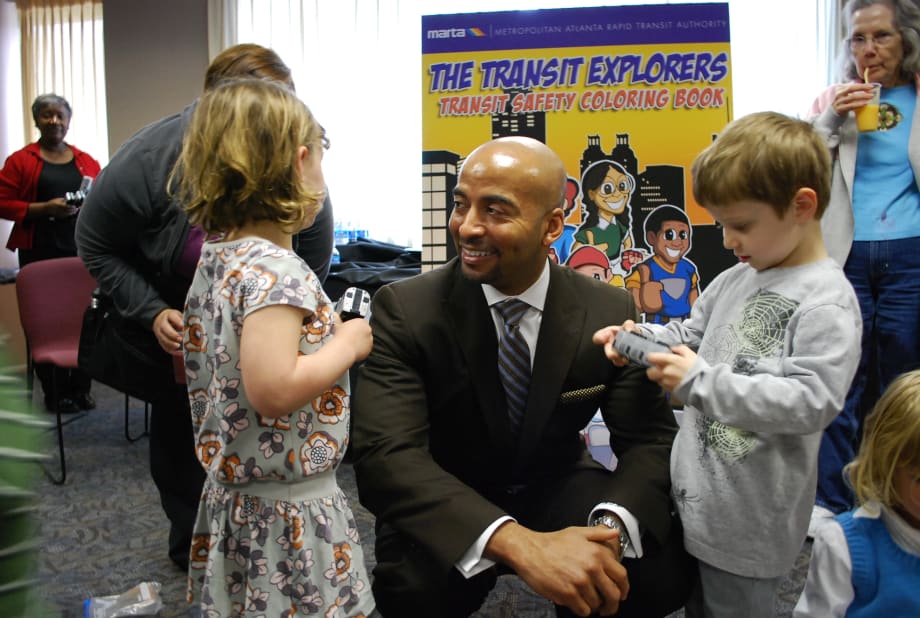
When taking over as GM/CEO of MARTA in Dec. 2012, Parker, who has a large array of both public and private sector experience in diverse communities around the country, said he’d like to change the perception of the agency. He speaks exclusively to METRO Magazine’s Managing Editor Alex Roman on how he has been able to do just that in a relatively short amount of time.
How is MARTA perceived now and how would you like to change that?
Since its beginnings, MARTA has struggled with a perception issue that it is an agency primarily for people who have no other means; that is one component. The second issue is MARTA has struggled, particularly in recent years, as an agency that has not protected taxpayer dollars well.
From my vantage point, we wanted to address the substantive things first, and then, we felt the perception items would begin to take care of themselves. For example, we have instituted a number of major reforms that are making the agency more efficient every day, while our costs are going down pretty significantly. MARTA’s only balanced its budget, where revenues actually exceeded expenses, twice in the last 15 years, and we were able to do that very quickly.
MARTA has also struggled to fairly compensate its employees. Many of our folks have not had raises for six years or seven years, and most have only had one raise in the last 10 years. We have begun budgeting money for increases to our employees.
Our customers have also struggled a bit as MARTA has raised fares more than pretty much any other agency in the country in the last three to five years, while at the same time cutting a dramatic amount of service, which has significantly increased the length of time customers had to wait in between buses and trains. By removing a fare increase originally projected for Fiscal Year 2014, and by not cutting service, we are displaying more fiscal accountability.
How effectively were you able to use available resources while trying to get more funding and support at the state and local levels?
My thought was before we start asking people for money, we need to get our own house in order. For the full first year, we have made no such request of the state government to give us funding. Instead, what we have done is cut expenses dramatically. In fact, for our Fiscal Year 2013 budget, we were able to cut $39 million in expenses to turn what was projected to be a $33 million deficit into a $9 million surplus. In addition, we have cut expenses at many of our different activity centers and have realized major savings. We do that so when we do make a request to the state, we are in a much stronger position to say ‘if you invest in us, I can assure you our dollars will be spent very well.’
One of the real benefits we have seen, though, is what has happened at the state legislature. When I started in 2012, just before the 2013 legislative session, there were a number of legislative activities going on that would have provided much more oversight of MARTA — more prescriptive actions that had to be taken by the agency — so we were often on the front page of the local newspapers. This year, we have barely even been mentioned. In fact, what we have been hearing is that legislators are pleased with the way we are running the service. We have heard Gov. Nathan Deal speak publicly that he is supportive of the leadership of the agency and the direction we are moving, and many other elected officials have said similar things.
Tell me about MARTA’s ‘Ride with Respect’ program.
The Ride with Respect campaign is an effort by MARTA to let everyone know that, when they ride our service, they should expect to be able to ride in a safe, unencumbered manner, and for people who come on our buses, trains and facilities with the intention of being disruptive or uncivil, we are going to hold them accountable. The vast majority of MARTA patrons are law abiding, good customers, and MARTA, as a whole, has one of the safest records in the entire nation amongst large transit systems. But, we still have our fair share of what we call ‘knucklehead behavior,’ where folks play their music too loud, panhandle or sell various items on our vehicles, and that makes people feel uncomfortable. Our goal with the campaign is to get people to behave themselves so everybody has a great ride. In the first couple of months it was in play, we have suspended well over 500 folks and have very few repeat offenders, which says that when we catch them and issue one of those suspensions they actually adhere to it and get the message. It really is creating a safer, more pleasant environment throughout our system.
Are there other new initiatives you have implemented at MARTA?
Yes. By coming up with the cost savings, we can invest that back into our customers. Beginning this spring and into the summer, we will be adding service for the first time in over half a decade. MARTA will be improving its bus routes and on-time performance by putting more buses and service out on the street. We are also going to significantly increase the amount of service on our train systems — where now we are running on 15 minute headways on some routes, we will be dropping that down to 12 or even 10 minutes, and where we already have 10-minute service, it will be dropped down to seven-and-a-half to five minutes.
What ideas have you brought with you from your stops along the road, including San Antonio and North Carolina?
The most consistent thing I have learned at each of my previous stops is that you have to communicate with your employees and customers. We have tried to do that with face-to-face opportunities with our employees; going to the various garages and different facilities. We have ‘Open Door Fridays,’ where our folks can come in, and for 10 minutes, can tell me any and every thing on their mind, give me every criticism they have, and when we deserve it, they will pat us on the back as well. It gives folks an unfiltered opportunity to express themselves to the CEO.
With customers, since I have been here, we have done more than 100 public meetings where we have gone out to everything from Rotary clubs and Kiwanis groups to neighborhood associations, civil rights organizations, small business groups, Fortune 500 leadership and even preschoolers to hear what they want in a transit system. We take all that information, and then, try to turn it into action plans that we go out and implement.
The Code of Conduct is also something we have done at every system. In Charlotte, N.C. and San Antonio the code was met with positive reactions from the riding public as well as people who don’t even ride our service. They appreciated hearing we were doing things to ensure all of our customers were being treated in a respectful manner. So [over the years], there have been lots of lessons learned, and we try to build on those things from every system.
More Bus

New York MTA Plans Largest Bus Fleet Upgrade in More Than a Decade
The agency is seeking manufacturers for 650 new CNG buses to replace aging vehicles, improve reliability, and advance its broader fleet modernization strategy.
Read More →
Building a Flexible Path to Transit Electrification
John Hroncich discusses BAE Systems’ modular and scalable approach, lessons learned from decades of real-world operations, and how agencies can identify electrification strategies that fit their fleets.
Read More →
Bus Tech Talk: Keeping Transit Technicians Ahead of the Technology Curve
LA Metro’s Obed Mejia discusses technician training, evolving maintenance technology, fleet replacement, and strategies for getting the most out of today’s transit fleets.
Read More →
Biz Briefs: RIPTA Unveils New Frontrunners, Clevland RTA Adds New Siemens, and More
In METRO's latest installment, we take a look at recent news from Siemens, Prevost, Dodge, and more partnerships making headlines across the transportation sector.
Read More →
People Movement: Holly Arnold Joins Transdev and More
In this edition, we also cover recent appointments and announcements at Pace, CamTran, MCI, and more, showcasing the individuals helping to shape the future of transportation.
Read More →
The High Cost of Transit Buses: Industry Leaders Look to Procurement Reform
Transit leaders and policymakers examine how standardized bus designs, streamlined procurement, and predictable funding could help agencies stretch budgets and deliver better service.
Read More →
The Business Voice Behind Public Transportation
As chair of APTA’s Business Members Board of Governors, Ray Melleady explains how more than 850 business members are partnering with transit agencies to advance funding, innovation, and industry-wide collaboration.
Read More →
From Surviving to Thriving: Building Stronger Transportation Organizations
Bus Business Consultants founder Brian Dickson shares lessons on leadership, organizational health, and creating options for long-term success in a changing transportation industry.
Read More →
Finding the ‘Happy Medium’: Optimizing Maintenance Without Sacrificing Reliability
The key to maintenance optimization isn’t doing less work—it’s doing the right work at the right time on the right assets.
Read More →
LA Metro, City of West Hollywood, and Partners Advance Smarter Bus Lane Enforcement
The award-winning partnership combines AI-powered detection with human oversight to improve bus reliability, accessibility, and enforcement efficiency.
Read More →