



New CTA tech aims to reduce bus delays, provide more consistent service
The technology, known as Bus Transit Management System (BTMS), provides real-time monitoring of bus movements and modern real-time communications between bus drivers and CTA’s Control Center.

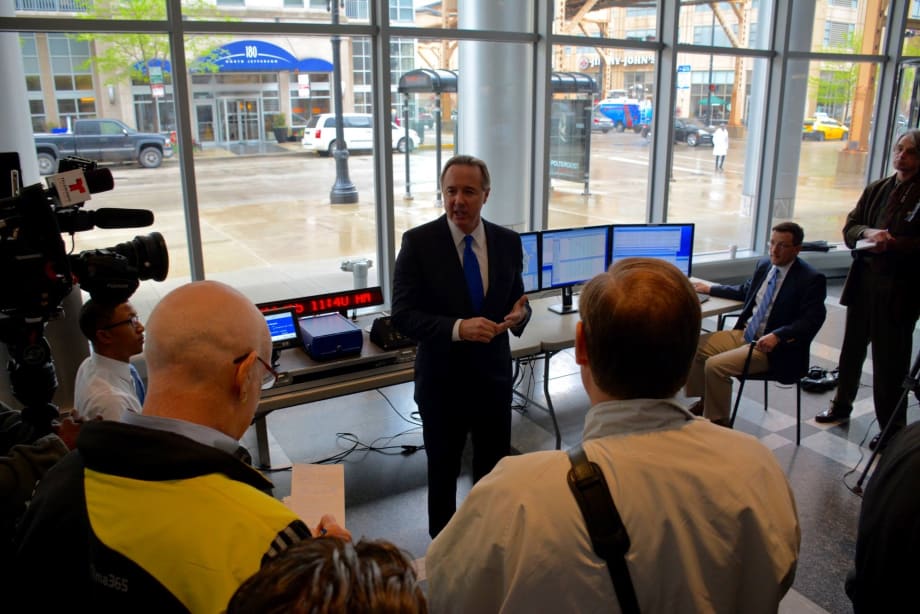
Photo: CTA
Photo: CTA
Chicago Transit Authority (CTA) officials Monday demonstrated a new technology designed to provide more consistent and reliable bus service.
RELATED:Chicago Transit Authority veteran Carter returns to lead agency
The technology, known as Bus Transit Management System (BTMS), provides real-time monitoring of bus movements and modern real-time communications between bus drivers and CTA’s Control Center. The system will allow buses to more quickly adapt to changing traffic and street conditions, and help avoid the two biggest challenges facing bus service: bus “bunching” and long waits between buses.
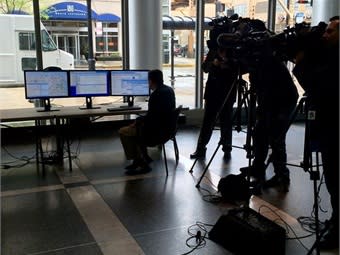
Photo: CTA
“The CTA under Mayor Emanuel has significantly invested in technology as a key method of improving service to customers and modernizing our transit system,” said CTA President Forrest Claypool. “This includes installing 4G wireless service in our subways, substantially expanding and enhancing Bus and Train Tracker service and increasing the number of security cameras on every CTA bus, train and station to more than 23,000. We’re committed to providing excellent service to our customers and to making the necessary investments to fulfill our promise to do so.”
RELATED:How to alleviate campus bus bunching
Through touch-screen terminals on every CTA bus, BTMS allows for improved two-way communication between drivers and CTA’s Communication and Power Control (C/PC), the command center that monitors all bus and train operations throughout the service region.
The system enables the Control Center to better track the location and movement of buses, and quickly convey route or speed changes to operators in order to ensure proper spreading of buses and adherence to schedule when possible.. If Control Center personnel detect conditions that could lead to a service delay or bus bunching—more than one bus arriving at a stop at or near the same time—they can instruct the driver to adjust the route accordingly. Further, if the Control Center needs to send a message to multiple buses about a reroute due to police or fire activity, it can be done instantaneously.
Testing on buses at two South Side CTA garages that initially received the new system has shown significant improvement to bus service. Since January 2015, bus “big gaps”— defined as larger-than-scheduled periods of time between buses — on nine of the busiest South Side bus routes have dropped an average of nearly 40 percent.
CTA officials noted that because buses share the same streets as all other vehicles, they will always be subject to various traffic conditions beyond the CTA’s control, from stalled cars and construction work to regular rush-hour congestion. “But this new technology will allow us to preemptively act even before those delays occur, so that we can minimize the inconvenience to our customers,” Claypool said.
BTMS replaces an outdated bus communications system that is at the end of its useful life, and does not provide location information or other state-of-the-art functionality of the new system. BTMS is built upon the same system that powers Bus Tracker and automated bus announcements.
By later this summer, all of CTA’s approximately 1,800 buses will be equipped with BTMS. The full deployment of software and hardware is budgeted at $8.8 million. The system will be paid for by federal funding.
More Bus

New York MTA Plans Largest Bus Fleet Upgrade in More Than a Decade
The agency is seeking manufacturers for 650 new CNG buses to replace aging vehicles, improve reliability, and advance its broader fleet modernization strategy.
Read More →
Building a Flexible Path to Transit Electrification
John Hroncich discusses BAE Systems’ modular and scalable approach, lessons learned from decades of real-world operations, and how agencies can identify electrification strategies that fit their fleets.
Read More →
Bus Tech Talk: Keeping Transit Technicians Ahead of the Technology Curve
LA Metro’s Obed Mejia discusses technician training, evolving maintenance technology, fleet replacement, and strategies for getting the most out of today’s transit fleets.
Read More →
Biz Briefs: RIPTA Unveils New Frontrunners, Clevland RTA Adds New Siemens, and More
In METRO's latest installment, we take a look at recent news from Siemens, Prevost, Dodge, and more partnerships making headlines across the transportation sector.
Read More →
People Movement: Holly Arnold Joins Transdev and More
In this edition, we also cover recent appointments and announcements at Pace, CamTran, MCI, and more, showcasing the individuals helping to shape the future of transportation.
Read More →
The High Cost of Transit Buses: Industry Leaders Look to Procurement Reform
Transit leaders and policymakers examine how standardized bus designs, streamlined procurement, and predictable funding could help agencies stretch budgets and deliver better service.
Read More →
The Business Voice Behind Public Transportation
As chair of APTA’s Business Members Board of Governors, Ray Melleady explains how more than 850 business members are partnering with transit agencies to advance funding, innovation, and industry-wide collaboration.
Read More →
From Surviving to Thriving: Building Stronger Transportation Organizations
Bus Business Consultants founder Brian Dickson shares lessons on leadership, organizational health, and creating options for long-term success in a changing transportation industry.
Read More →
Finding the ‘Happy Medium’: Optimizing Maintenance Without Sacrificing Reliability
The key to maintenance optimization isn’t doing less work—it’s doing the right work at the right time on the right assets.
Read More →
LA Metro, City of West Hollywood, and Partners Advance Smarter Bus Lane Enforcement
The award-winning partnership combines AI-powered detection with human oversight to improve bus reliability, accessibility, and enforcement efficiency.
Read More →