




Related: Bus tracking service to provide time-based bus info
NY MTA introduces the first of more than 2,000 state-of-the-art buses
After more than three decades of bearing more than a passing resemblance to refrigerators on wheels, the appearance of North America’s largest transit bus fleet is undergoing a stunning transformation
May 23, 2016
Marc Hermann, MTA New York City Transit
3 min to read
Marc Hermann, MTA New York City Transit
By Charles Seaton, MTA New York City Transit
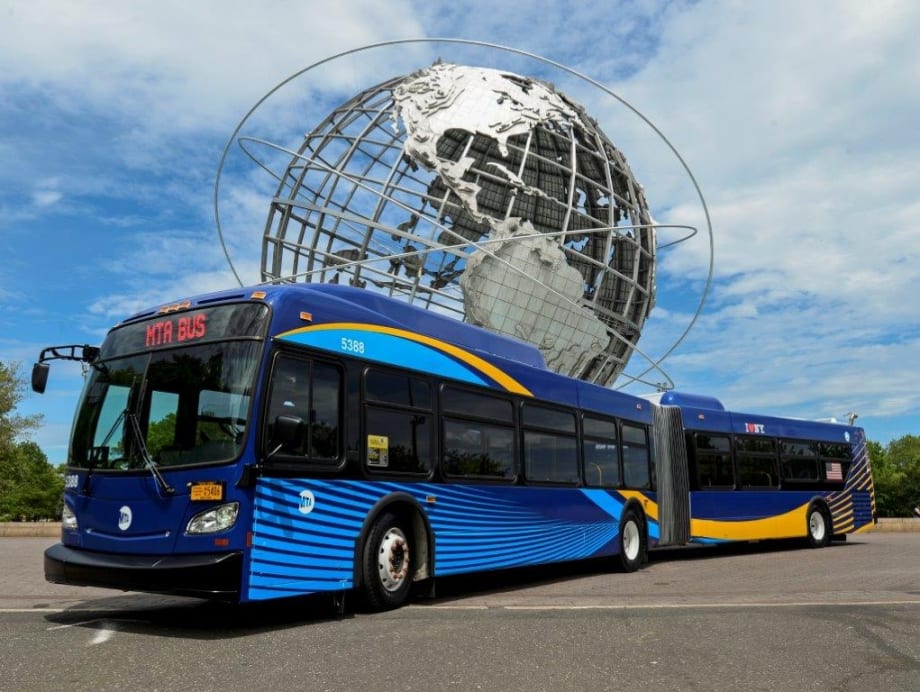
After more than three decades of bearing more than a passing resemblance to refrigerators on wheels, the appearance of North America’s largest transit bus fleet is undergoing a stunning transformation, with an eye-catching new look and the introduction of 21st century amenities designed to brighten the day and ease the commutes of harried customers.
The first seven in an order of 75 new MTA buses, fresh off the assembly line were introduced by Gov. Andrew M. Cuomo; MTA Chairman/CEO Thomas F. Prendergast; NYC Transit President Veronique “Ronnie” Hakim; and Darryl Irick, President of MTA Bus/Sr. VP, NYC Transit Department of Buses. Wrapped in two shades of blue with sweeping gold accents, the handsome, new buses are hitting the streets in the borough of Queens.
The 60-foot, low-floor New Flyer Xcelsiors are part of a series of upcoming deliveries over the next five years, totaling more than 2,000 new, state-of-the-art vehicles. They will help ease overcrowding, improve dependability and serve to modernize more than one-third of the MTA’s bus fleet. In a nod to the widespread use of electronic devices today, these buses feature Wi-Fi service and USB charging ports, which allow riders to communicate and top off device batteries enroute.
“The MTA operates a fleet of nearly 6,000 buses, with the oldest vehicles approaching 18 years in service in what is arguably the roughest environment in the country. The delivery of new buses offers us a unique opportunity to revolutionize bus travel throughout the city, offering our customers amenities not previously available,” noted Irick. “We are also modernizing the paint scheme that our buses have worn since the 1980s. It’s bold, fresh and gives our agency a whole new appearance on the street.”
The first seven buses are already in service while the remainder of the order is being delivered at a rate of four to five per day. All 75 buses will be in service this summer and operating in the Richmond Hill, South Jamaica, South Ozone Park, Springfield Gardens, Rosedale and Far Rockaway neighborhoods in Queens.
The buses were introduced at a ceremony held at the New York City Transit’s Michael J. Quill Depot on Manhattan’s far West Side. Gov. Cuomo and Chairman Prendergast also took the opportunity to announce the successful field test for MTA eTix, a free app that will allow Long Island Rail Road and Metro-North commuter rail customers to purchase train tickets anytime, anywhere on their mobile devices, instead of using paper tickets.
“Today, we are reimagining the MTA for the 21st century and creating a transit system that will meet the needs of the next generation of New Yorkers,” Gov. Cuomo said. “With our unprecedented MTA capital plan, we are building for the future with major initiatives that will improve the commute of millions of New Yorkers, reduce overcrowding and bring new technology to our subways, buses and railroads. New York is investing in the MTA like never before, and together we are recapturing the boldness and ambition that made this the Empire State in the first place.”
“We see the debut of these new buses and the roll out of the MTA eTix field test as important steps forward as we continue to renew, expand the transit system and create an enhanced experience for our customers,” said Chairman Prendergast.
All new bus deliveries will be given the new paint scheme and upgraded customer amenities.
More Bus

New York MTA Plans Largest Bus Fleet Upgrade in More Than a Decade
The agency is seeking manufacturers for 650 new CNG buses to replace aging vehicles, improve reliability, and advance its broader fleet modernization strategy.
Read More →
Building a Flexible Path to Transit Electrification
John Hroncich discusses BAE Systems’ modular and scalable approach, lessons learned from decades of real-world operations, and how agencies can identify electrification strategies that fit their fleets.
Read More →
Bus Tech Talk: Keeping Transit Technicians Ahead of the Technology Curve
LA Metro’s Obed Mejia discusses technician training, evolving maintenance technology, fleet replacement, and strategies for getting the most out of today’s transit fleets.
Read More →
Biz Briefs: RIPTA Unveils New Frontrunners, Clevland RTA Adds New Siemens, and More
In METRO's latest installment, we take a look at recent news from Siemens, Prevost, Dodge, and more partnerships making headlines across the transportation sector.
Read More →
People Movement: Holly Arnold Joins Transdev and More
In this edition, we also cover recent appointments and announcements at Pace, CamTran, MCI, and more, showcasing the individuals helping to shape the future of transportation.
Read More →
The High Cost of Transit Buses: Industry Leaders Look to Procurement Reform
Transit leaders and policymakers examine how standardized bus designs, streamlined procurement, and predictable funding could help agencies stretch budgets and deliver better service.
Read More →
The Business Voice Behind Public Transportation
As chair of APTA’s Business Members Board of Governors, Ray Melleady explains how more than 850 business members are partnering with transit agencies to advance funding, innovation, and industry-wide collaboration.
Read More →
From Surviving to Thriving: Building Stronger Transportation Organizations
Bus Business Consultants founder Brian Dickson shares lessons on leadership, organizational health, and creating options for long-term success in a changing transportation industry.
Read More →
Finding the ‘Happy Medium’: Optimizing Maintenance Without Sacrificing Reliability
The key to maintenance optimization isn’t doing less work—it’s doing the right work at the right time on the right assets.
Read More →
LA Metro, City of West Hollywood, and Partners Advance Smarter Bus Lane Enforcement
The award-winning partnership combines AI-powered detection with human oversight to improve bus reliability, accessibility, and enforcement efficiency.
Read More →